|
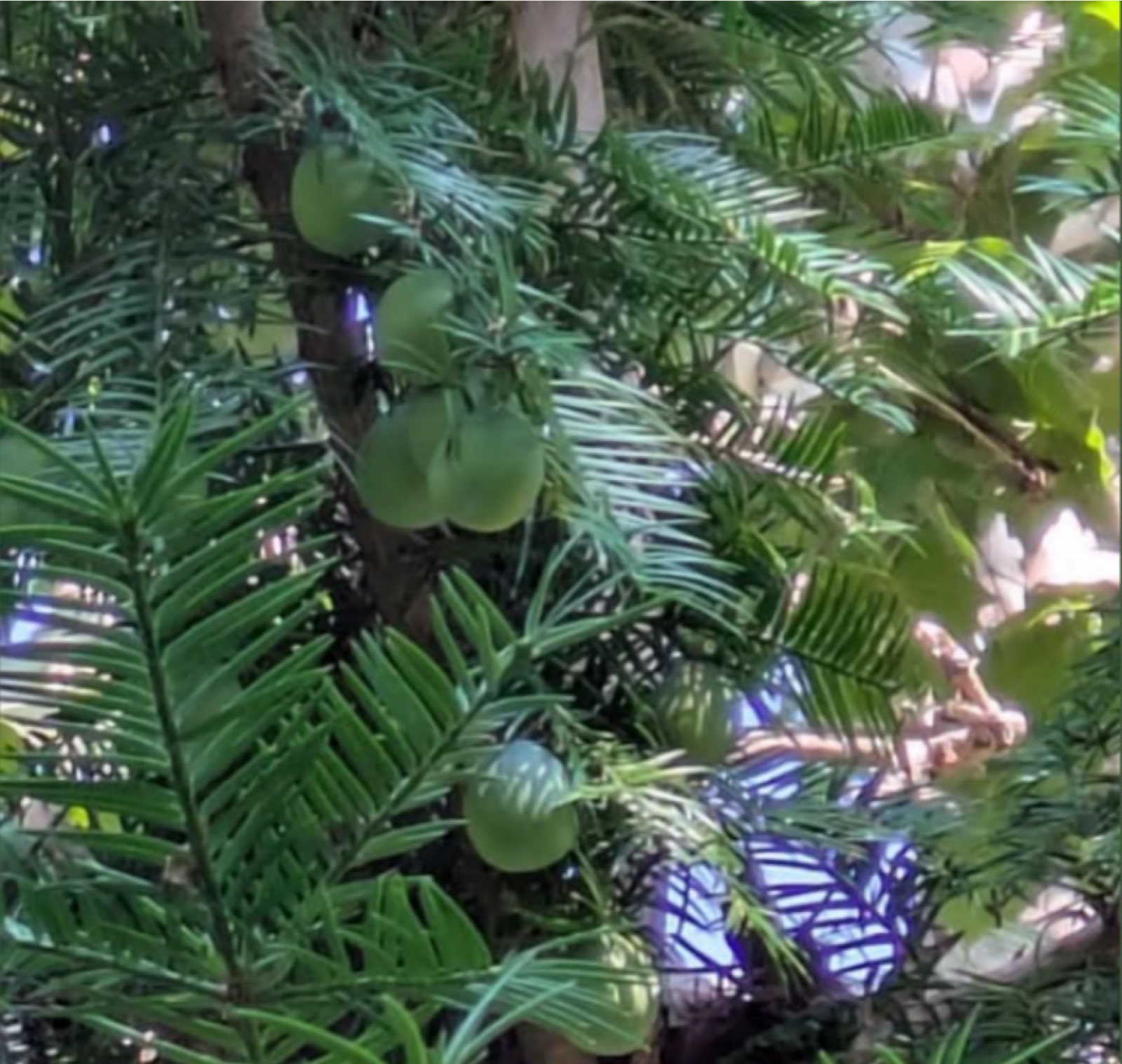
in Lansing, MICHIGAN Beal Botanical Garden, Michigan State University • 2026 NEWSFLASH: Lansing MI becomes the farthest north seed producer 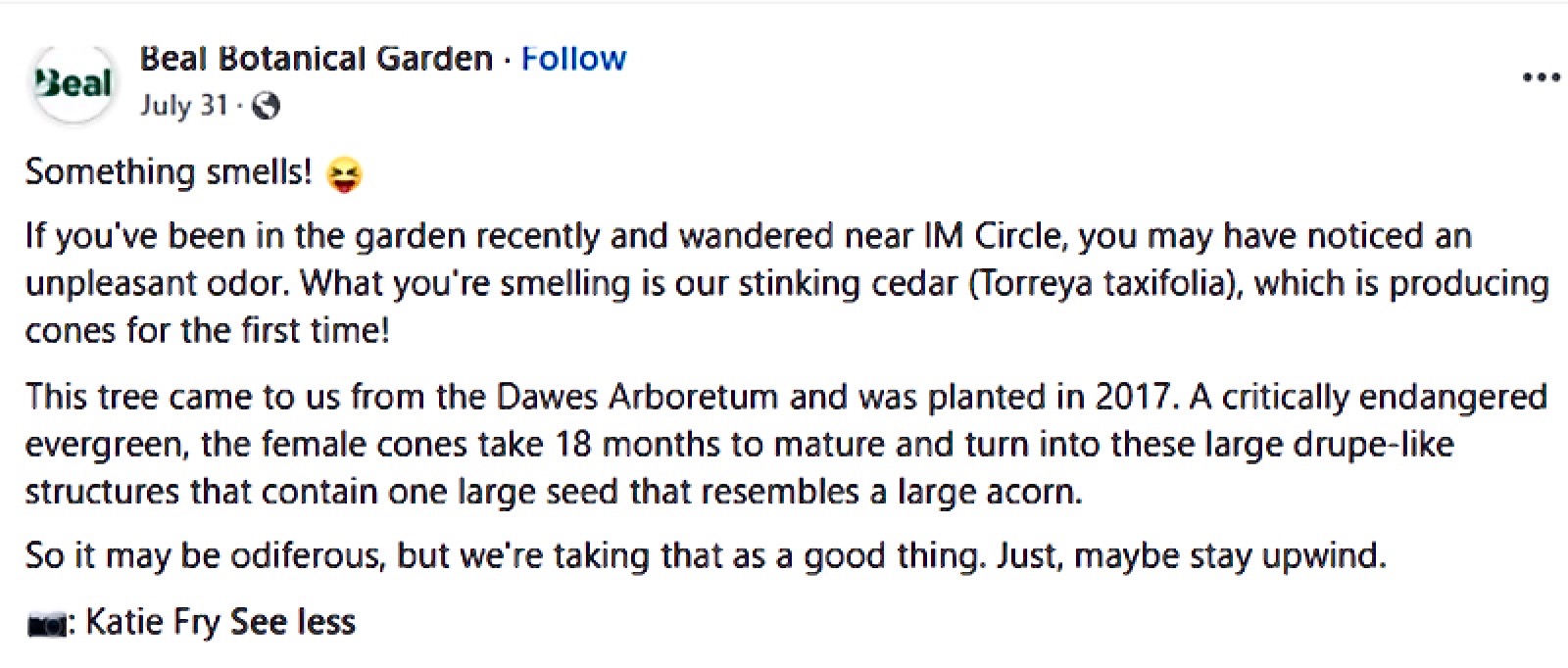
|
Torreya taxifolia
in Lansing, MICHIGANBeal Botanical Garden, Michigan State University
• 2026 NEWSFLASH: Lansing MI becomes the farthest north seed producer
Beal Botanical Garden at Michigan State University
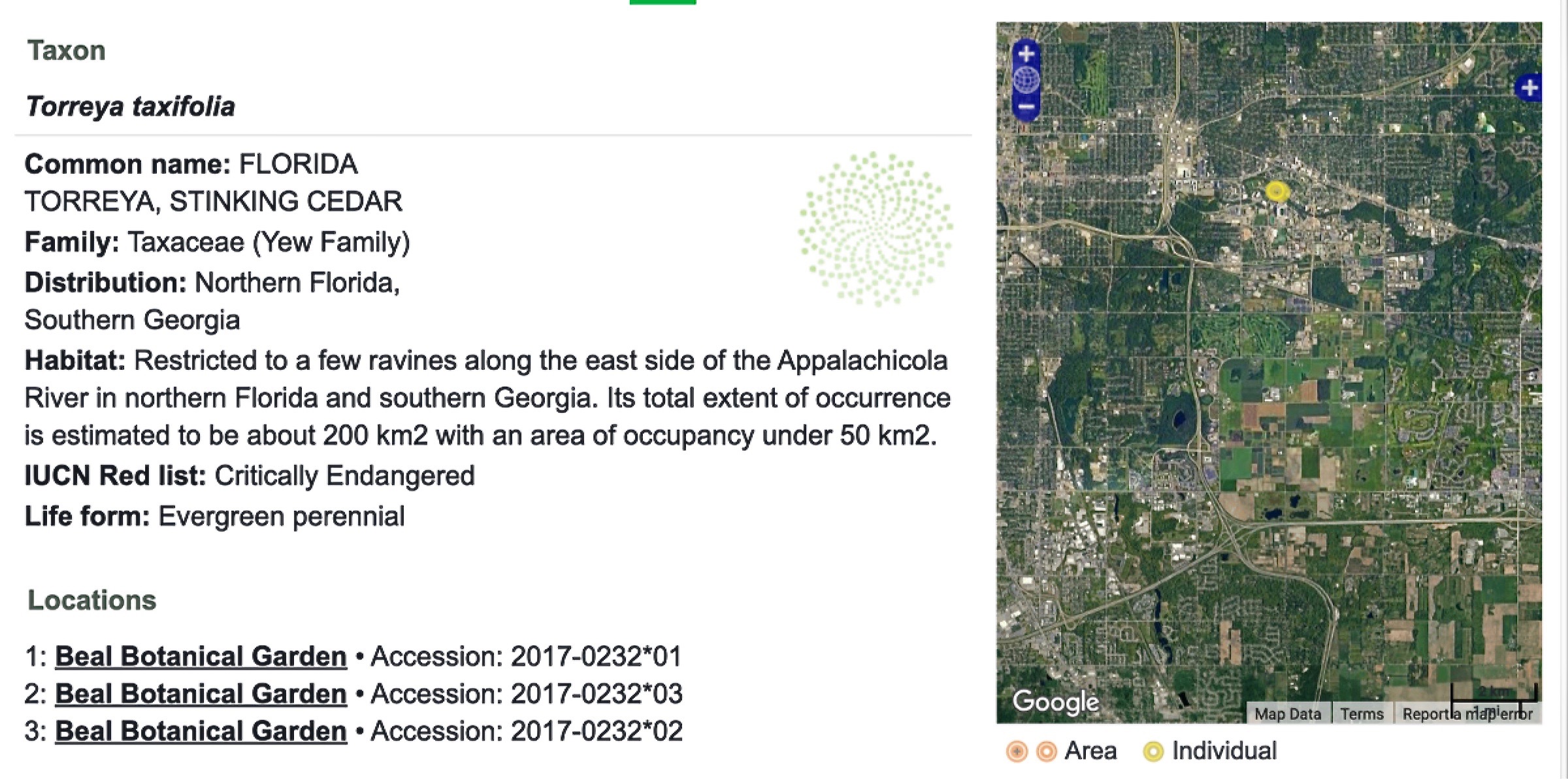
ABOVE: Lucas Machias alerted Torreya Guardians to the above social media entry by the Collections Manager (Katie Fry) at Beal Botanical Garden at Michigan State University in Lansing. LEFT: The accessions entry on the Beal website.
Chronological Reports • NOVEMBER 2026: Connie Barlow reports on a 90-minute phone conversation with Collections Manager Katie Fry. ACQUISITION OF THE 3 TORREYAS: In 2017, Beal acquired 3 potted seedlings from Dawes Arboretum in central Ohio. GENETIC PROVENANCE: Click on the above link to learn that Dawes Arboretum received seeds on three occasions from Torreya Guardians. We sent 10 seeds in 2006 and 20 seeds in 2009 that had been donated to us by the Biltmore Gardens in North Carolina. In 2014 we sent 300 seeds that had been donated from the ex situ planting in northernmost Georgia of rooted branchlets (clones) of some of the remaining population within the native range of north Florida. That site is administered by the State Botanical Garden of Georgia (a staff change there in 2015 abruptly ended seed donations to us). The 3 potted seedlings would thus be direct descendants of the remaining wild individuals in the glacial refuge of northern Florida. STATUS OF THE TORREYAS: Katie Fry estimates that the torreya producing seeds (for the first time, 2026) is somewhere between 12 and 15 feet tall. It has 1 basal sprout, about 1 foot tall. The two other torreyas are both about 7 feet tall. Reproductive buds visible in November 2026 appear to be female on the branches that Fry looked at on both of those trees. Note: Torreya Guardians have documented individual torreyas that bear both genders, although the literature tends to label the species as dioecious rather than subdioecious. SITE DESCRIPTION: Given the frost-kill of below-zero F. temperatures (plus windchill) in January of 2025 and again in 2026, the site itself must offer substantial protection. Torreya Guardians has learned that in northern states, Florida torreya does well in full-sun (but is vulnerable in southern states). Yet in the north, polar winds that accompany sub-zero F temperatures can be devastating. Fortunately, the 3 torreyas at Beal are superbly sited: The reproductive female is about 50 feet from the east-facing side of a 4-story building. The other two torreyas are along the south side. Beal Gardens is situated in a sunken aread along the floodplain of a creek and is thus somewhat sheltered from winds. The torreyas are planted on berms, so not affected by strong floods. Visit our Northern Limits page for photos of MI and OH torreya frostkill. SEED PRODUCTION: Approx. 10 to 20 full-size green seeds were visible end of July 2026 in this first year of seed production (see photo at top of page). By November the seeds were gone, as they would have dropped and then been harvested by rodents. Note: Connie Barlow, the writer of this report, graduated from Michigan State University in 1974.