|
Next Generation Mother Trees of Green Ash Documented in Ypsilanti MI
(Huron River, November 2026)
by local residents Connie Barlow and Luke Roman
Webpage created by Connie Barlow: https://www.torreyaguardians.org/ash-ypsilanti.html
Note: "Mother trees" is a term used by USDA (Ames, IA) on a webpage titled Ash ID
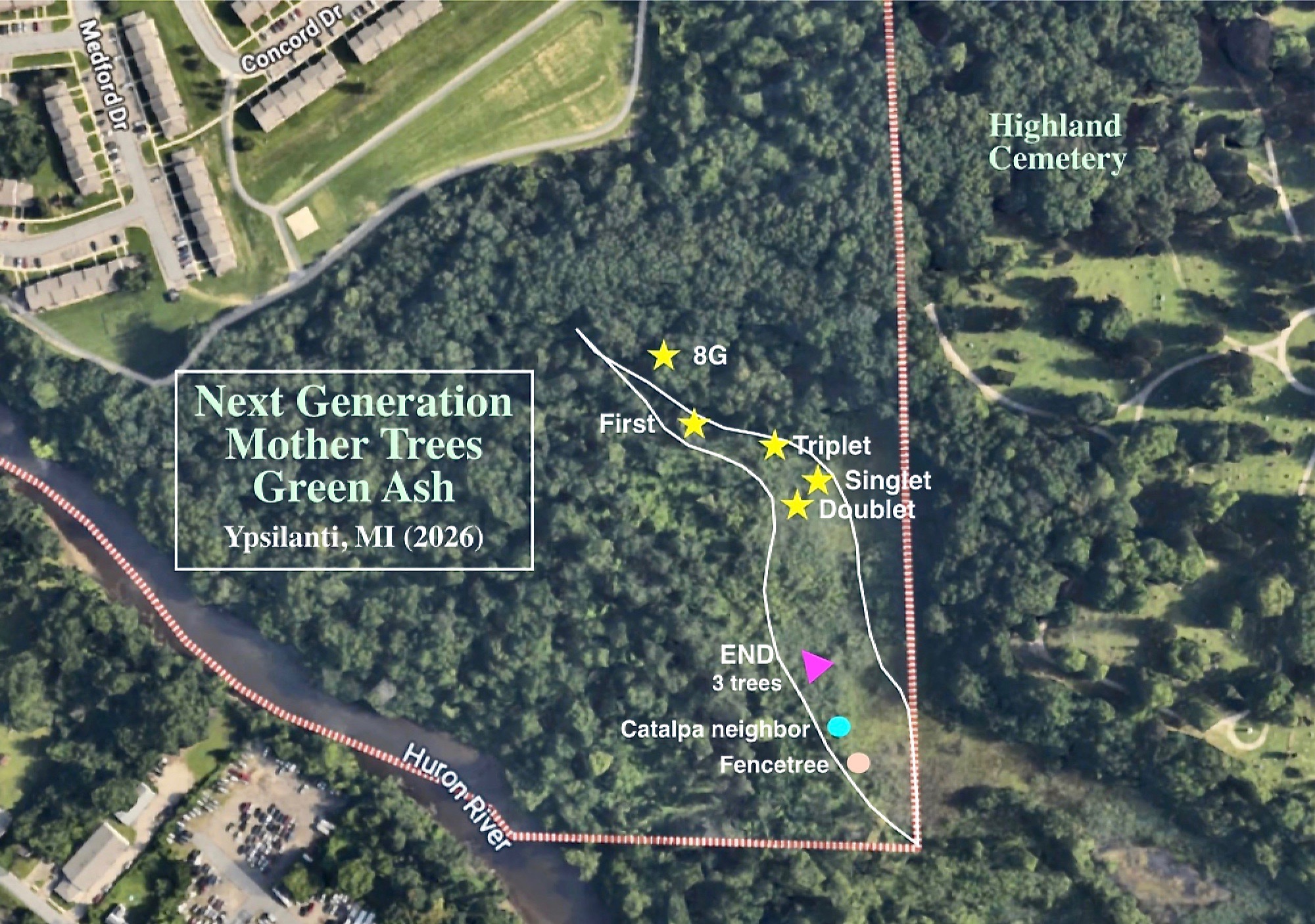
Image captured from Google Maps, satellite version, date unknown.
ABOVE: Property line shows privately owned forest, designated as undevelopable in context of the high-density housing permit at upper left. All ash mother trees are in the elevated bottomland downslope of the cemetery. White line surrounds the ephemeral pond and swamp region. Colorful symbols are 12 female trees bearing samaras, November 2026, as individually named.
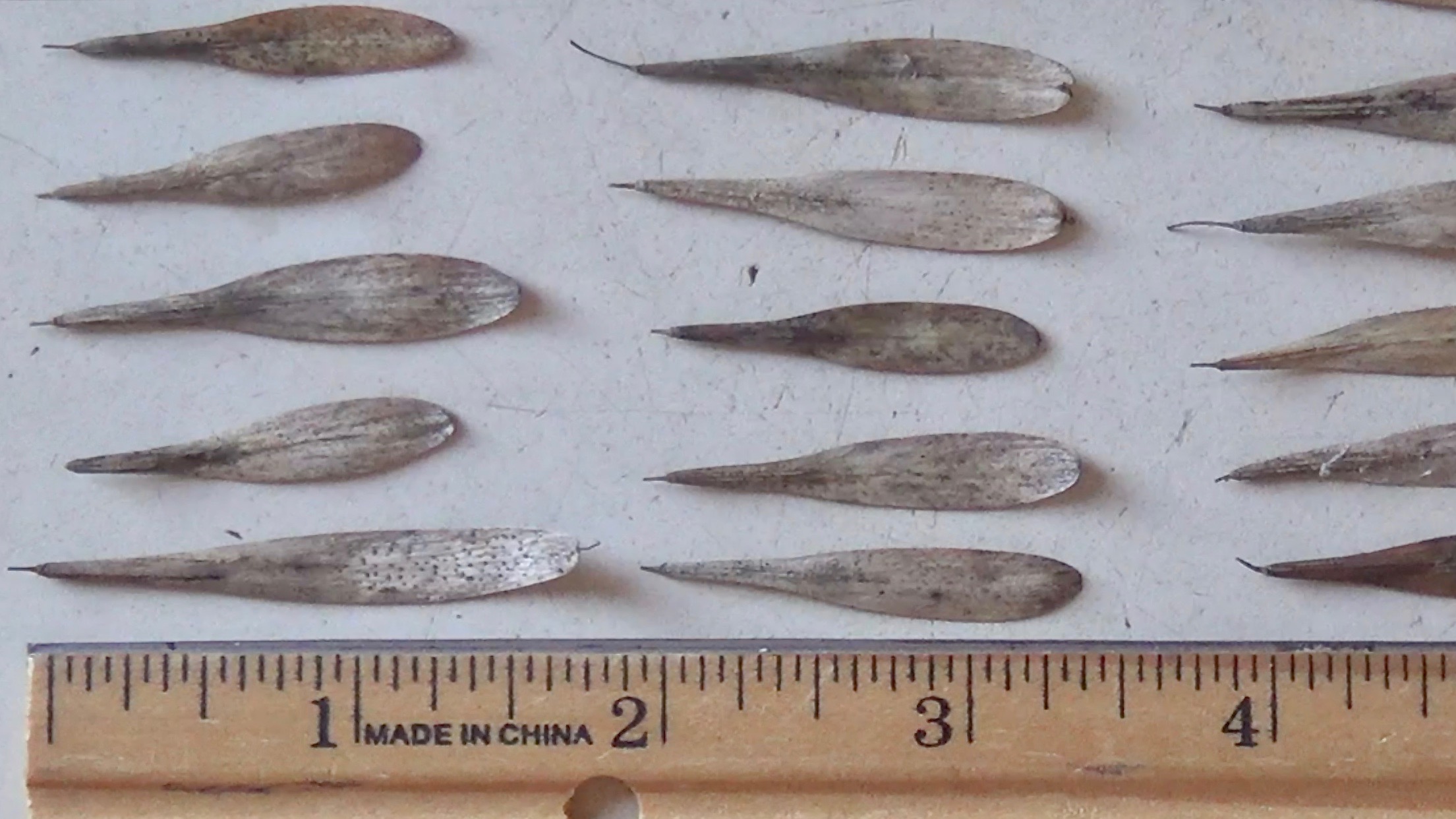
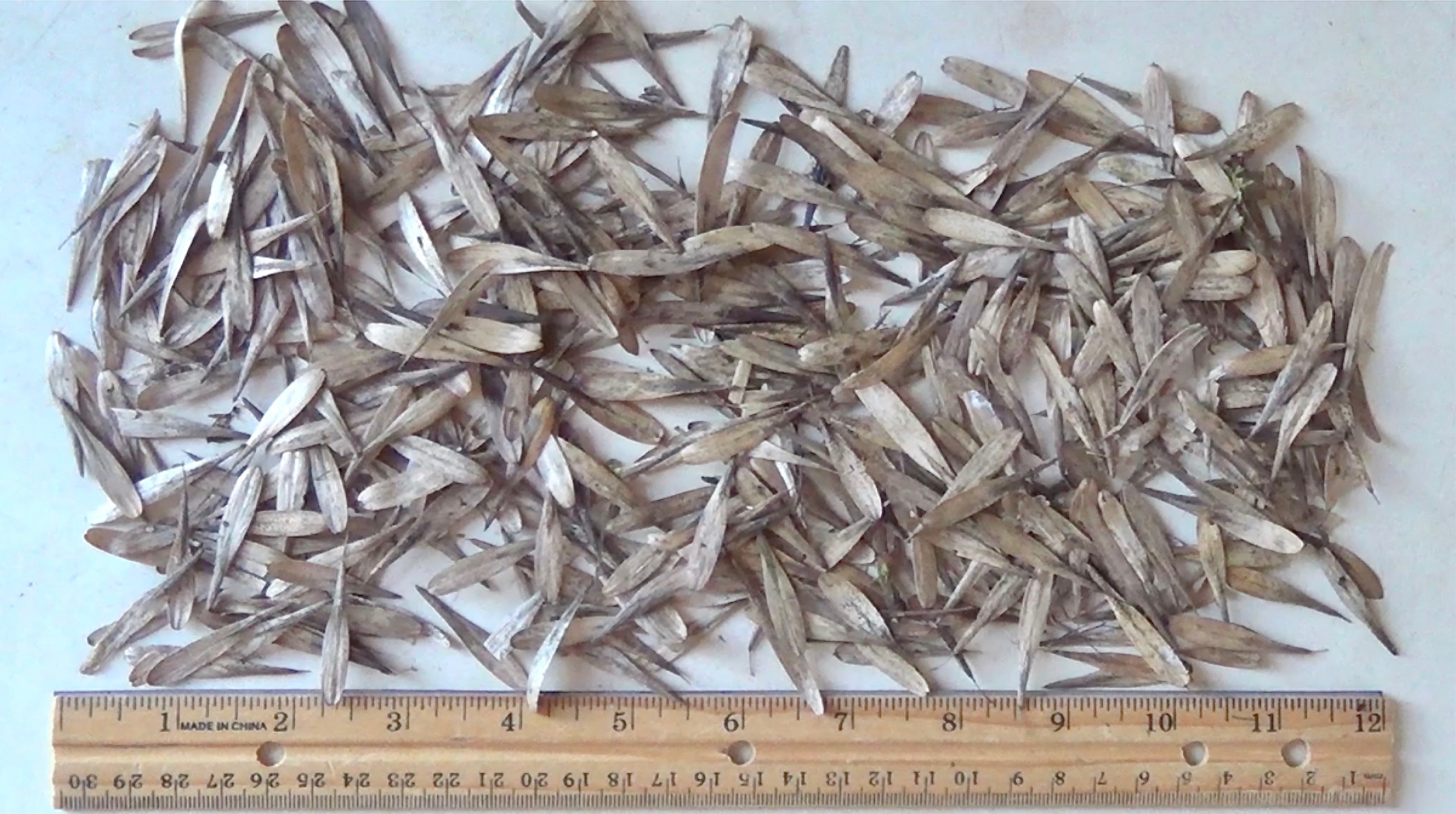 ABOVE: After collection, Connie Barlow examined each seed using the thumbnail-press test, and found in some of the 8 distinct seed collections that few were likely viable. The example here is "First Tree" for which 60 seeds (L) passed the thumbnail test, while many more (R) were rejected. Trees with epicormic branches low enough to pick by hand had the best seed-test outcomes.
Linked Sections
Part 1: Ecotype of Closed Canopy Forest (1 green ash mother tree)
• "Patch 8G mother tree" (12 inch DBH)
Part 2: Open Canopy, Swamp Forest Ecotype (10 green ash mother trees)
• "First mother tree" (12 inch DBH)
• "Far Triplet mother trees" (10, 6, and 8 inch DBH)
• "Far Singlet mother tree" (4 inch DBH)
• "Far Doublet mother tree" (6.5 inch DBH)
• "Swamp End Group" (3 mother trees, biggest is 10 inch DBH)
• "Catalpa Neighbor mother tree" (6 inch DBH)
• "Fence mother tree" (7 inch DBH)
Relevant Research Papers
Part 1: Ecotype of Closed Canopy Forest
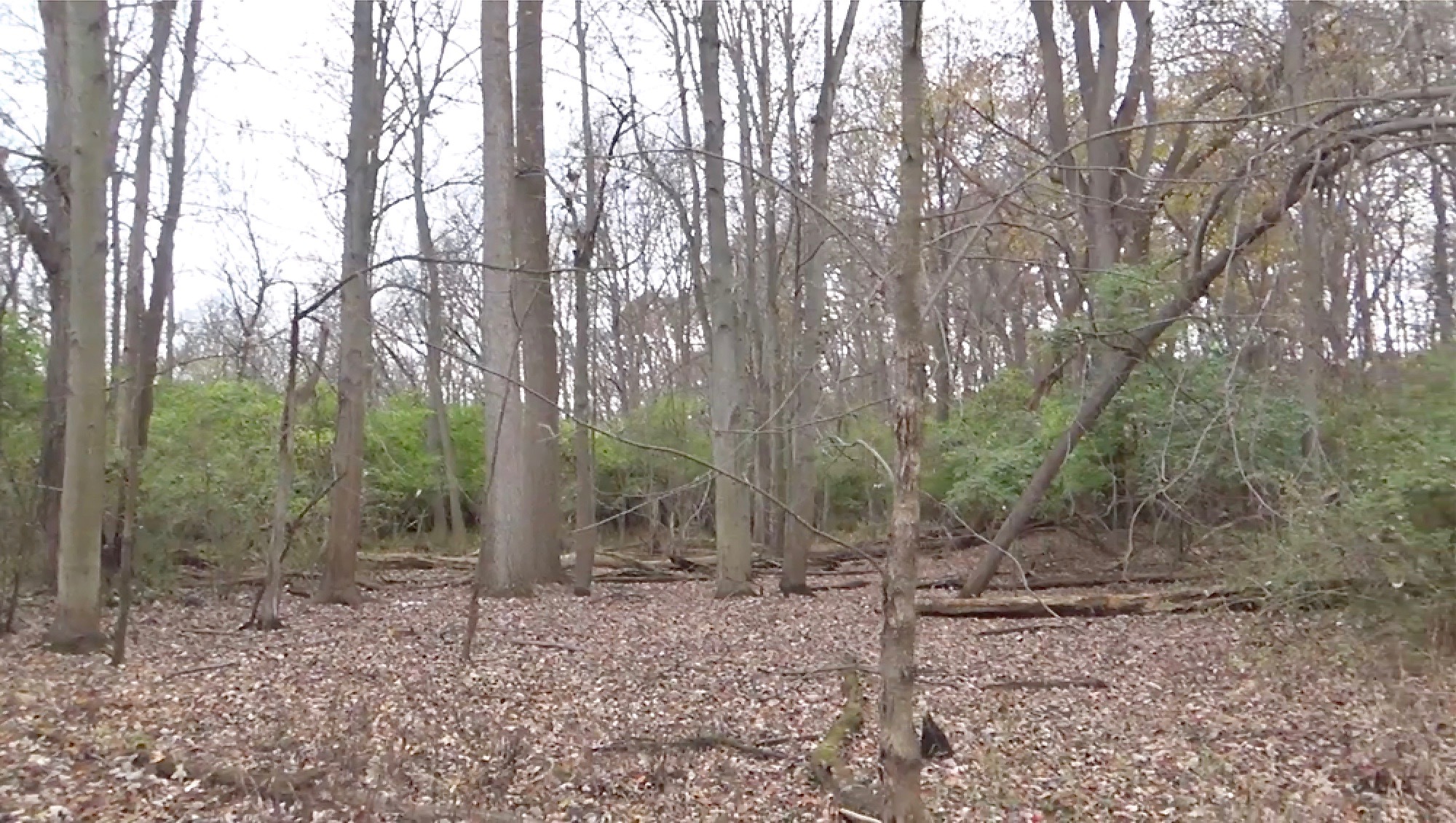
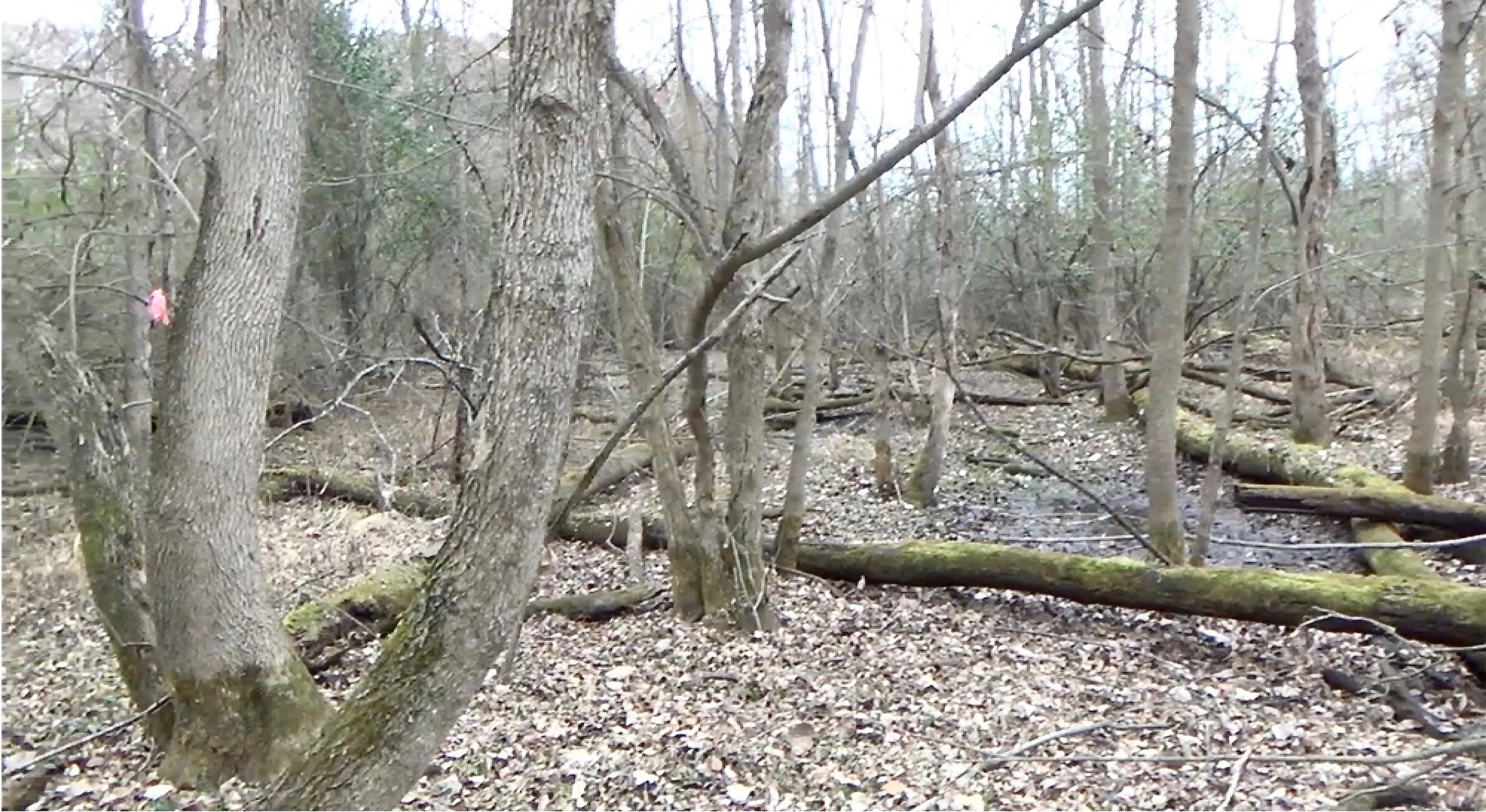
ABOVE: Where Swamp Forest begins at its northern-most edge. Center back of this photo is where a small creek vanishes from the north vanishes. Most of the large trees in this ephemeral pond zone are RED MAPLES that grow so fast that the bark stays smooth. There are also a few COTTONWOODS. The closest small tree is dead; probably an ASH. The green subcanopy is AMUR HONEYSUCKLE, Lonicera maackii. At far right, the ground slopes uphill into the upland area that is dominated by oaks.
There are no oaks in the bottomland forest. Dominant trees in the bottomland where elevation is slightly higher are BITTERNUT HICKORY (whose diamond-patterned bark is more pronounced and more pefect than the GREEN ASH) that previously dominated the wetter sections of the swamp.
Also on ground higher than where one finds creeping jenny are huge WALNUT TREES, a few old BUTTERNUTS, some BLACK CHERRYS. Also, a few HACKBERRYS, SYCAMORES, and COTTONWOODS, especially in lower patches. Right along the Huron River can be found sections where small ELMS dominate.
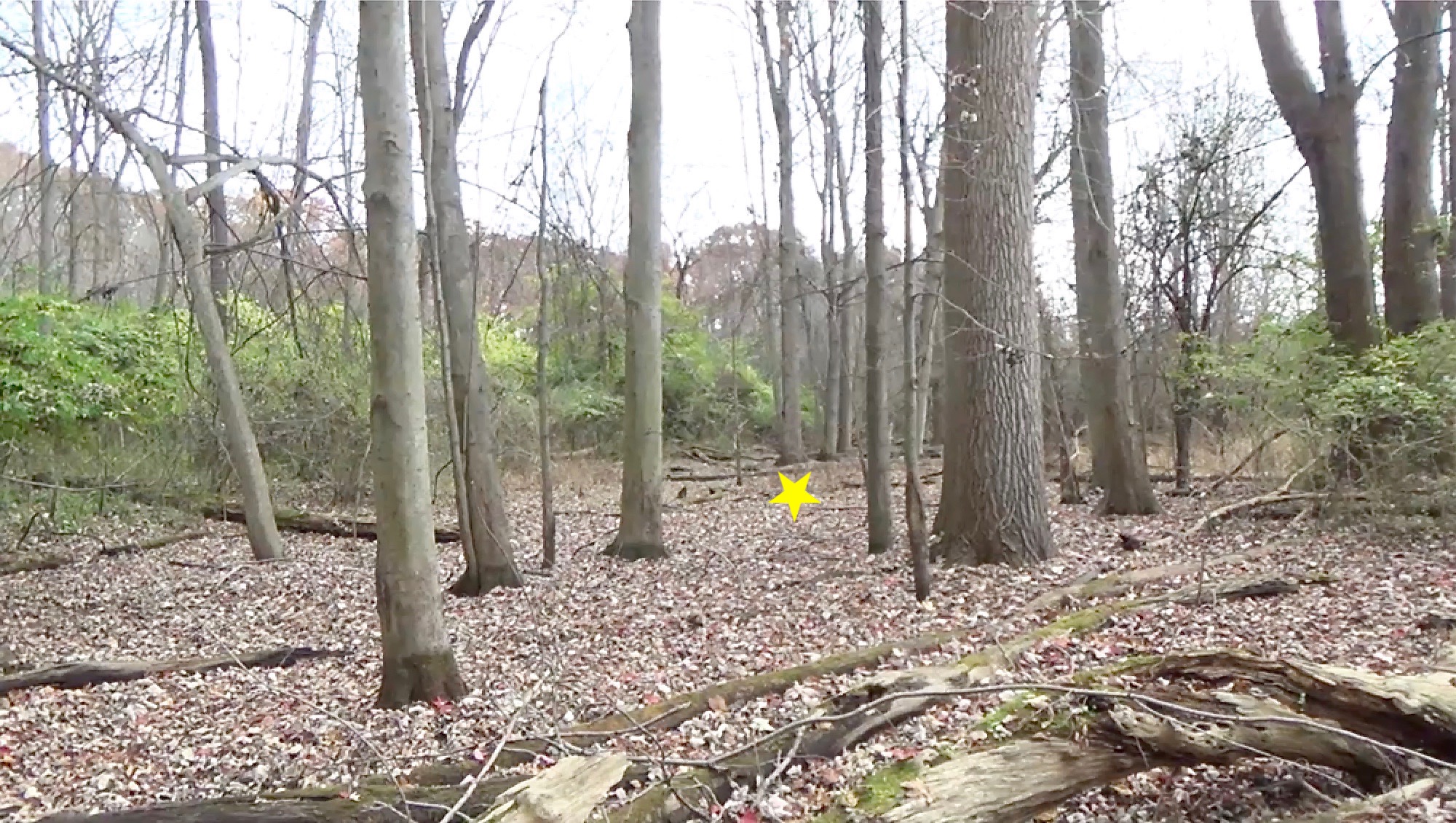 ABOVE: Turning 180 degrees (from the previous photo), the Swamp Forest continues southward. Again, there are smooth RED MAPLES. The widest trunk is COTTONWOOD. Above the YELLOW STAR is a RED MAPLE that has a metal plate leaning against its other side. In the photo below that tree is the closest far left (with metal plant still hidden on opposite side). 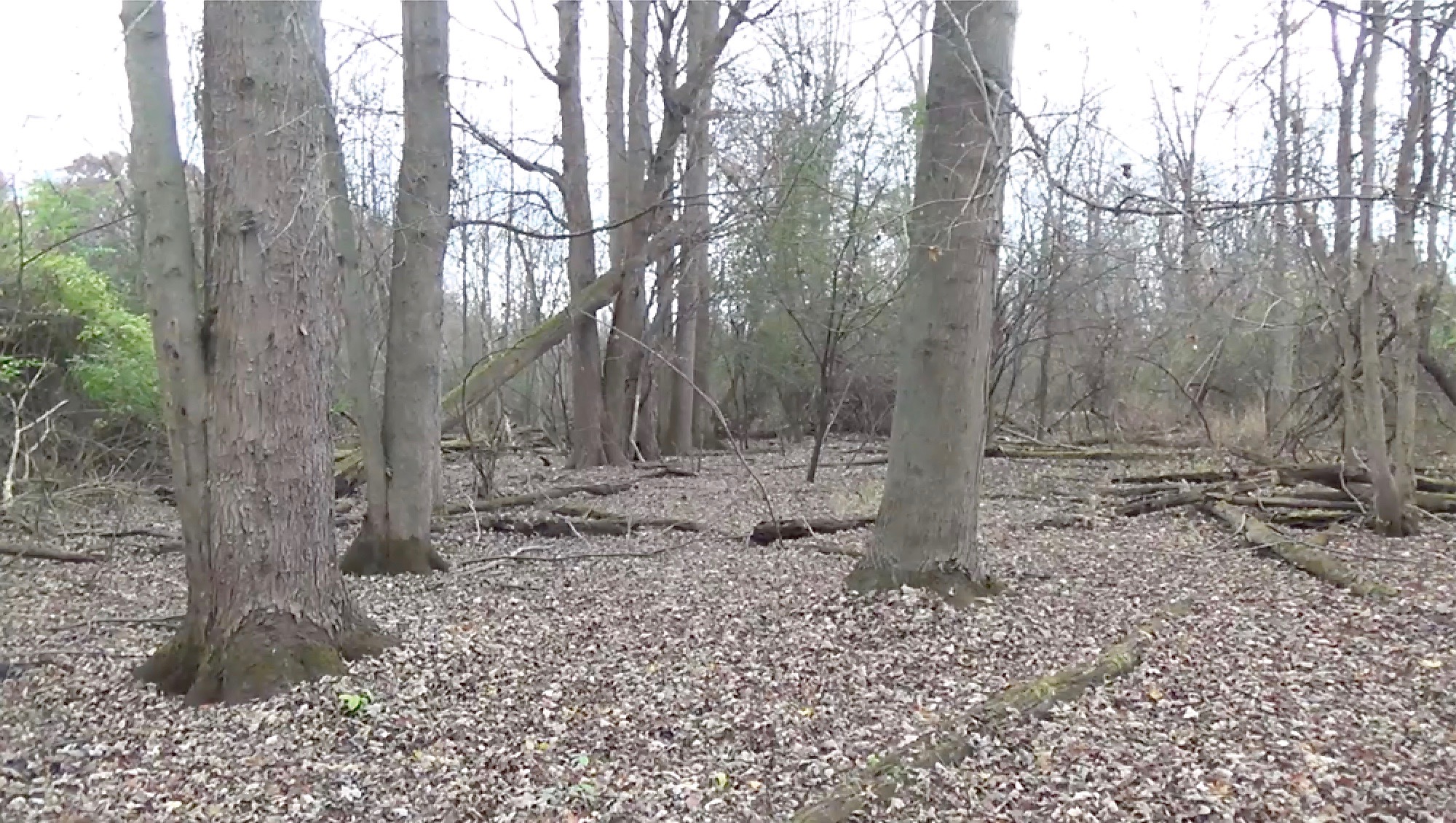 ABOVE: The large MAPLE with the (hidden) metal plate is double-stemmed near left. The Swamp Forest continues in the distance southward and soon swerves to the right.
BELOW: Metal plate is visible on the south side of the maple. Directly to the right of that maple is Pawpaw Patch 8H (where the Amur Honeysuckle thins). A short walk further inland leads to Pawpaw Patch 8G, which is where "Patch 8G Ash Tree" can be found. 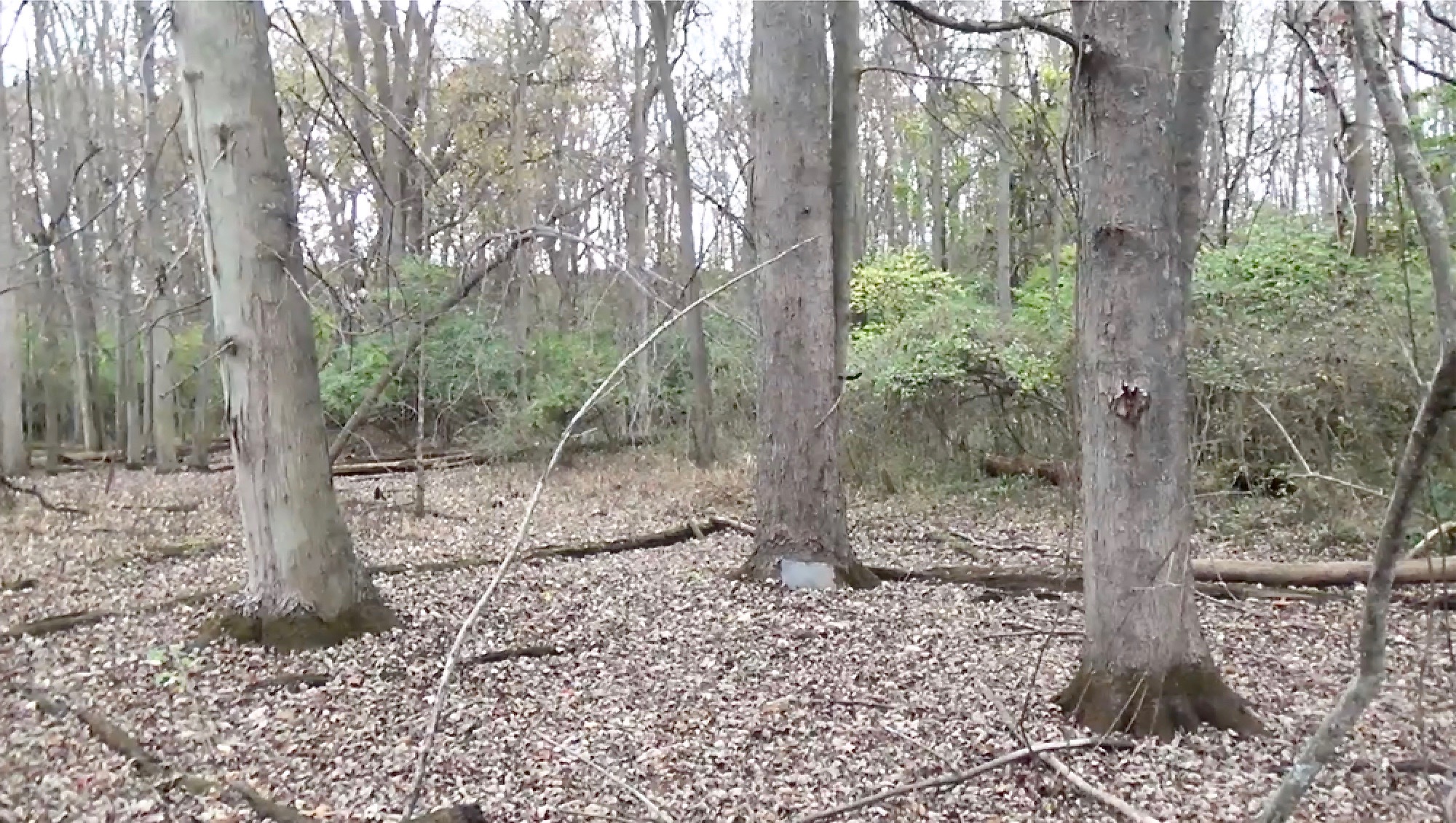
"Patch 8G Green Ash Mother Tree" (12 inch DBH)
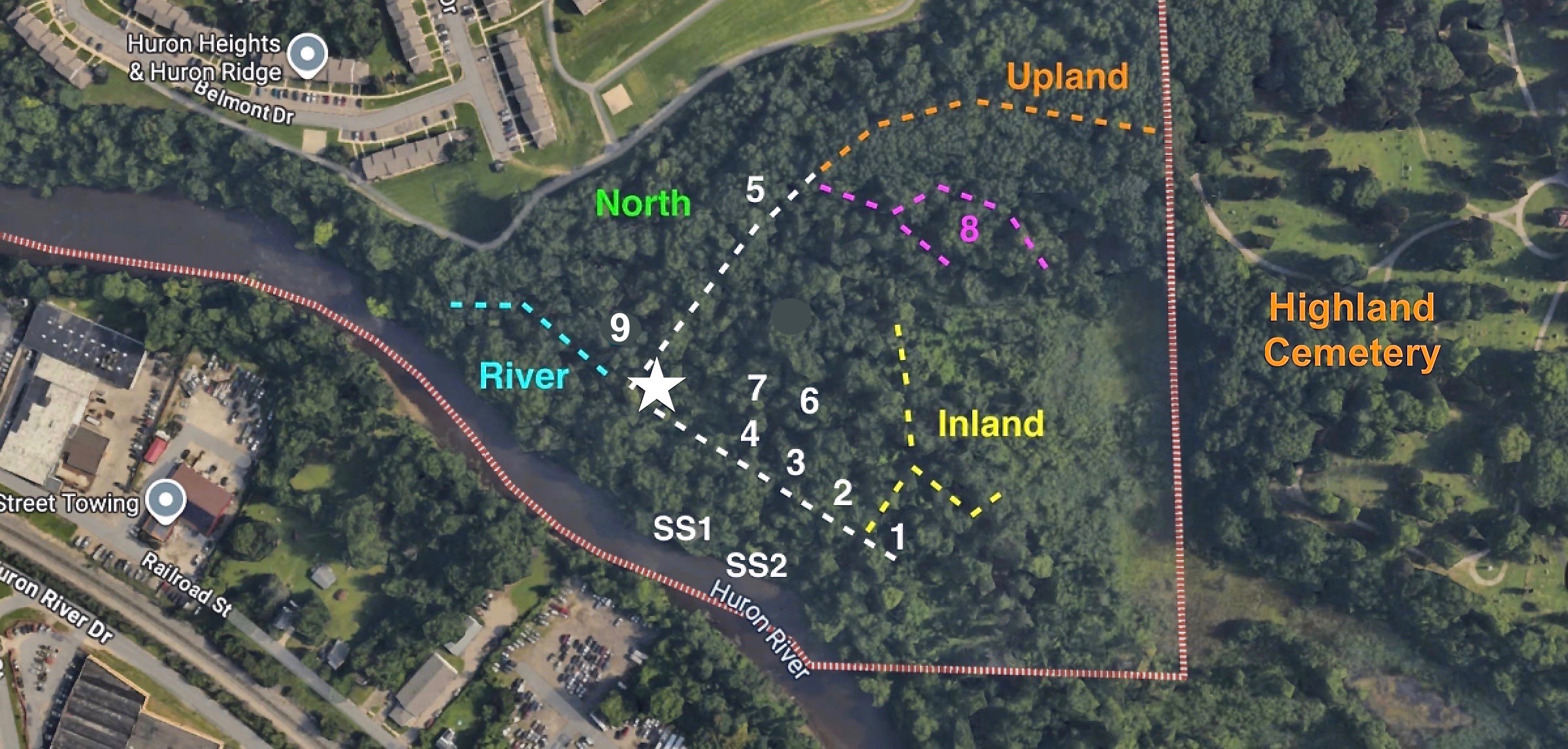 ABOVE: "Patch 8G Green Ash Mother Tree" is found in PAWPAW SECTION 8, whose trail is PURPLE. The canopy-view survey in November 2026 suggests that no LINGERING ASH trees are alive anymore. This MAP and details on all the pawpaw planting sections can be found on the webpage by Connie Barlow titled "Pawpaw Ecological Survey in Michigan (Part 3: Wild-Planting Experiments)".
• Any seed bearers today can be considered the NEXT GENERATION MOTHER TREES, recruited from seed dropped by the short-term lingering elders perhaps two decades ago. 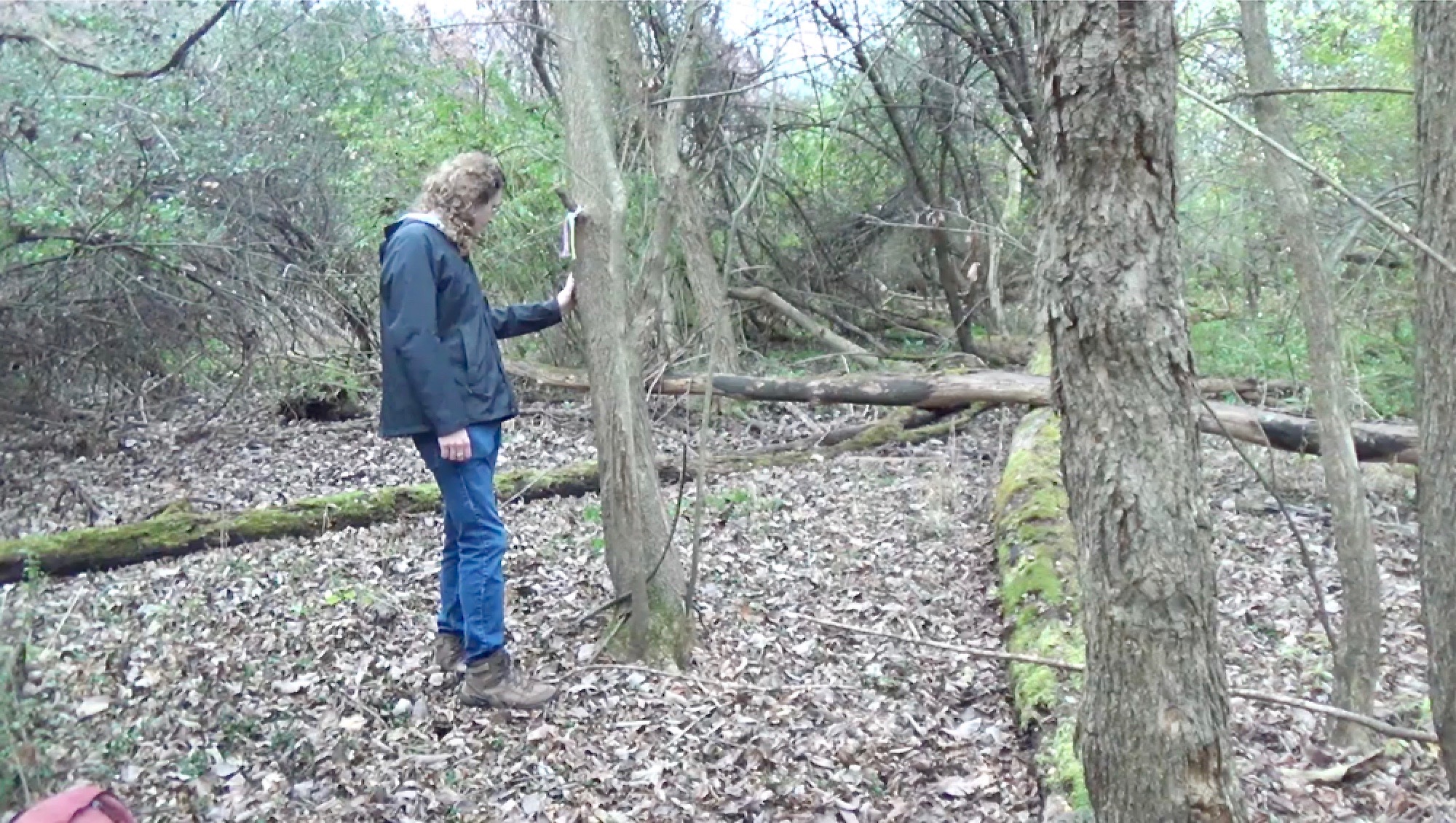 ABOVE: Luke Roman at "Patch 8G Mother Tree" mid-November 2026. The tree is marked by a cloth tied onto an epicormic shoot. (Atop the moss-covered log at right is where we found most of the seeds we collected.) Front right trunk is likely a dead ash.
BELOW: To the right of the above photo can be seen a recently FALLEN BOX ELDER, featured in the photo below. The greenery to its right marks the Pawpaw Patch 8G planting that Connie Barlow did in 2025, but now considers to be too moist for taprooted pawpaw to succeed. 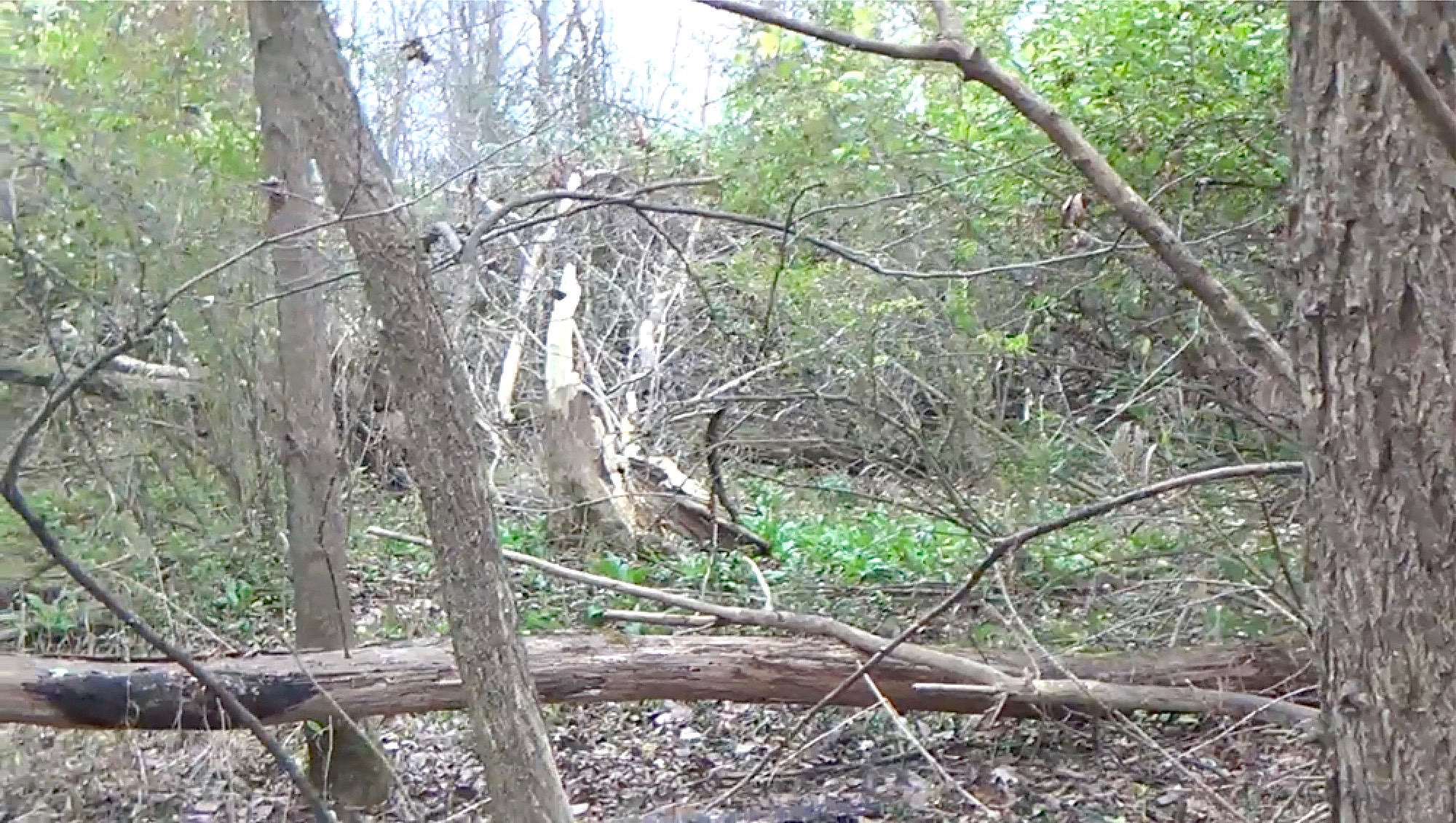 BELOW: The following 4 photos show this green ash mother tree from top to base: 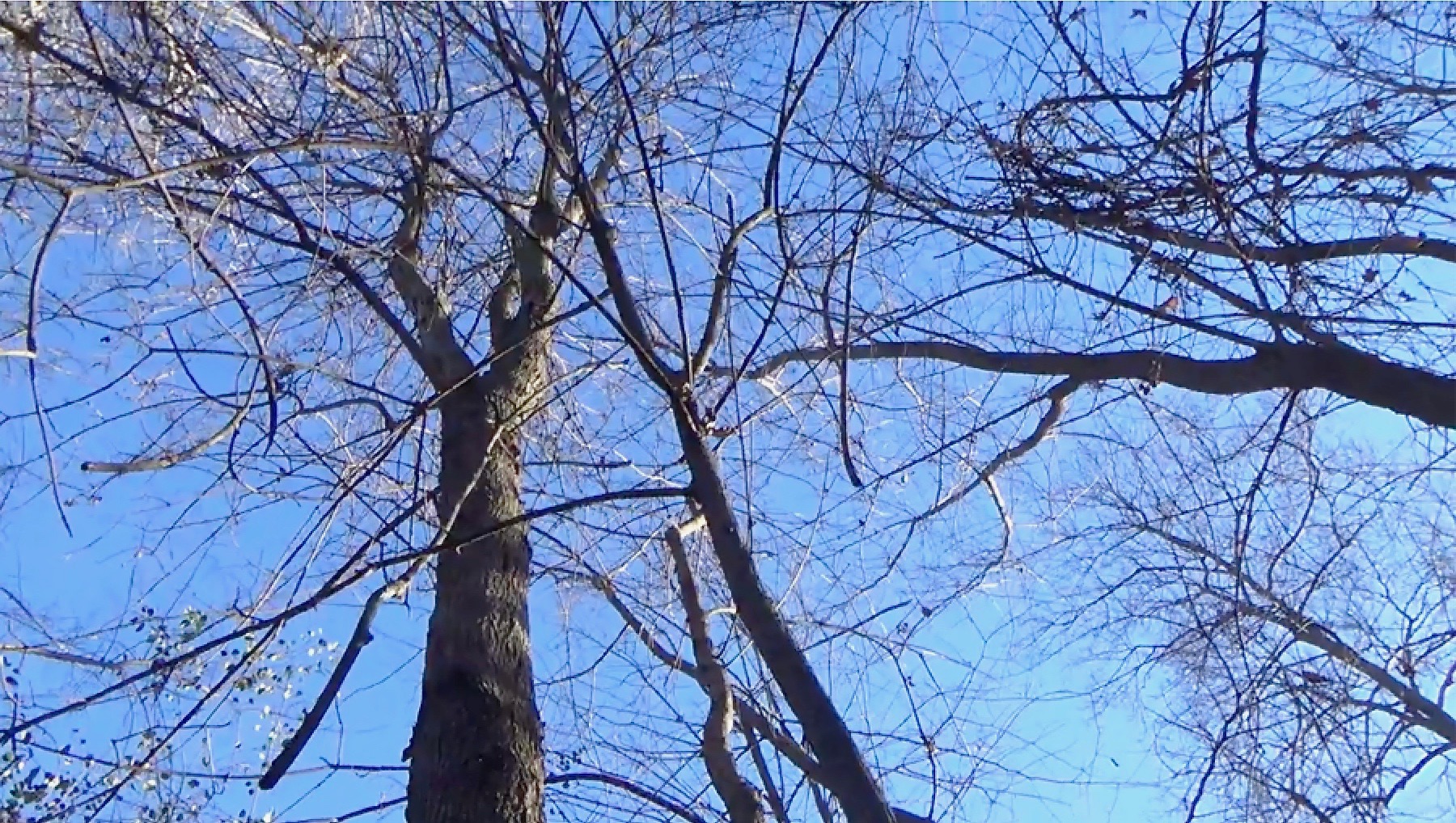
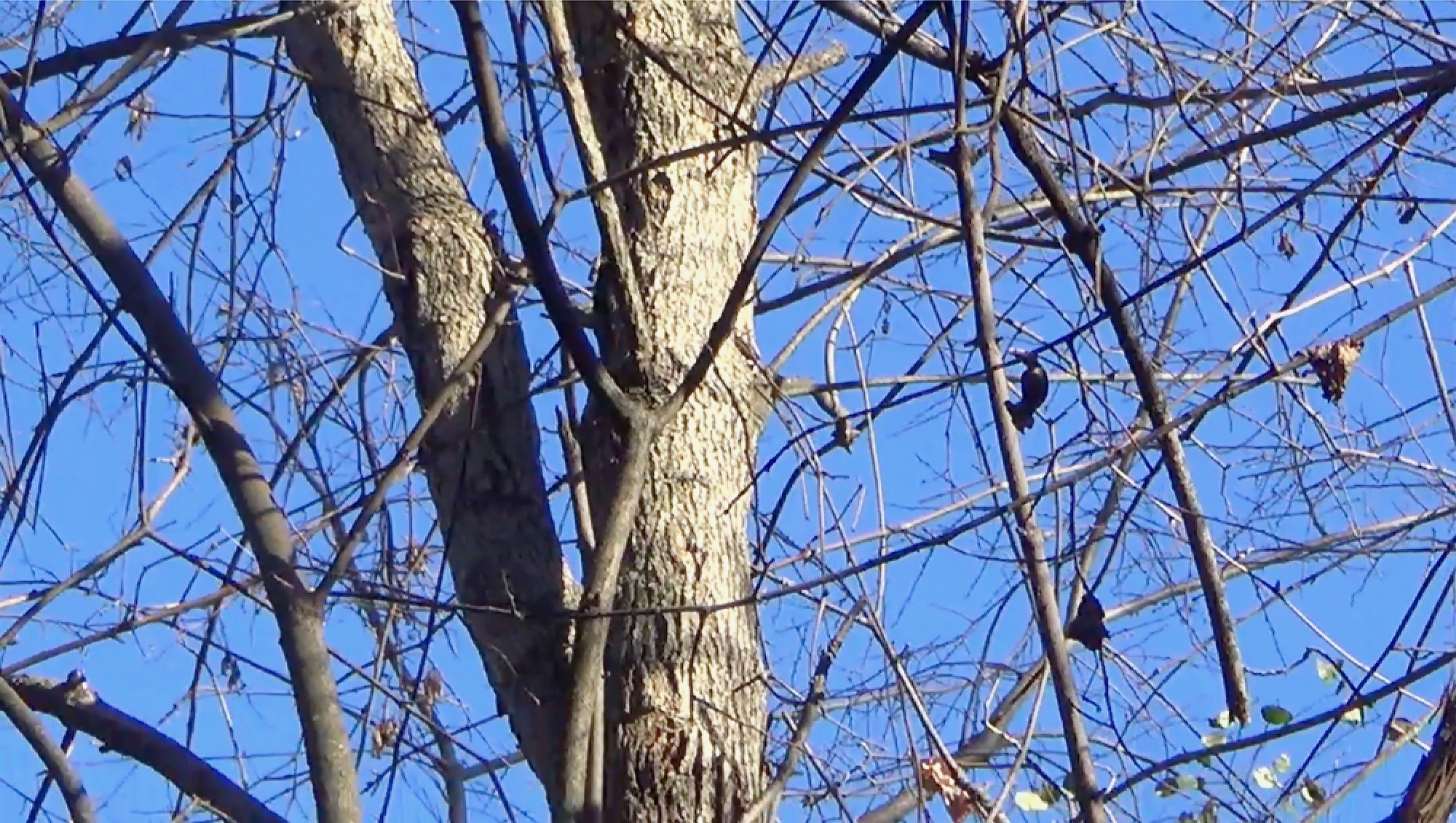
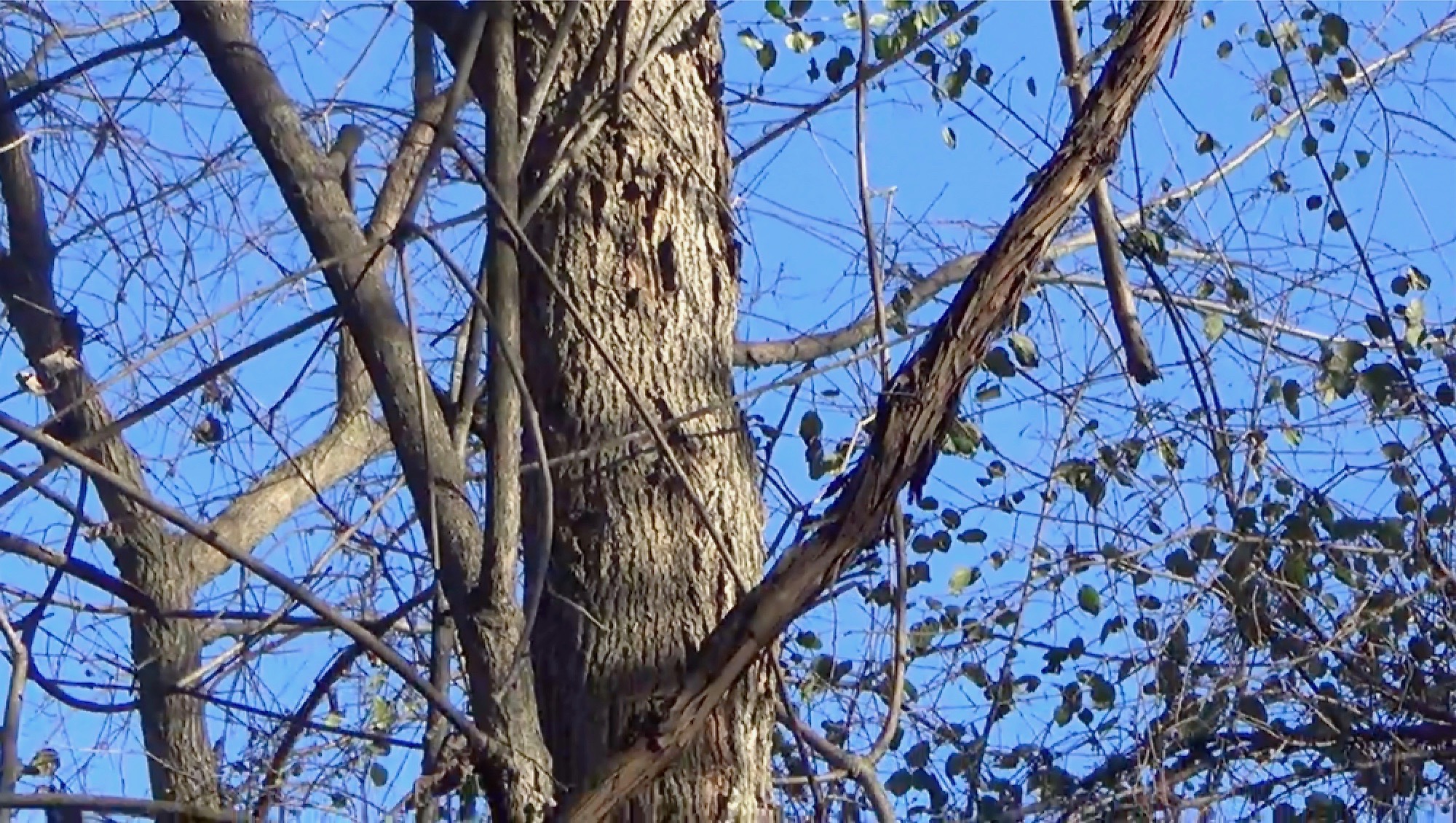
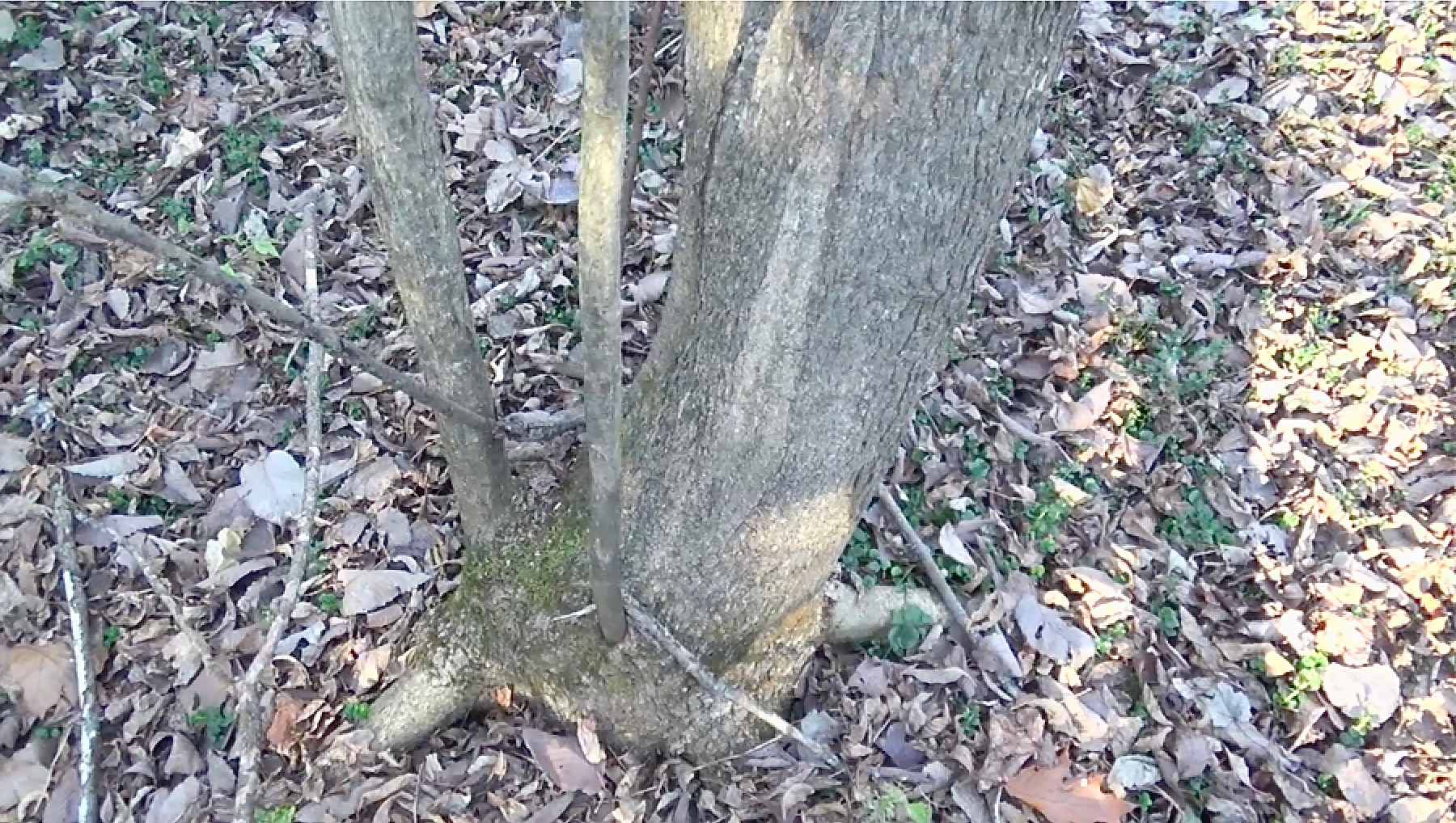
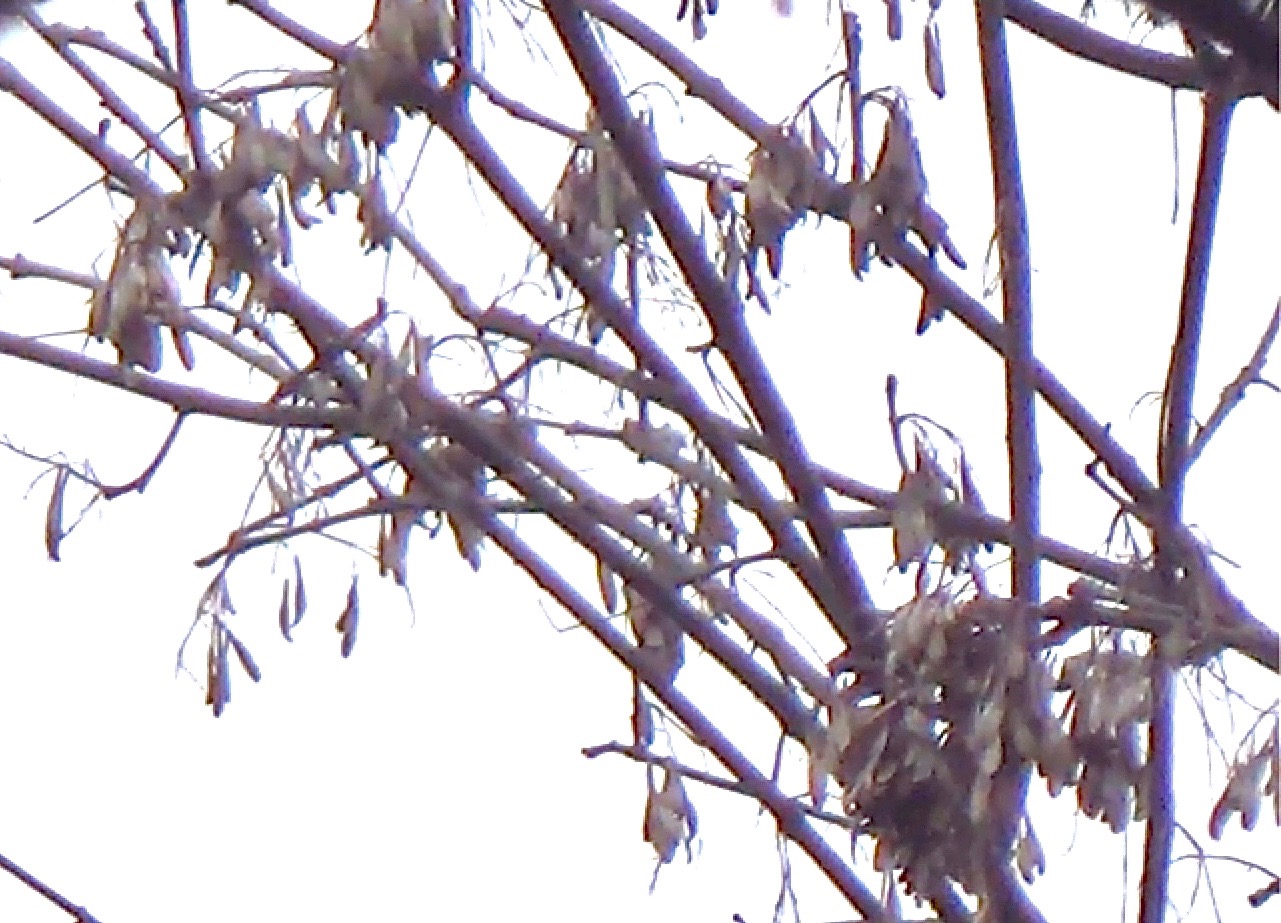
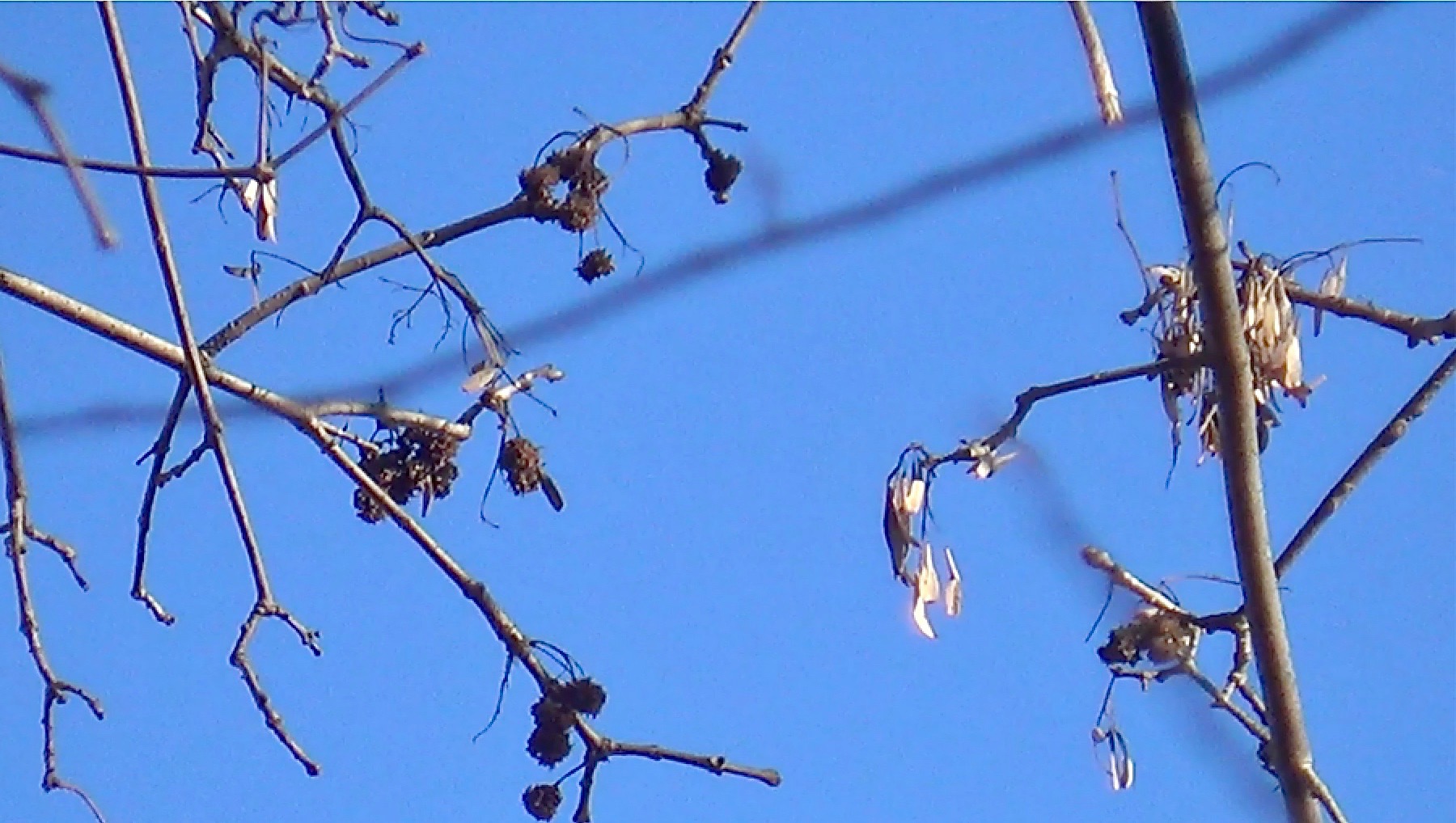 ABOVE: Blond color ASH SAMARAS are visible, but what are the dark round clusters?
BELOW: Seeds are easiest to find atop nearby mossy logs — but might some be from prior years? 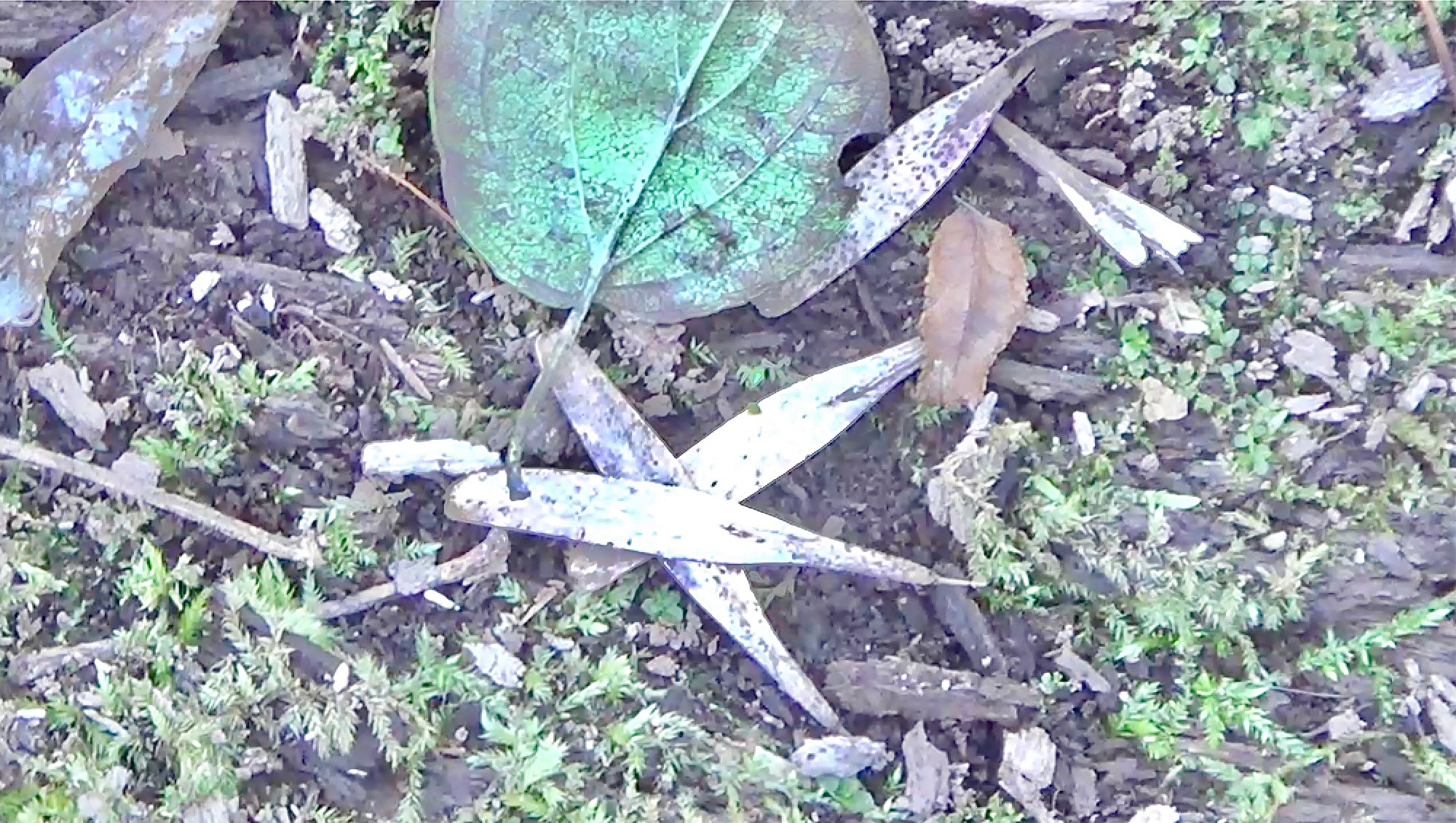 ABOVE: Seeds are easiest to find atop nearby mossy logs — but might some be from prior years?
BELOW: This SEED atop leaf litter (and nearby creeping jenny) is surely from the current year. 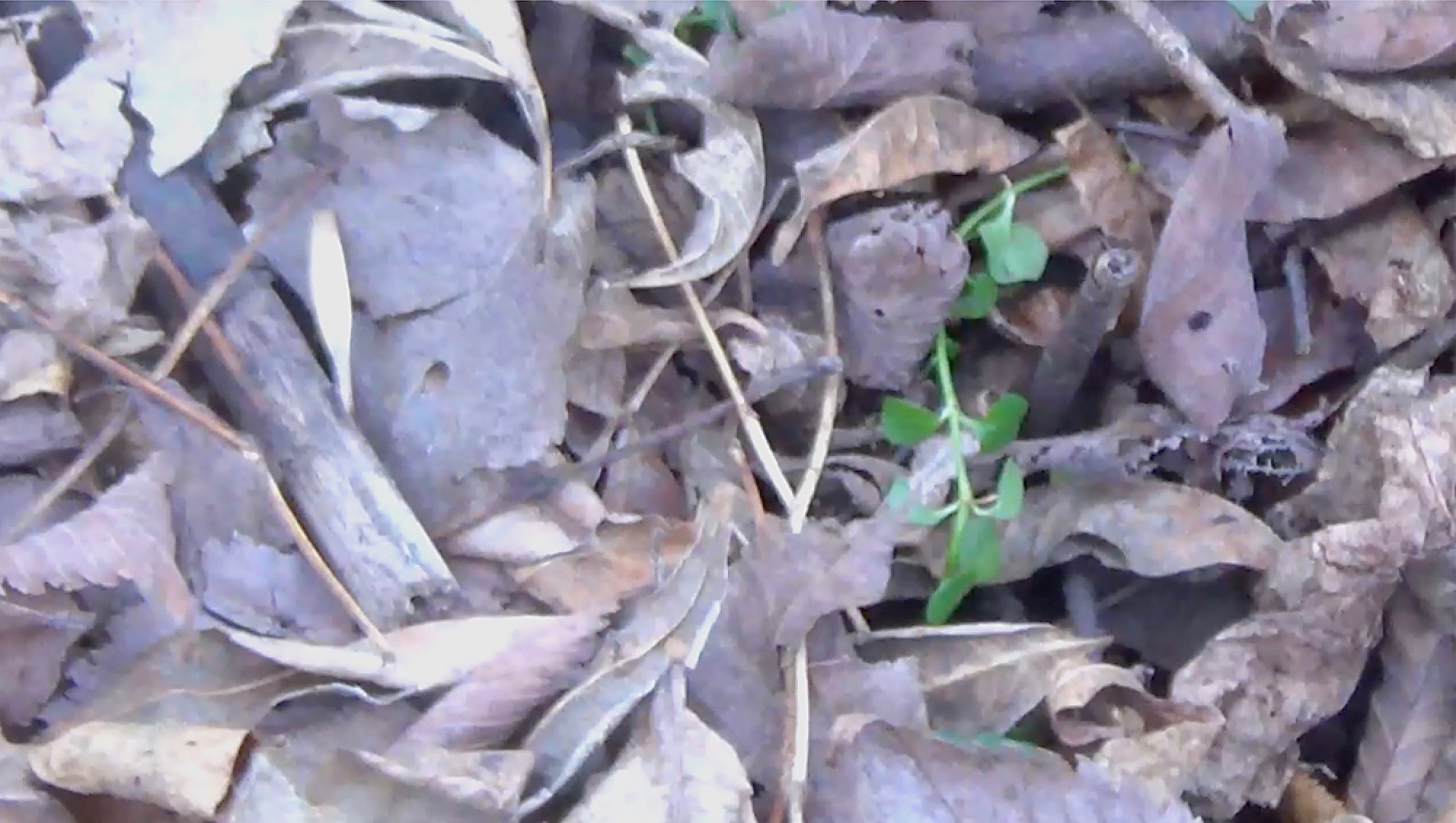
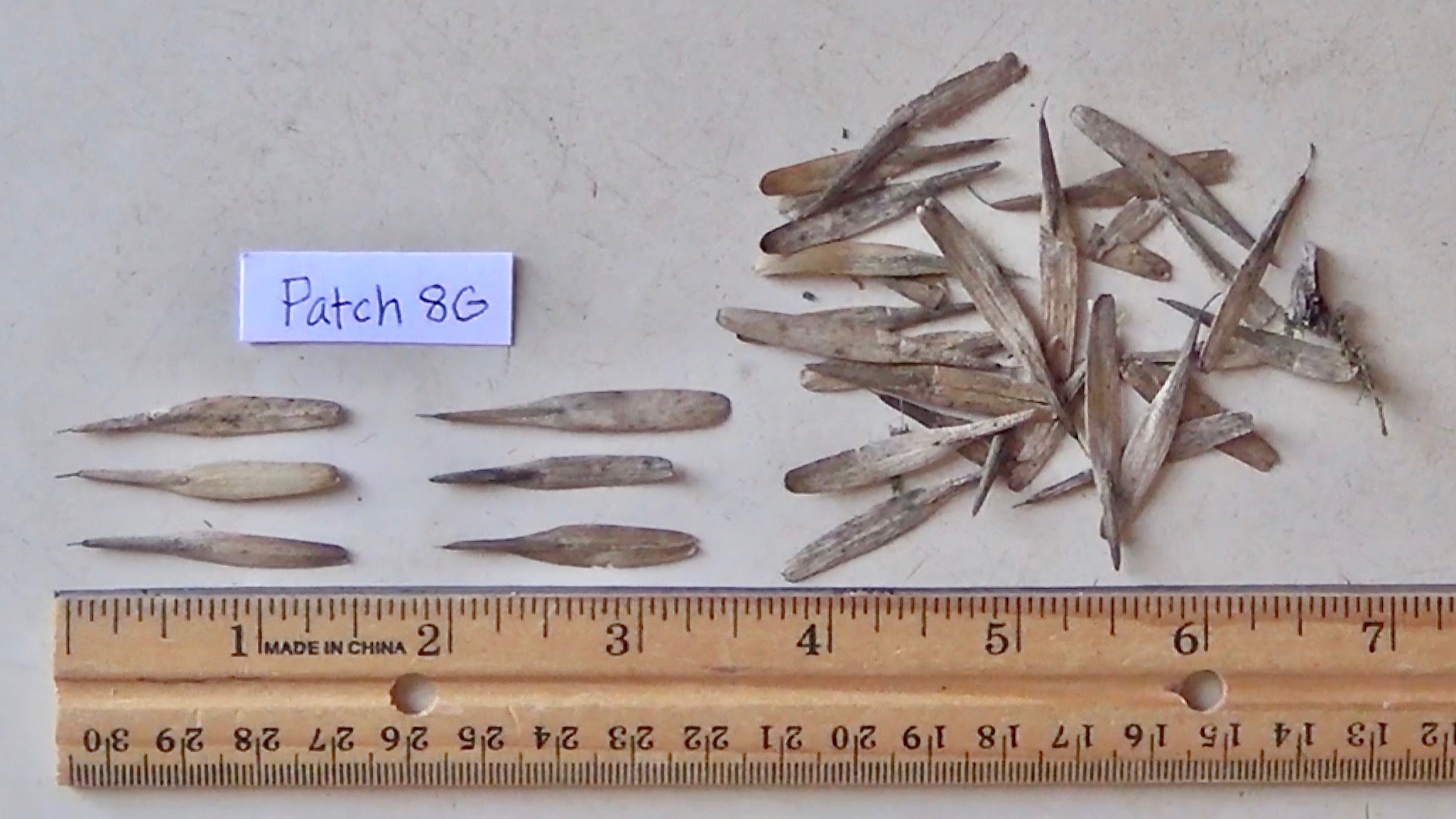 ABOVE: 6 passed the thumbnail-press viability test (rejected seeds at right).
Part 2: Ecotype of Open Canopy, Swamp Forest
"First Green Ash Mother Tree in Swamp" (12 inch DBH)
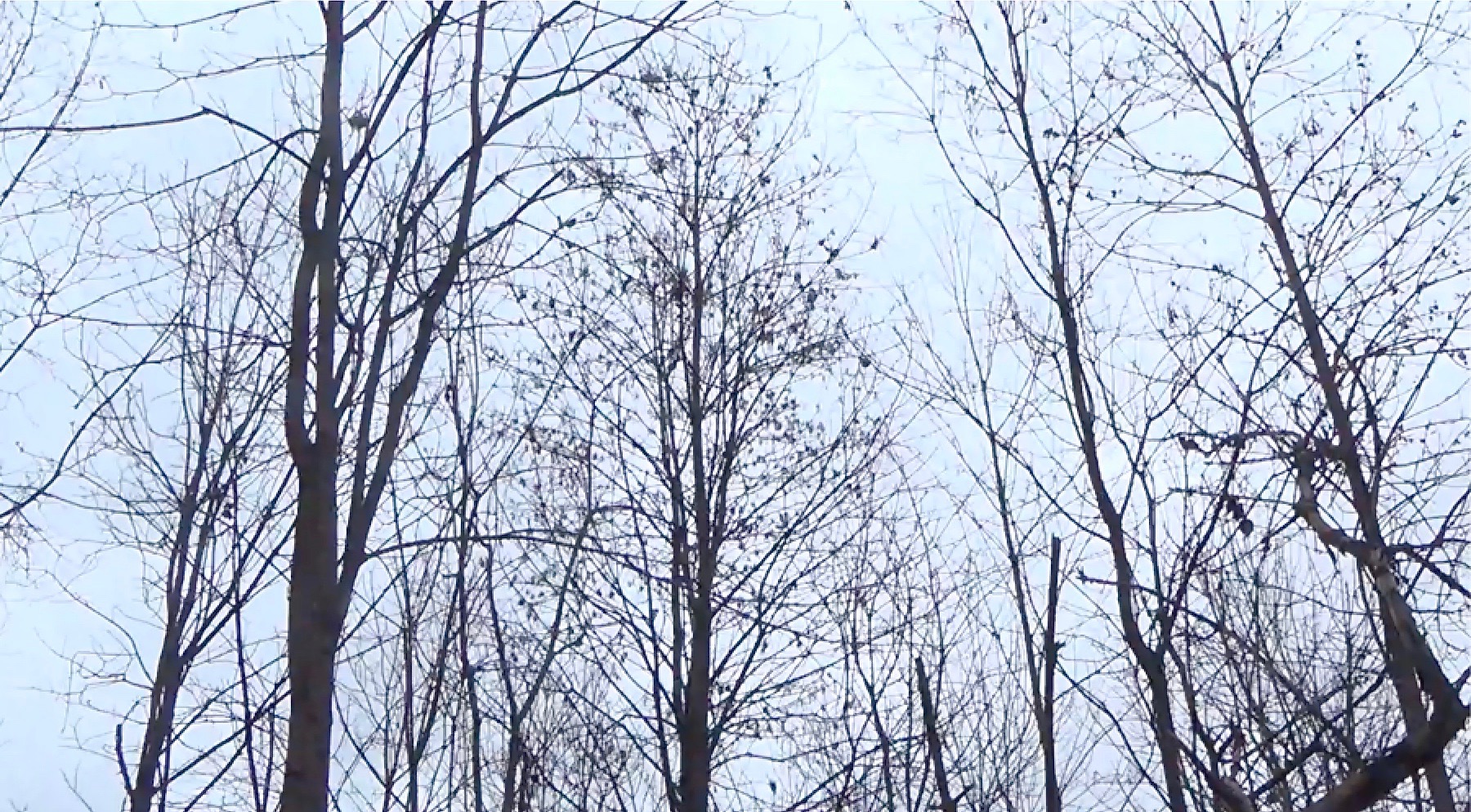
ABOVE: Seed-bearing top of "First Tree" in center (November 2026).
ABOVE: (L) Pink cloth on an epicormic sprout marks the living trunk • (R) close-up of the samaras.
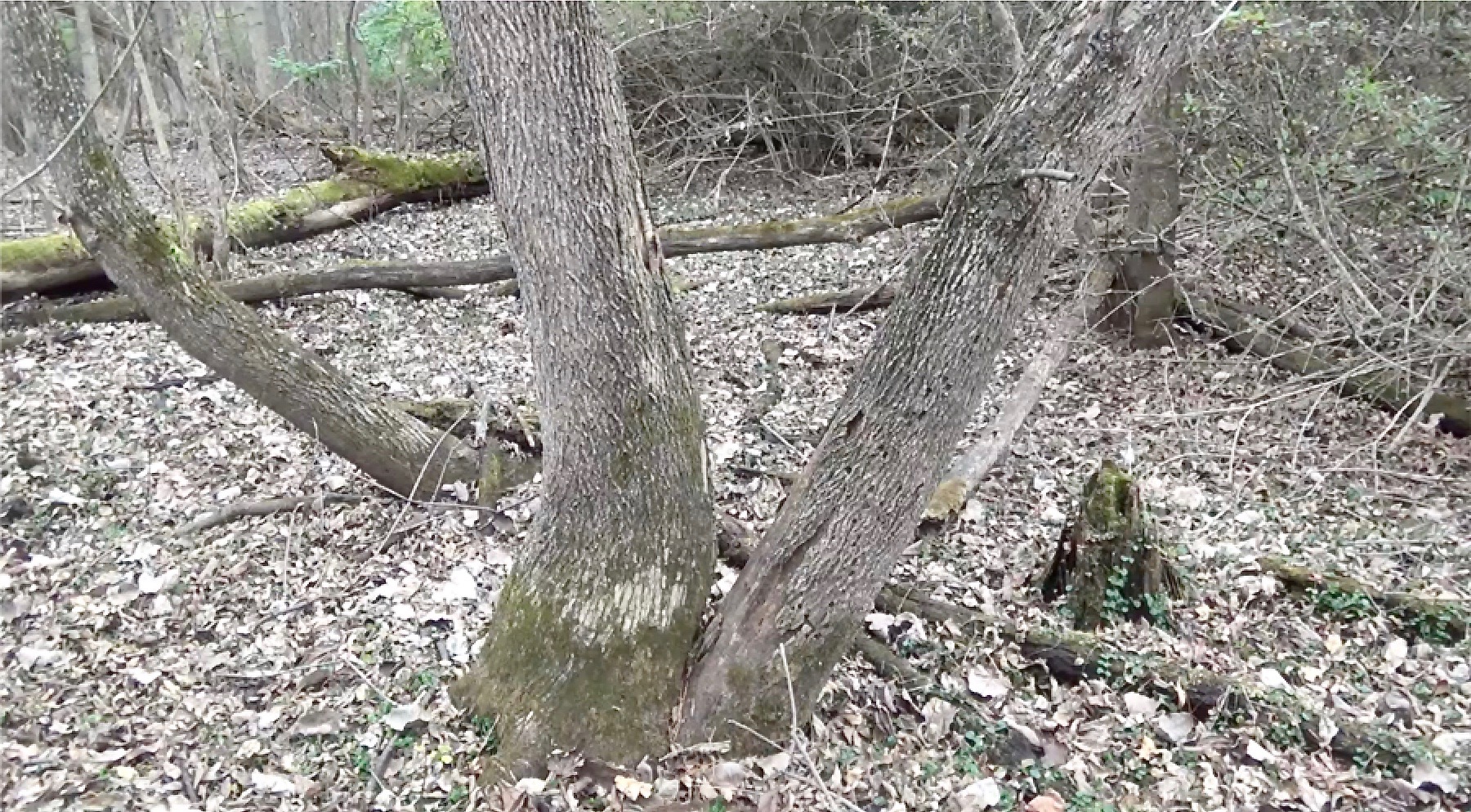
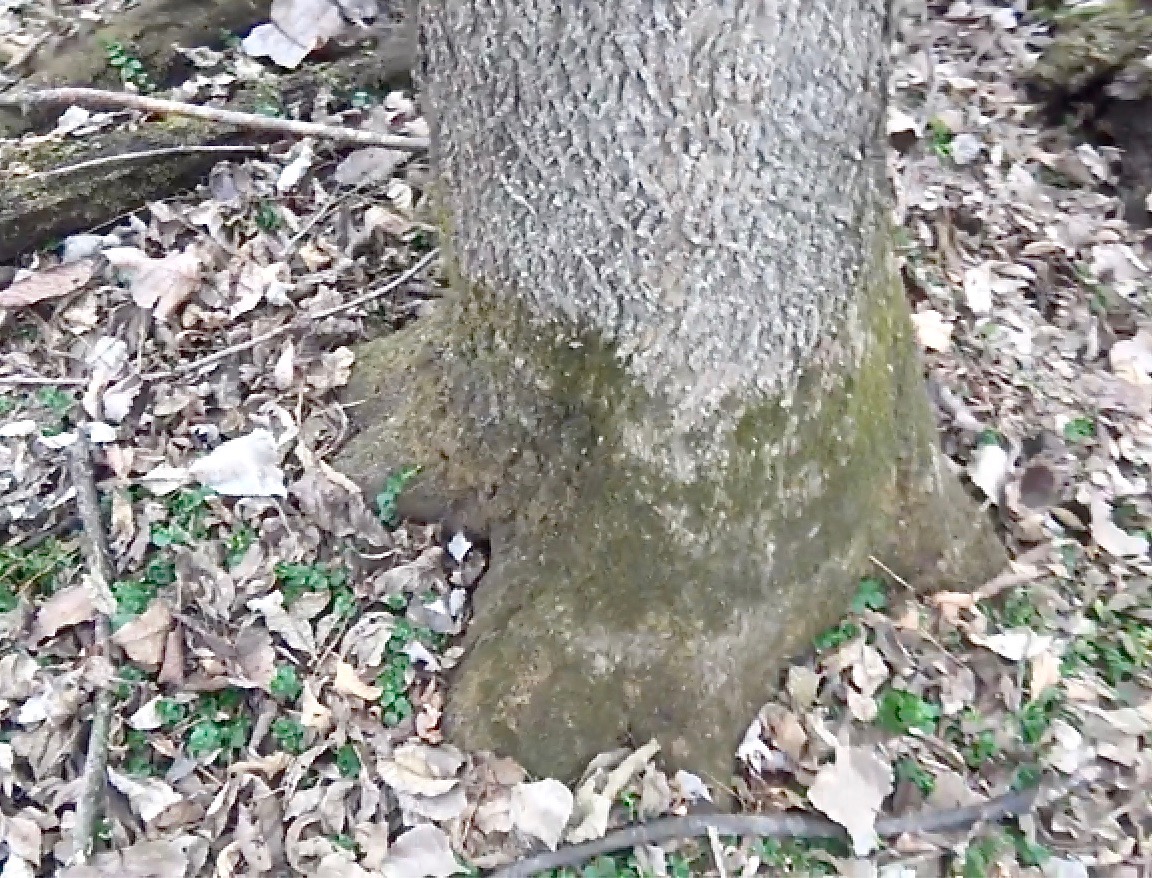 ABOVE: Base of "First Tree", with dead neighbor leaning to the right. 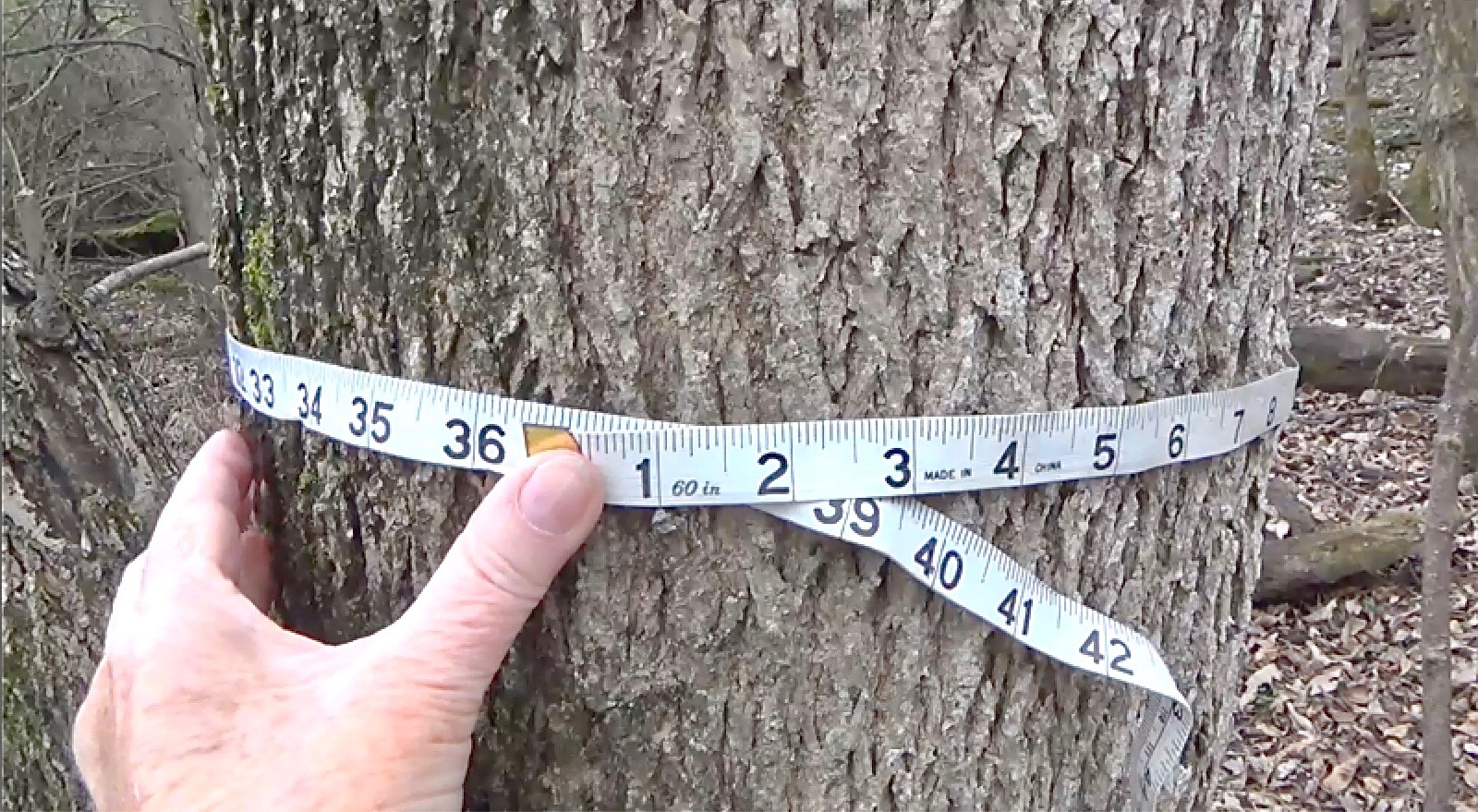
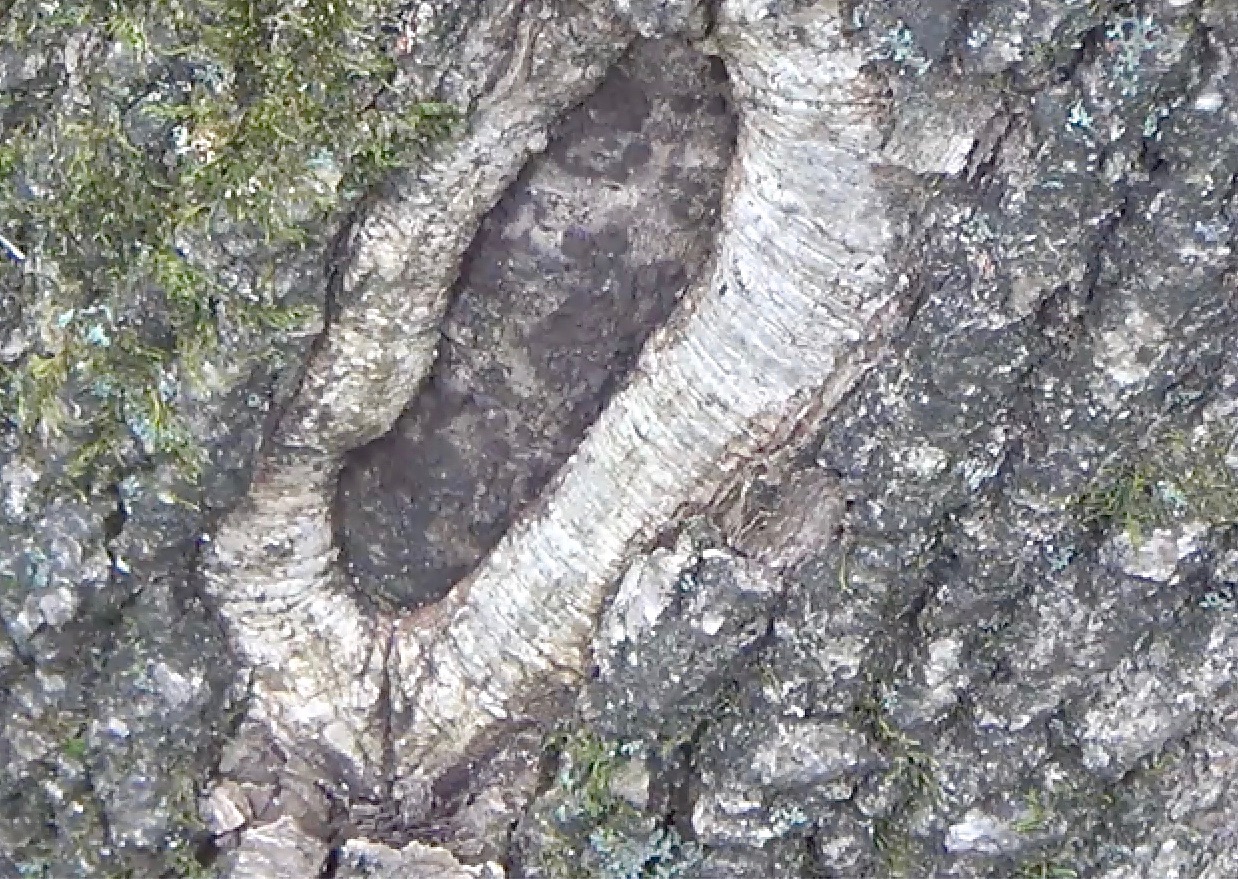 ABOVE: Circumference of 36 inches (12 inch DBH) and healed-over wound of the living tree. 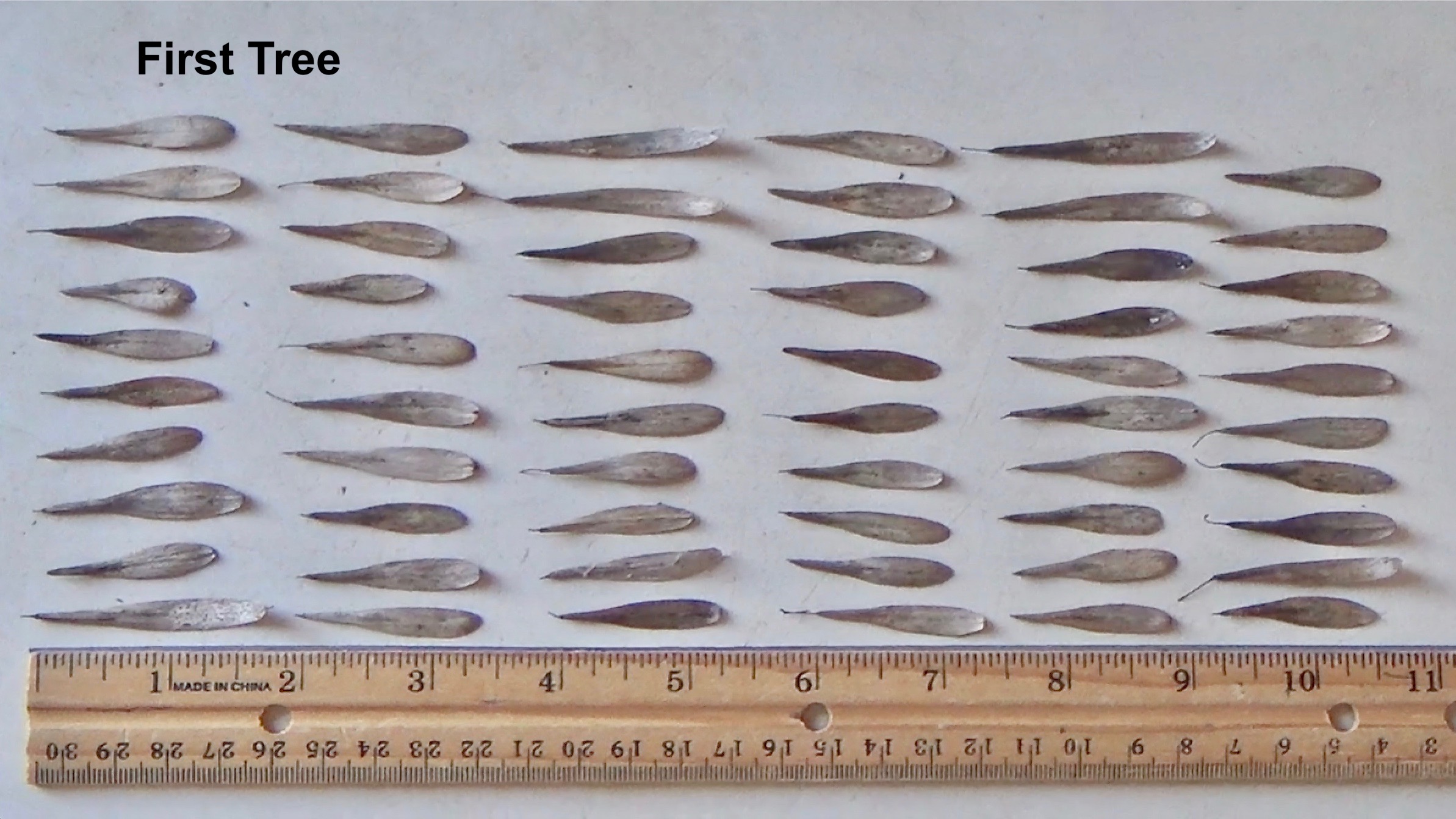 ABOVE: The 60 seeds of "First Tree" that passed the thumbnail-press viability test. 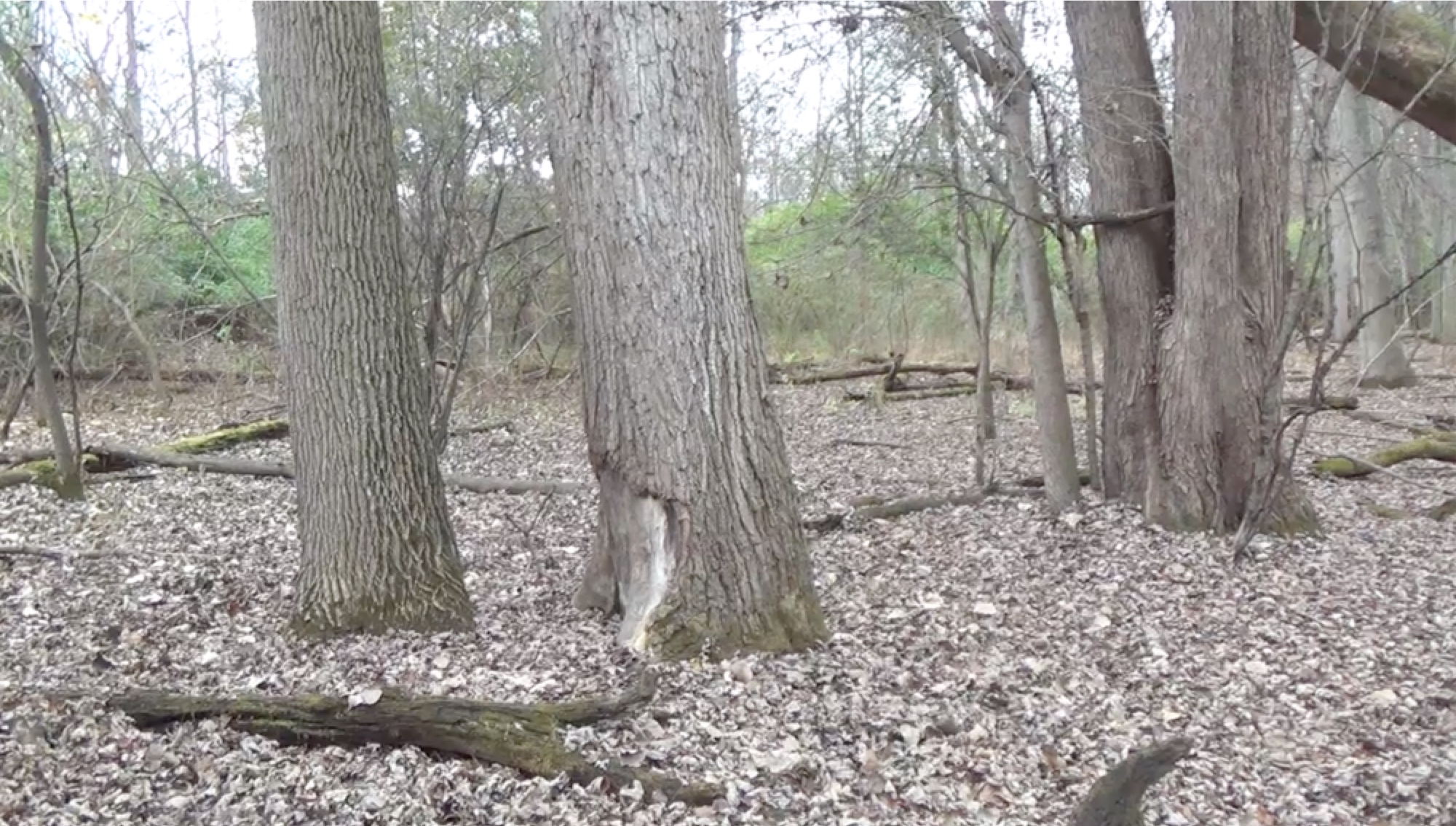 ABOVE: TO LOCATE "First Tree", find the lone "Beavertree" Cottonwood in the middle of the ephemeral pool section 30 yards farther into the swamp (southward) than the cluster of giant RED MAPLE & COTTONWOODS dominating the area adjacent to Pawpaw Site 8h. Notice the wounded area at the base of center tree. After the beaver finished dining, the tree had no problem healing the edges of the wound and continuing to thrive.
BELOW: Standing at Beavertree and facing southward deeper into the swamp, one can see "First Tree", marked here with a yellow star. Notice the tumble of logs. The large mossy ones are likely the elders that cast their final pollen and seeds soon after the Emerald Ash Borer entered the Detroit area in the 1990s. First USA documentation of the Asian beetle happened in 2002 less than 20 miles from here.
• This is GROUND ZERO — and thus likely to be among the first to have NEXT GENERATION recruits mature into MOTHER TREES and begin to cast their own seeds. 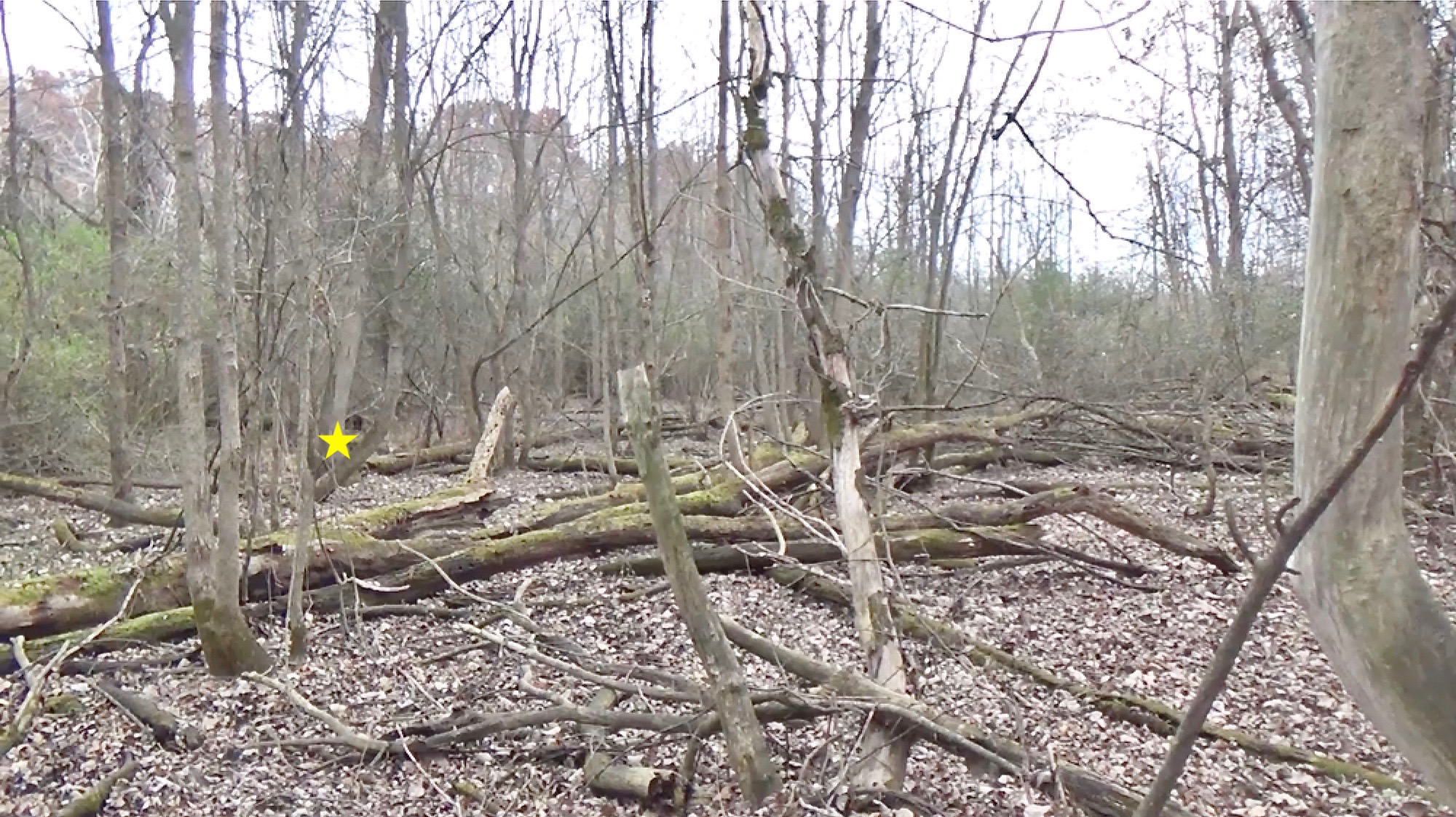
"Far Triplet Mother Trees" (10, 6, and 8 inch DBH)
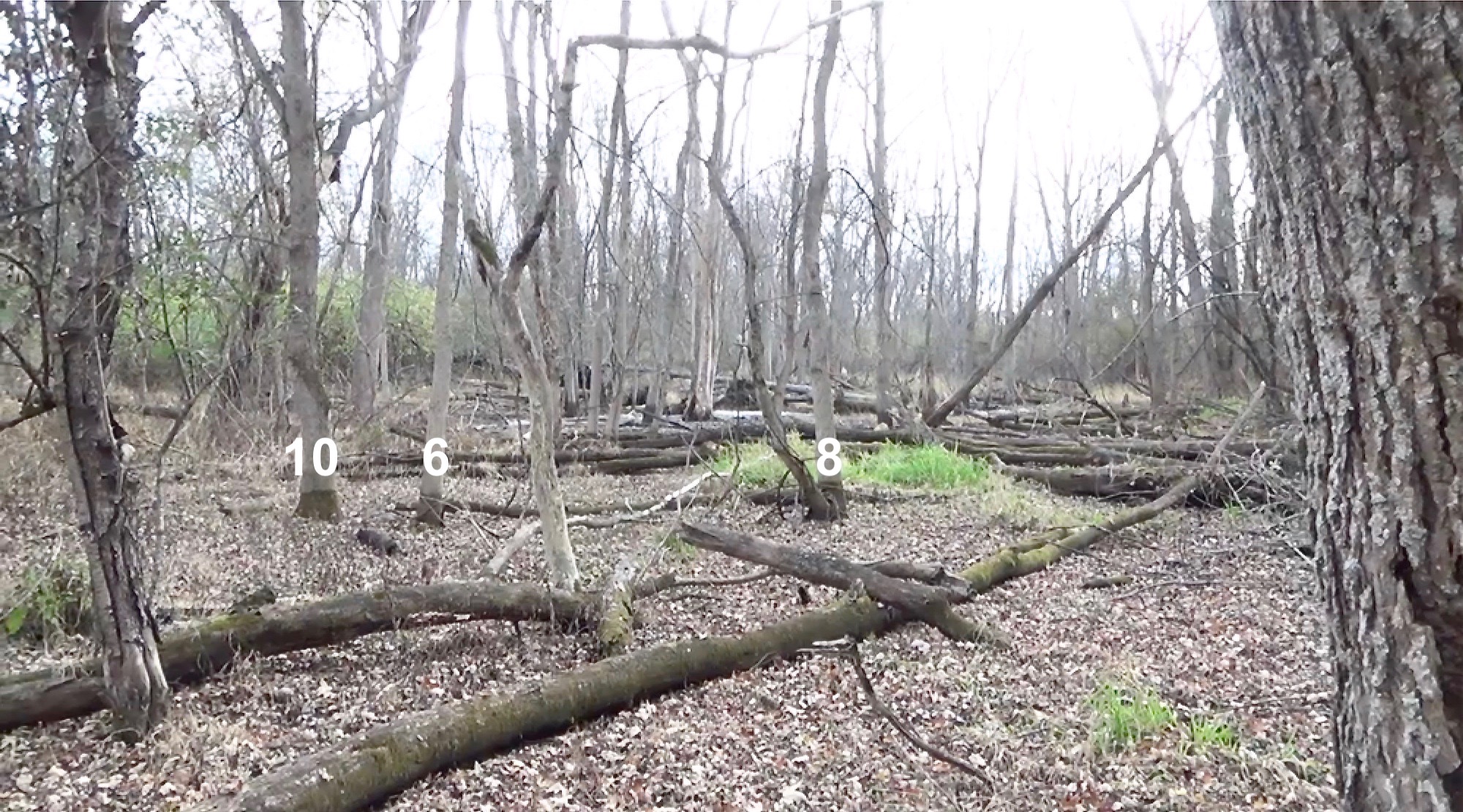
ABOVE: Three trees (numbers are DBH) with samaras farther into the swamp. Grassy knoll marks the spot.
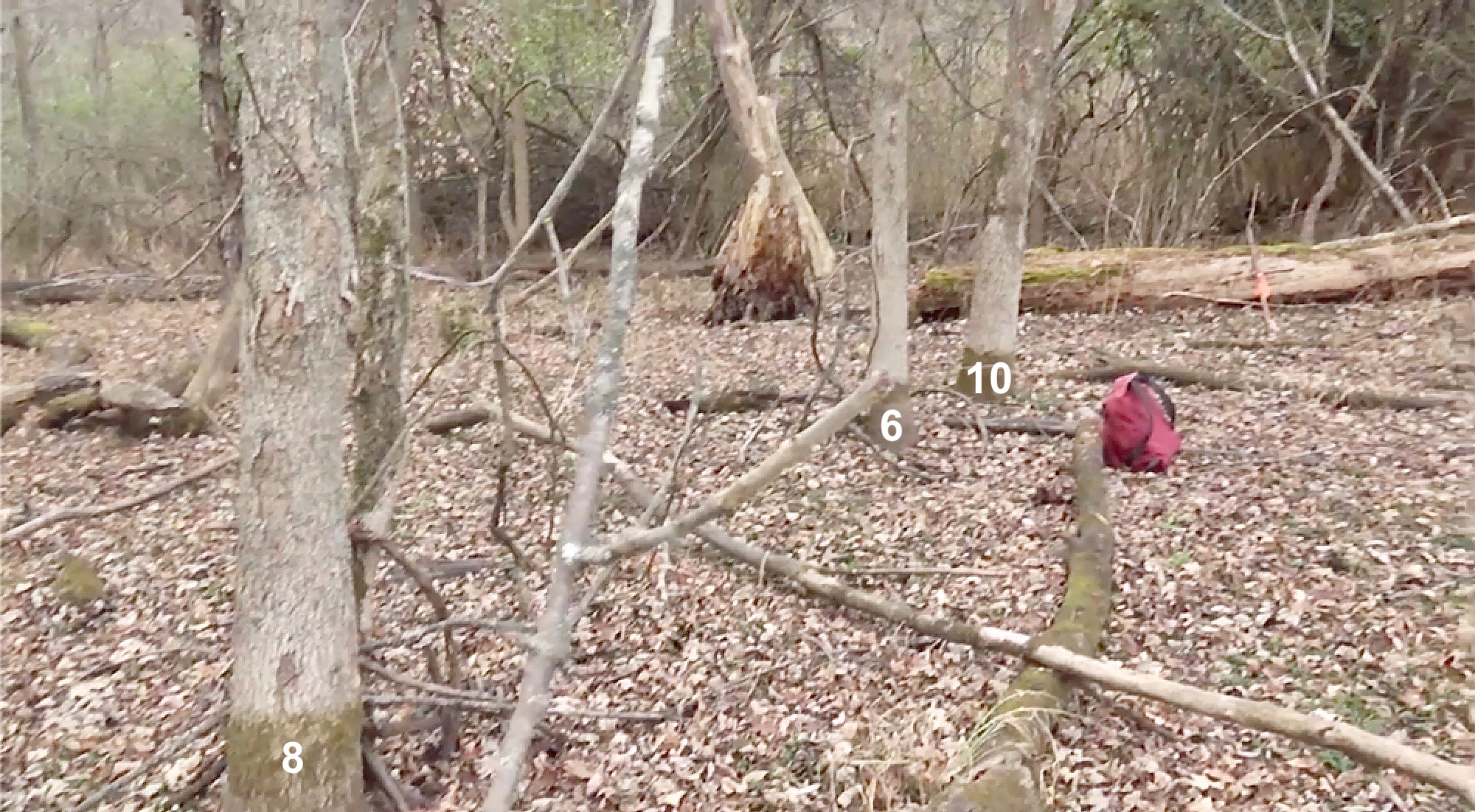 ABOVE: Another view of "Far Triplet" from near the grassy knoll. The blond stump and fallen tree in back is a good indicator for finding this group again. It has a mossy top, which is where most of the seeds were collected. 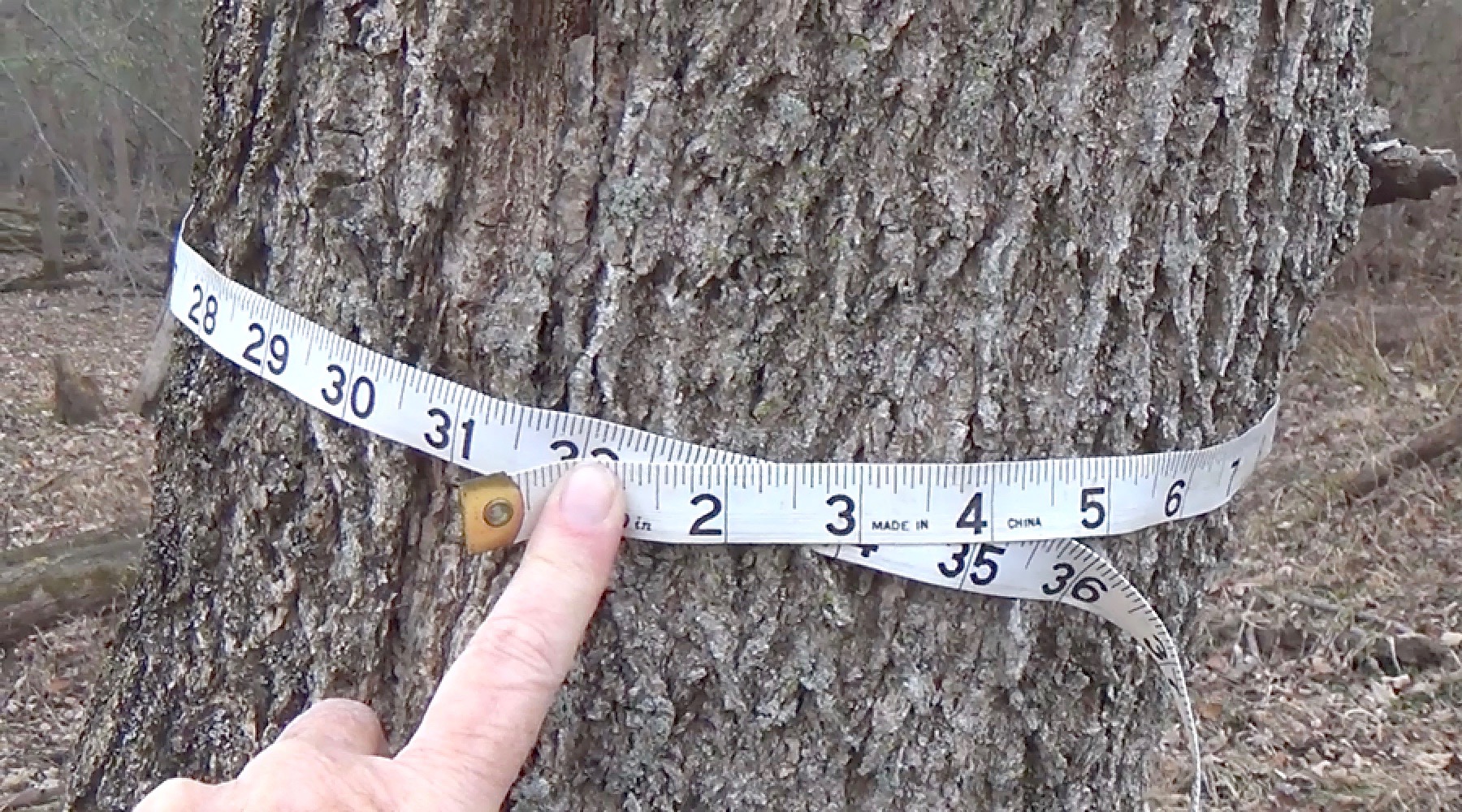
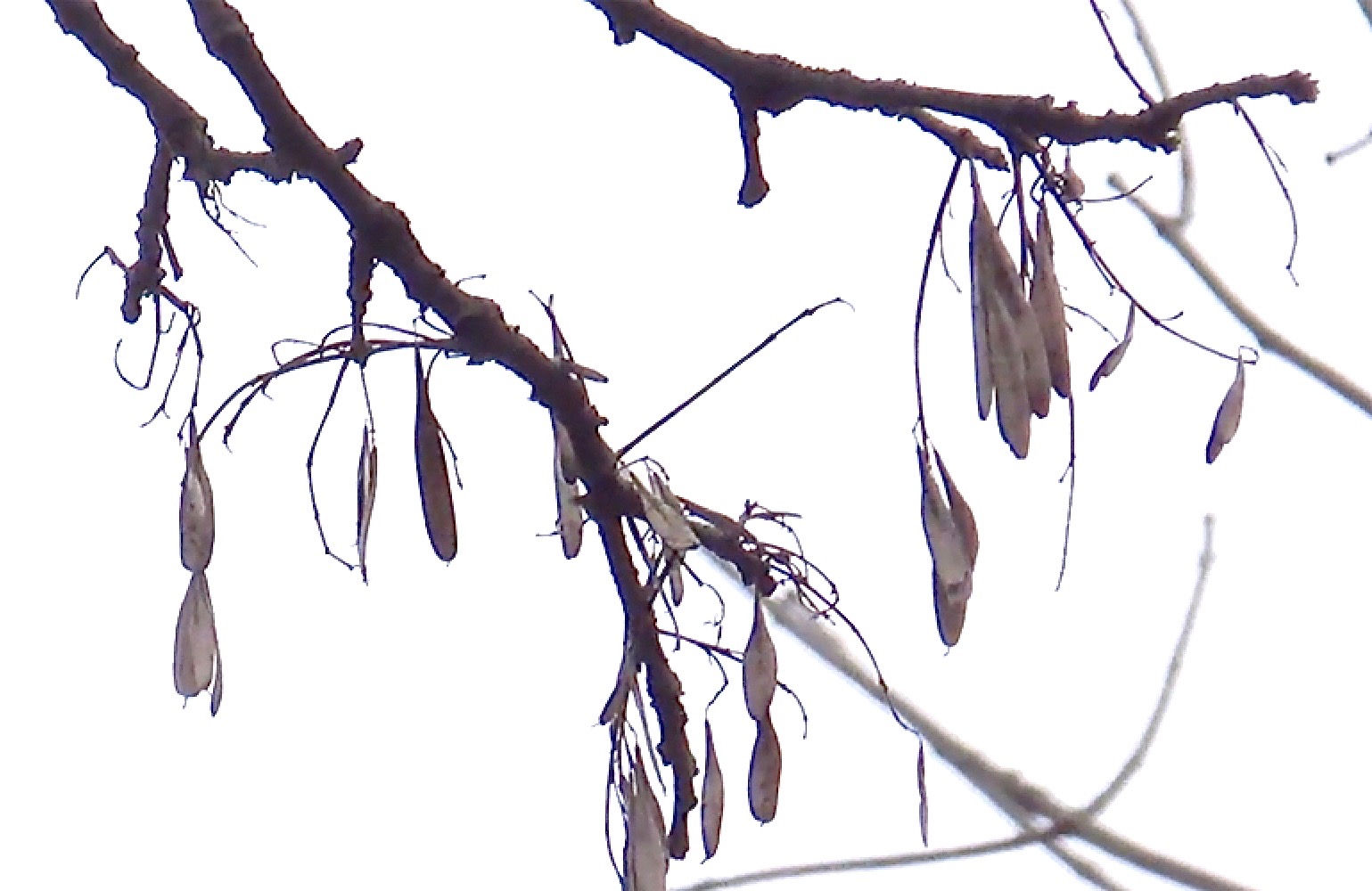
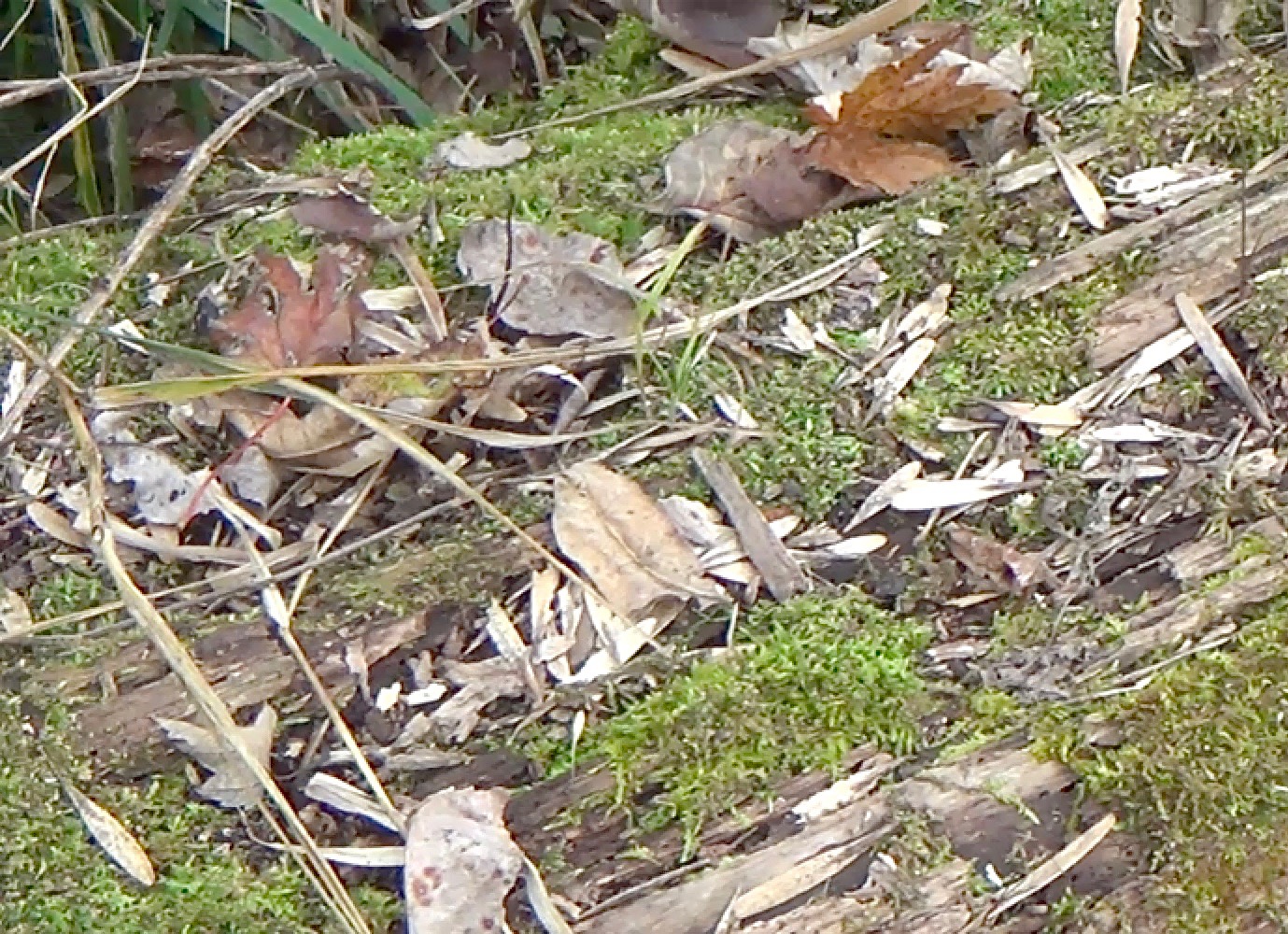
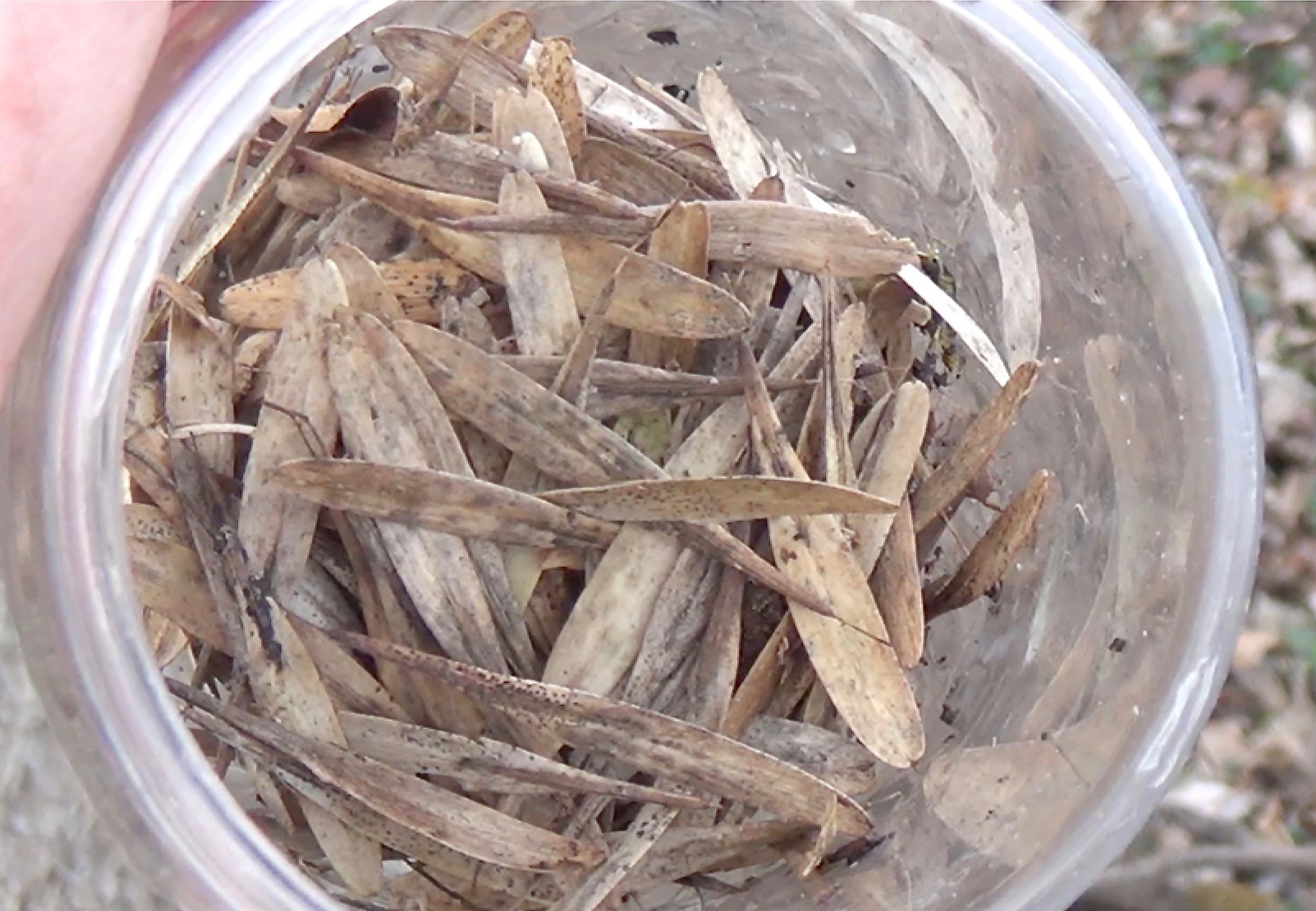
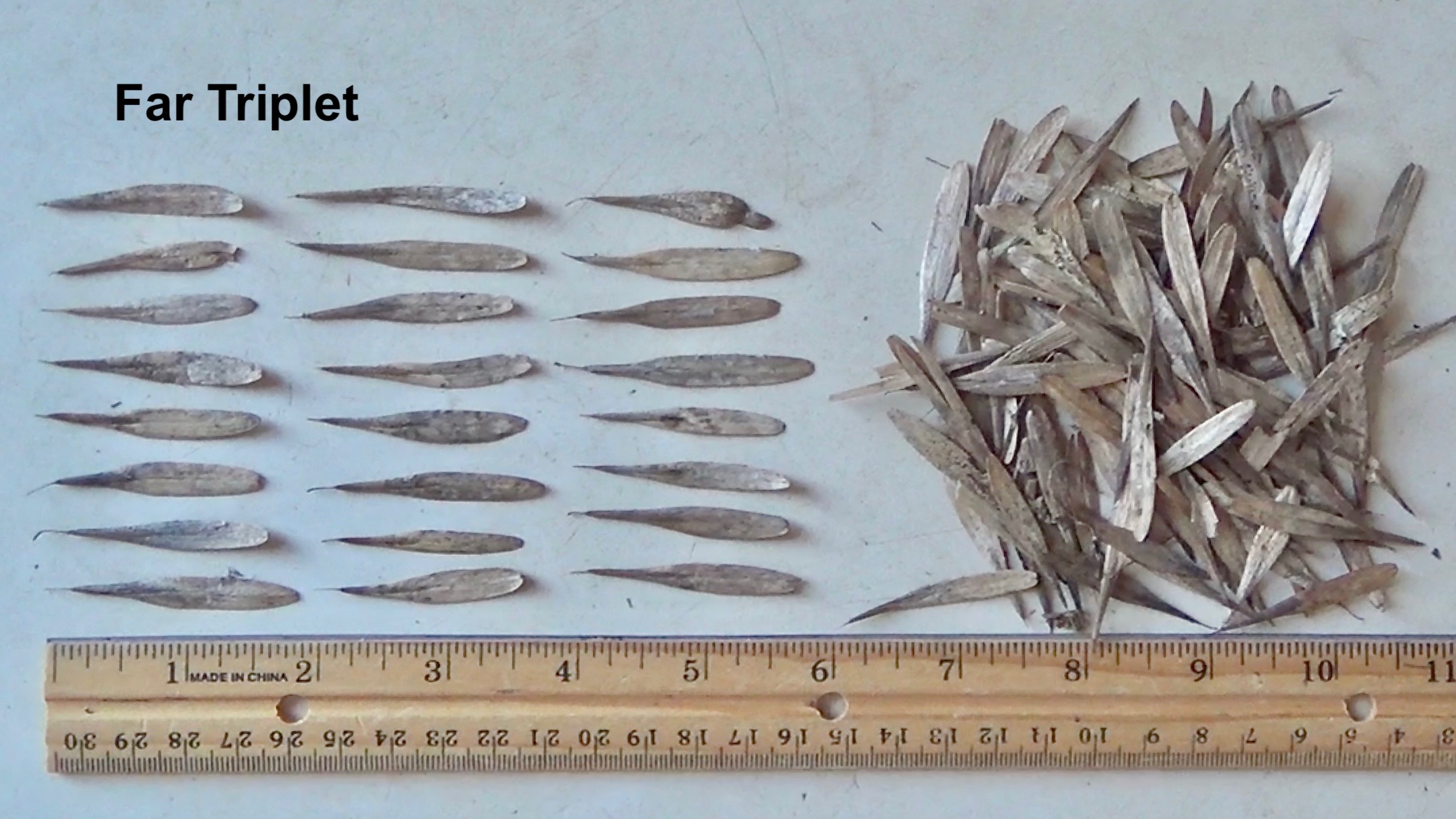
ABOVE: 24 seeds passed the thumbnail-press viability test (rejected seeds at right).
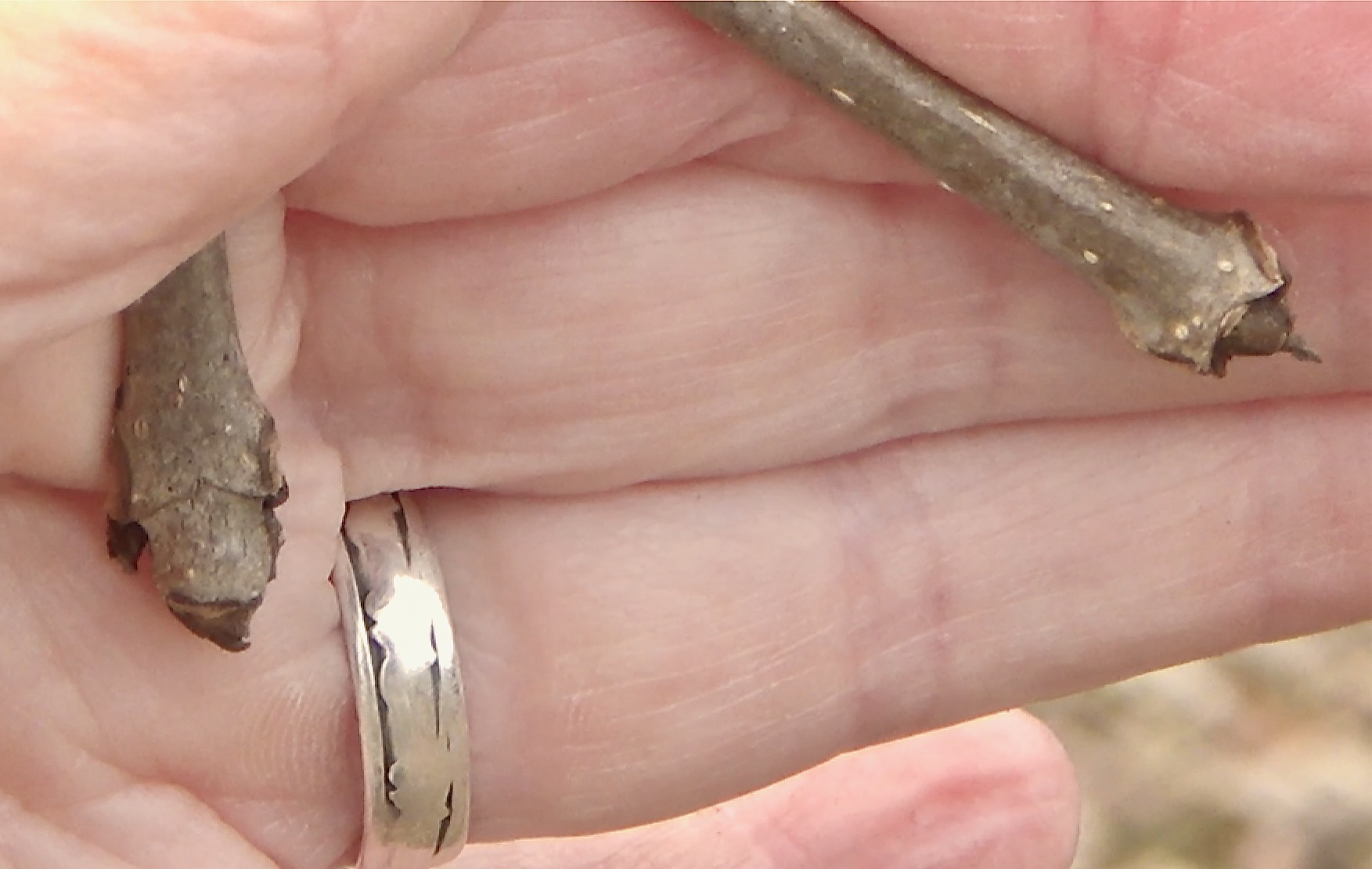
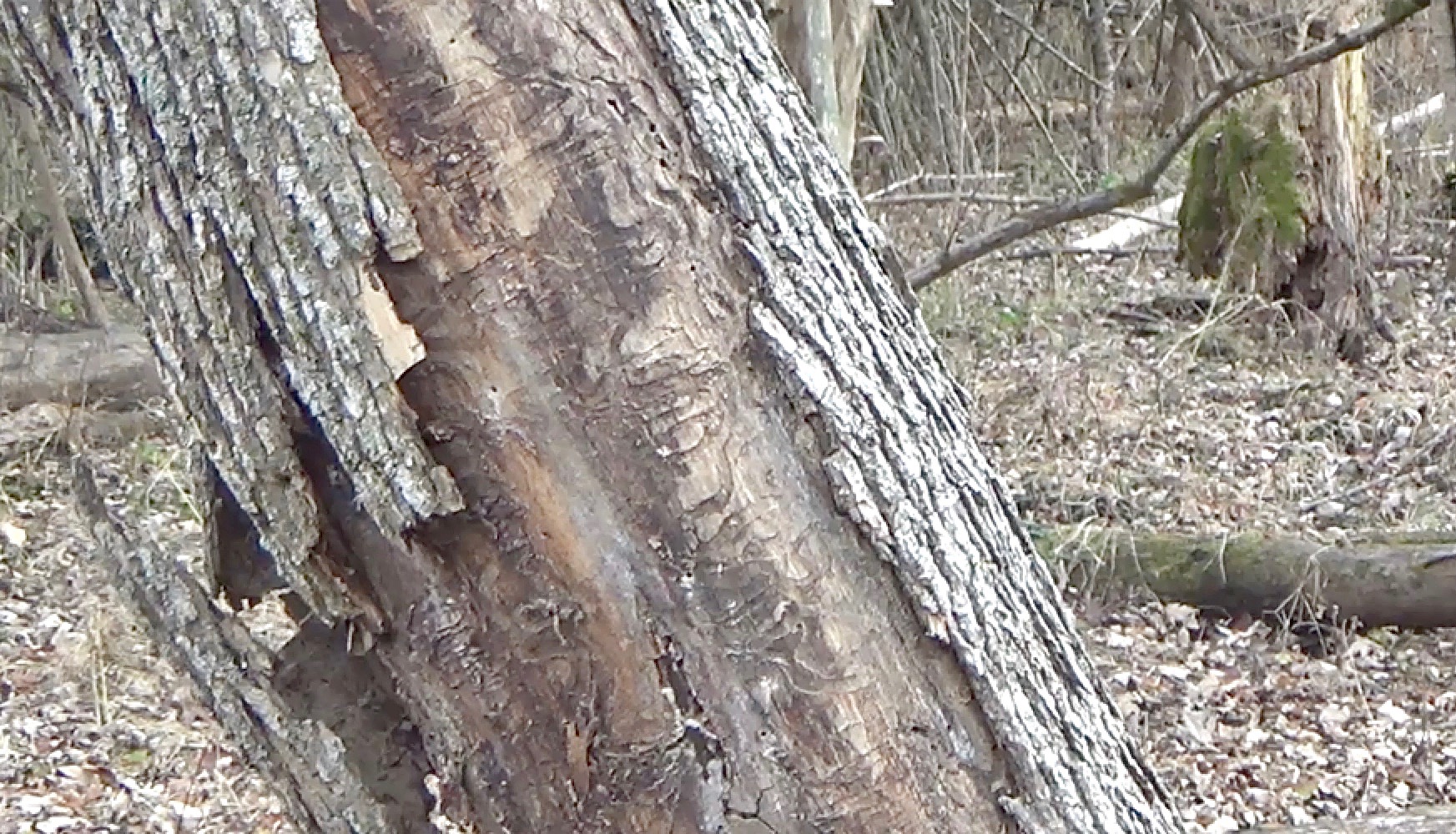
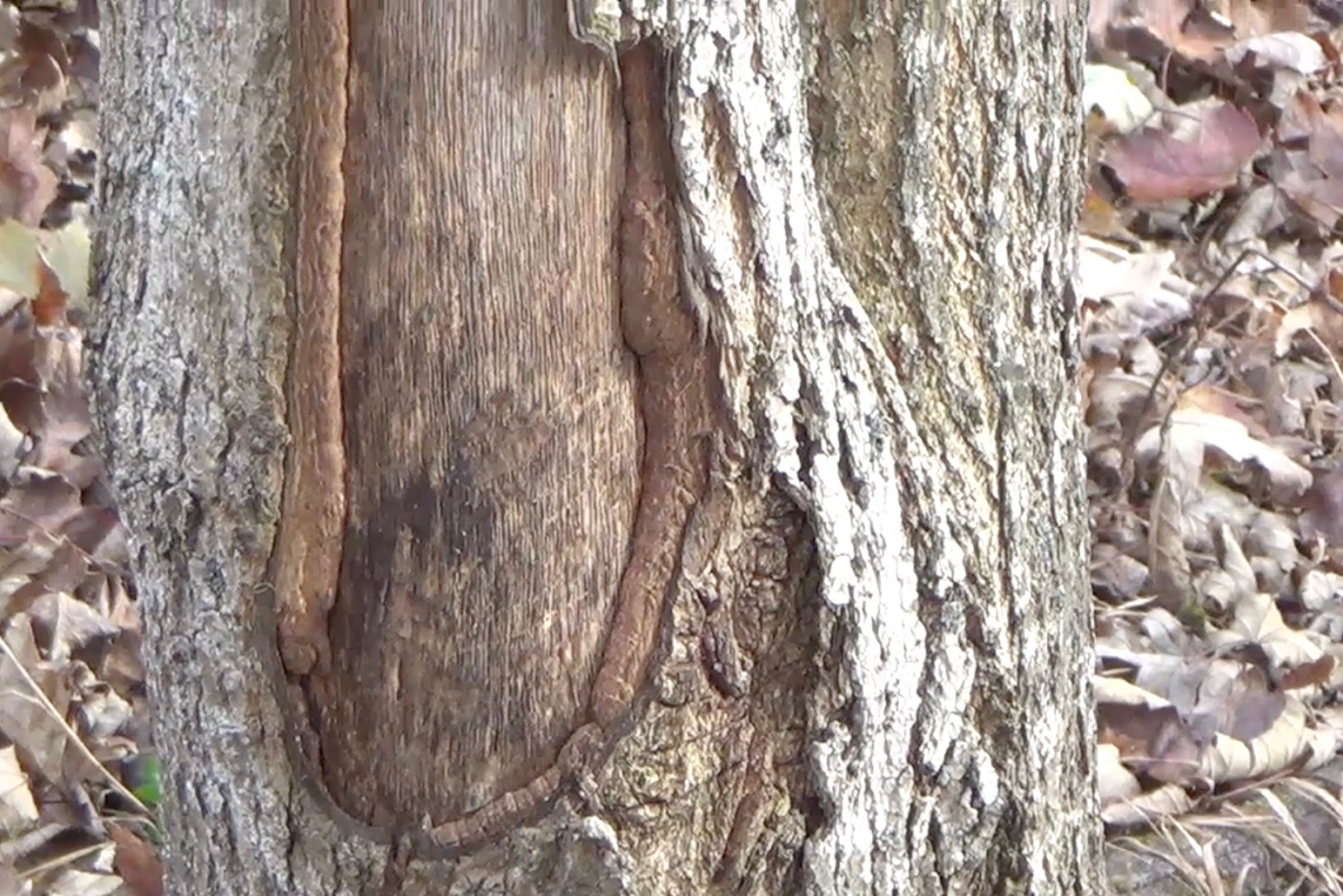
ABOVE: Dead trees often show lots of UNHEALED BARK (L), while living trees tend to show HEALED BARK (R). See at bottom the 2025 paper by Mathieu and McCullogh, which reports: "White ash often produced wound periderm around old EAB larval galleries, then laid down new sapwood and bark, effectively reestablishing phellogen and cambial integrity
over the injury. We observed this response, which may contribute to the persistence of colonized trees, on most white ash trees in Plantation A, but it was rare on green ash."
"Far Singlet Mother Tree" (4 inch DBH)
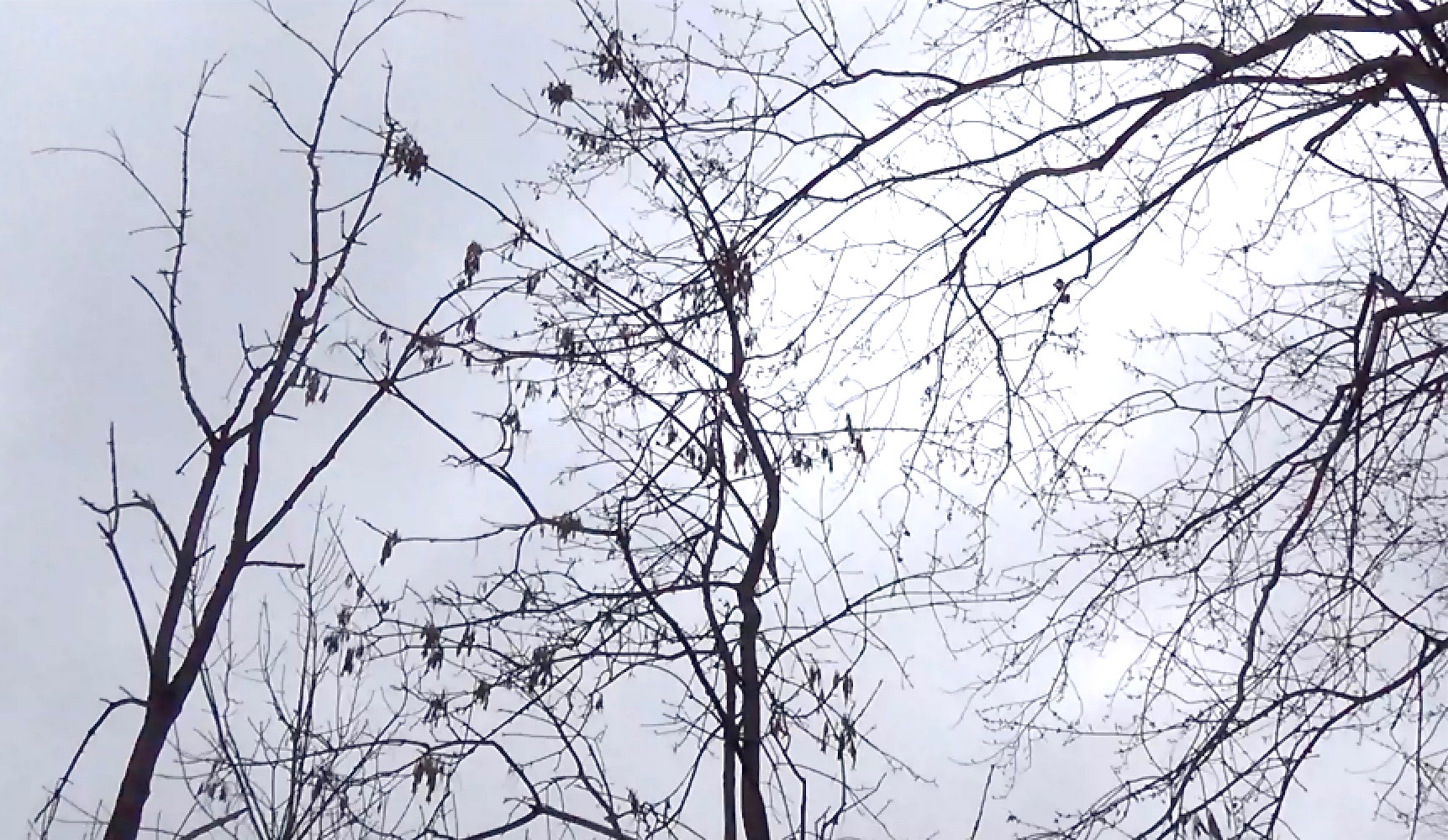
ABOVE: Samaras hanging from the top of the "Far Singlet" ash.
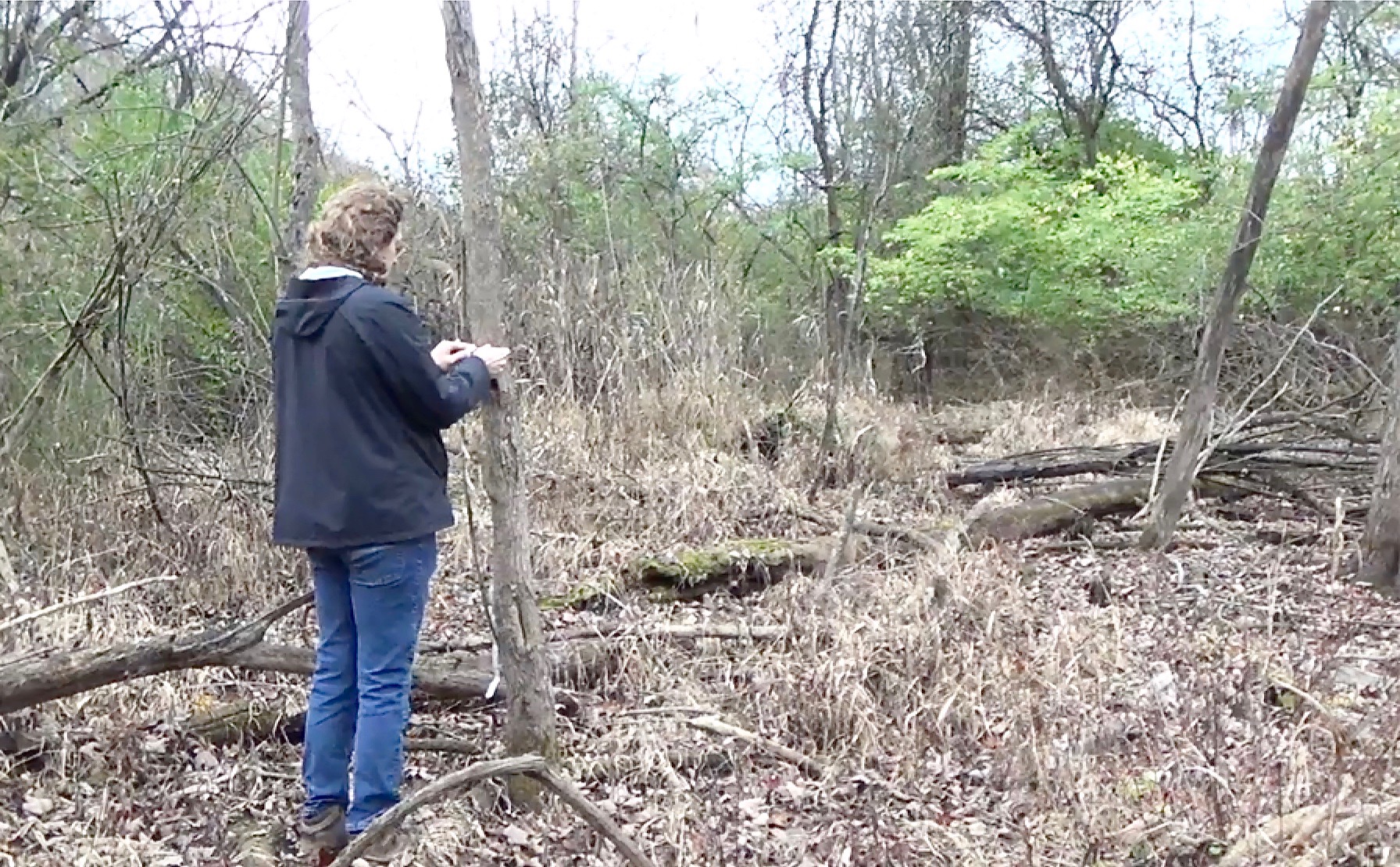
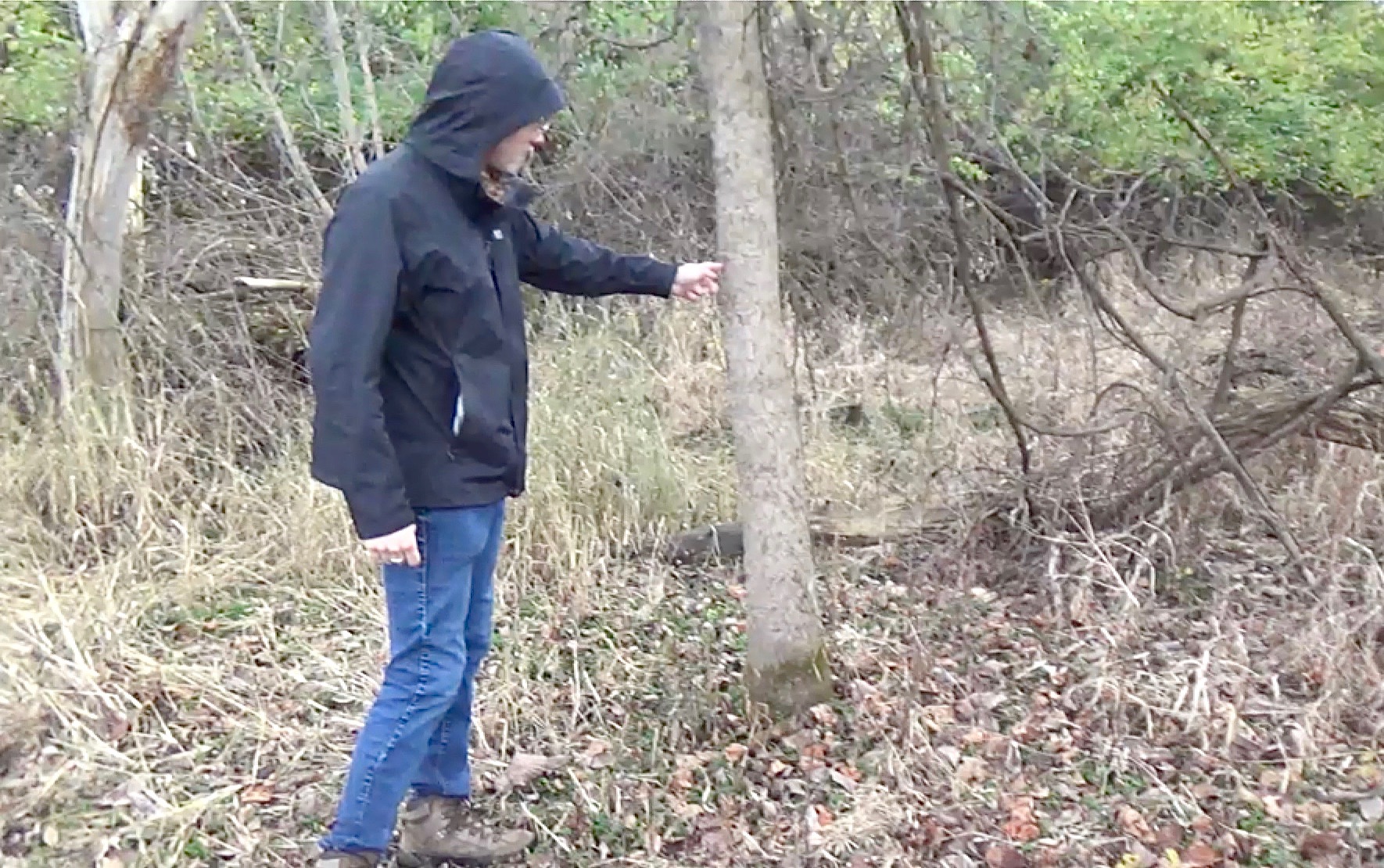
ABOVE: Luke measures 12 inch circumference (4 inch DBH) on "Far Singlet".
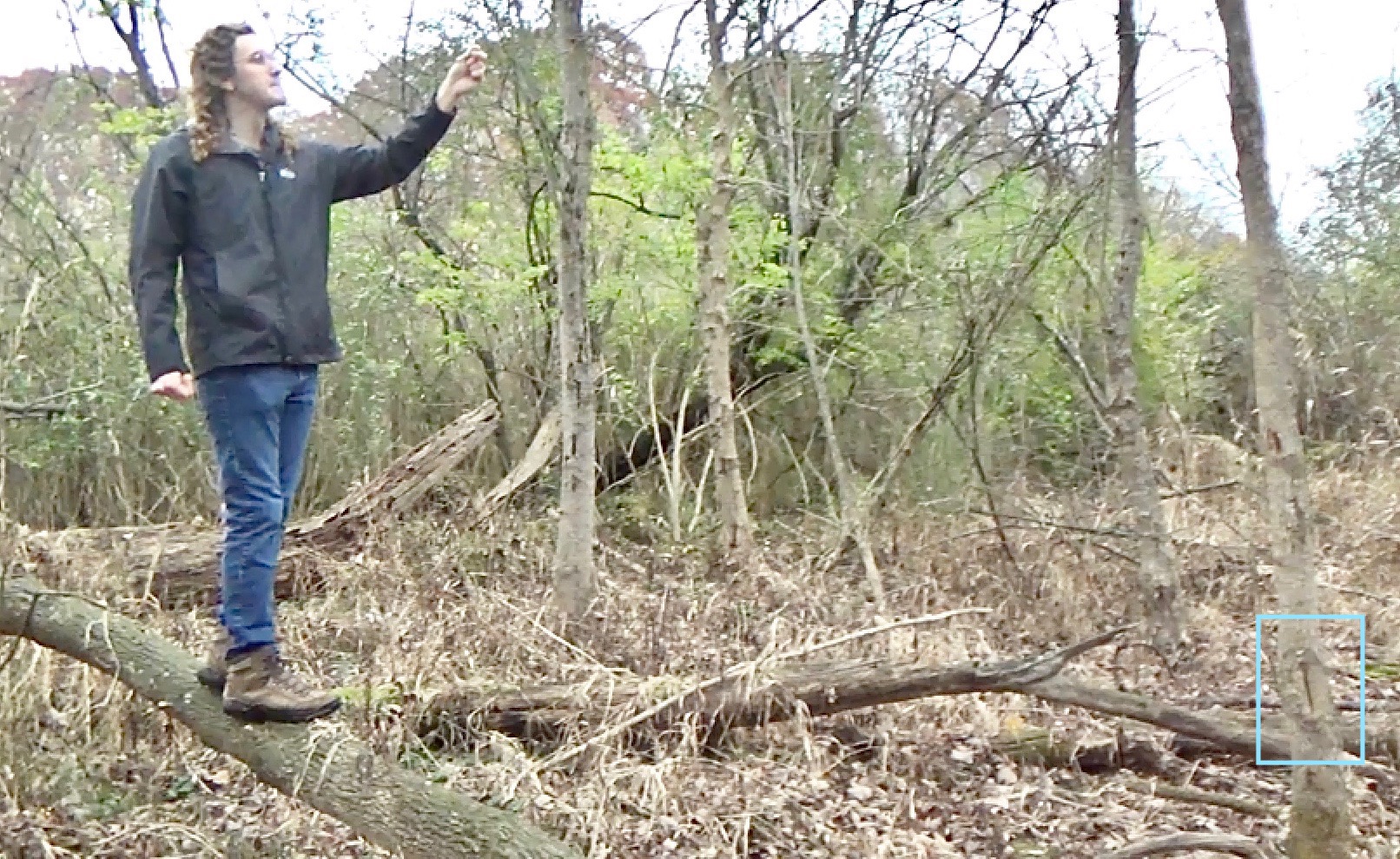
BELOW: Luke touches a bunch of samaras at the tip of a lower branch.
Blue rectangle shows the wound at the mother tree's base (also visible in above image).
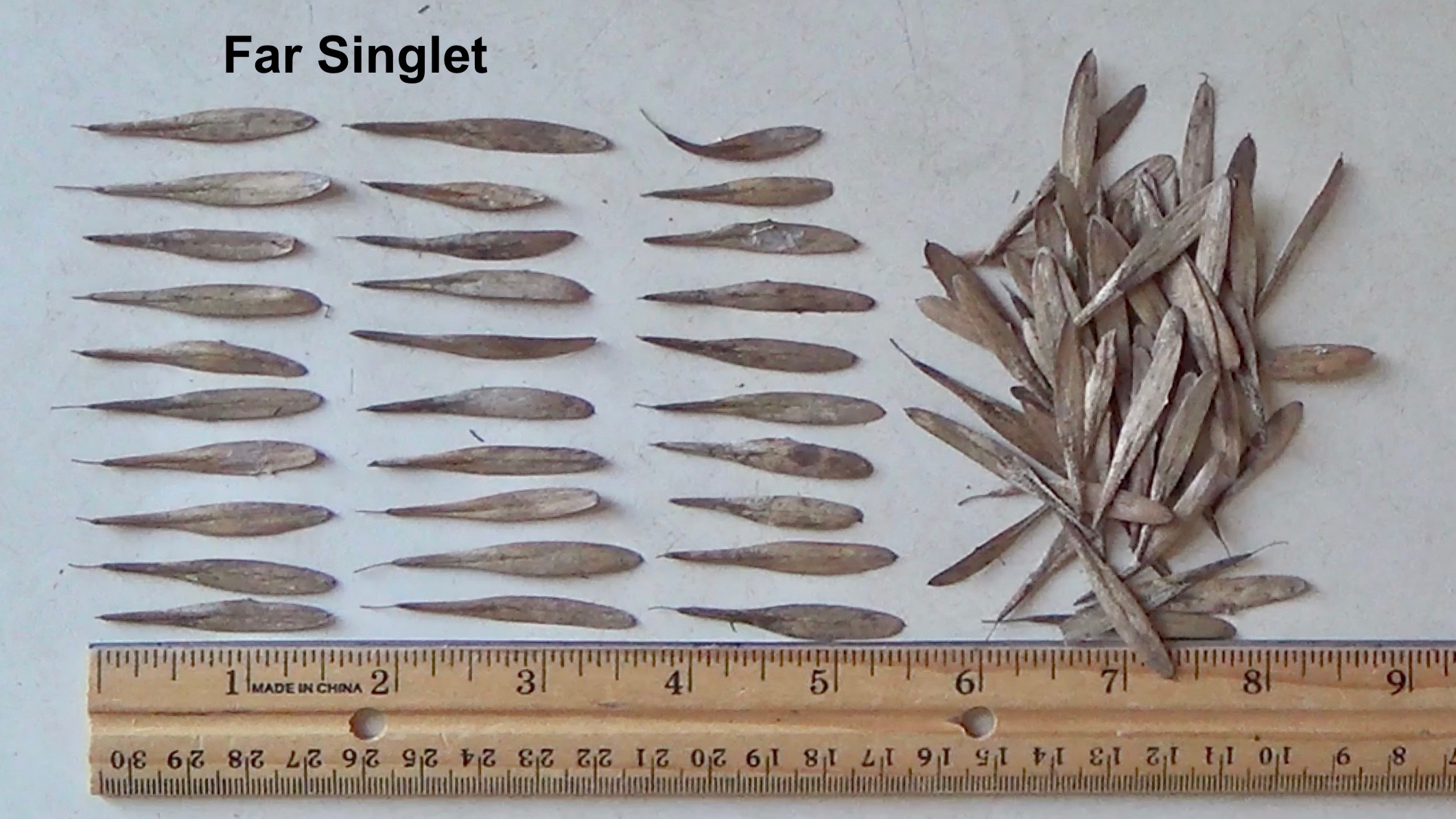
BELOW: 30 seeds passed the thumbnail-press viability test (very few rejected when current year is assured).
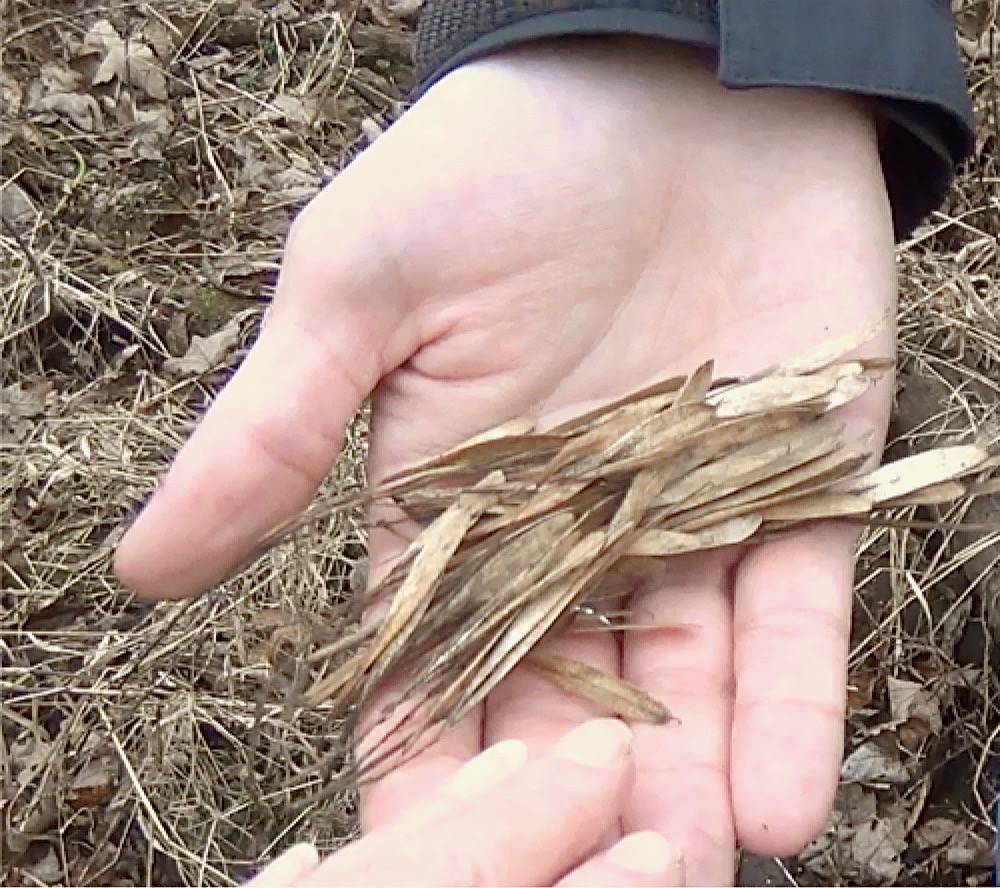
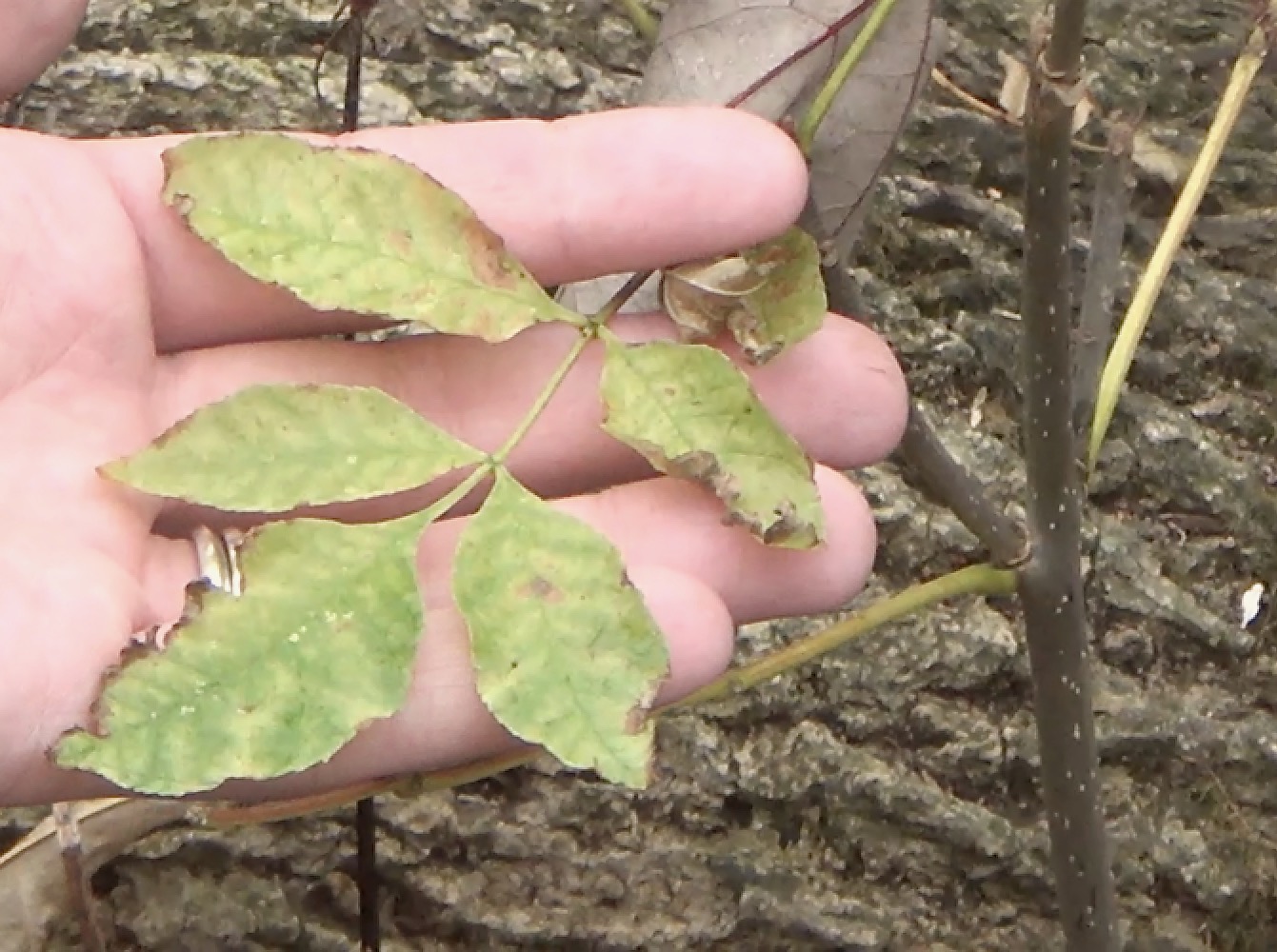 ABOVE: (L) Seeds collected from branch. (R) Leaf of a seedling or sprout nearby.
BELOW: Seedling (or sprout) rises from under fallen tree. Several neighbors showing nipped-off tops. 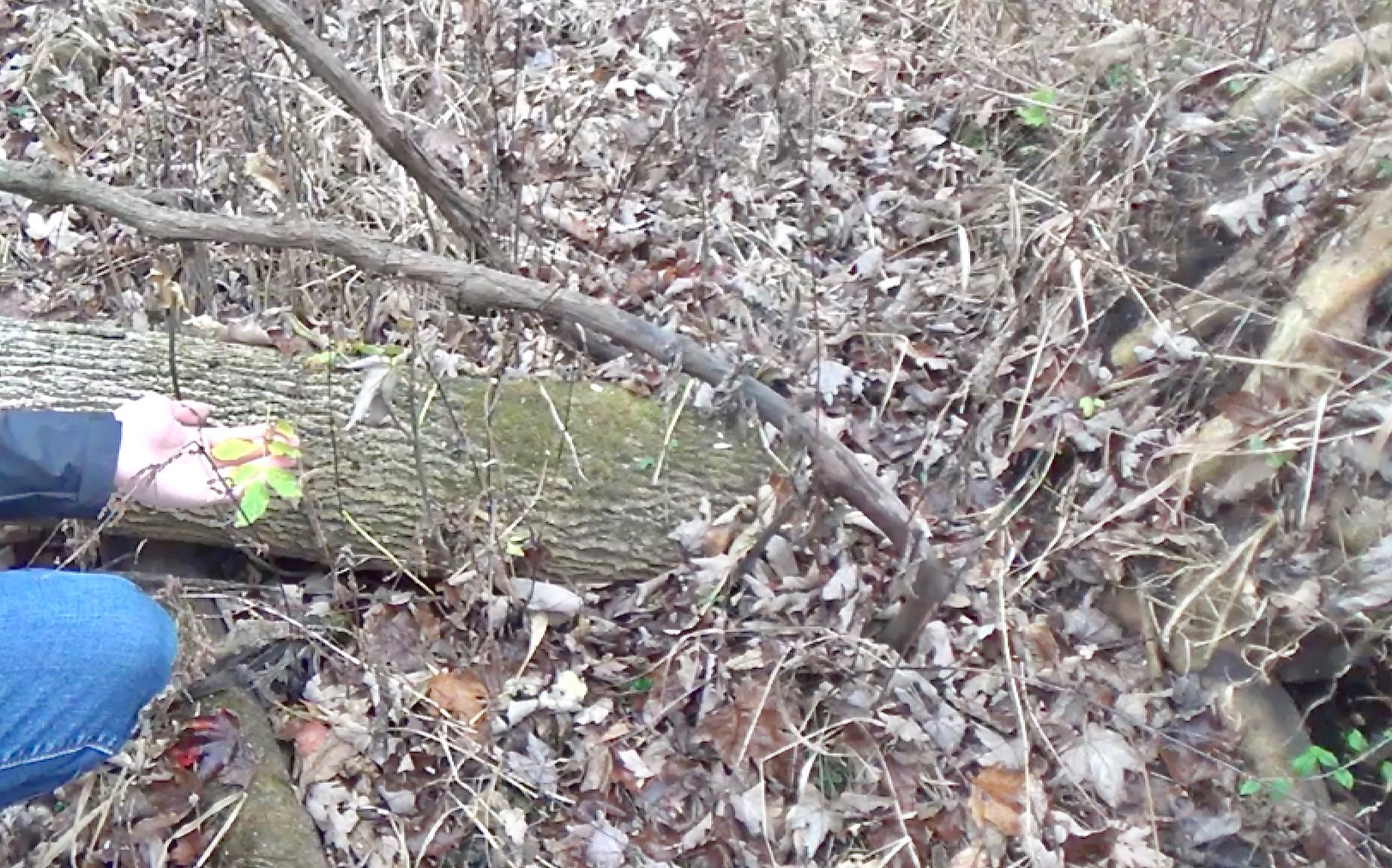
"Far Doublet Mother Tree" (6.5 inch DBH)
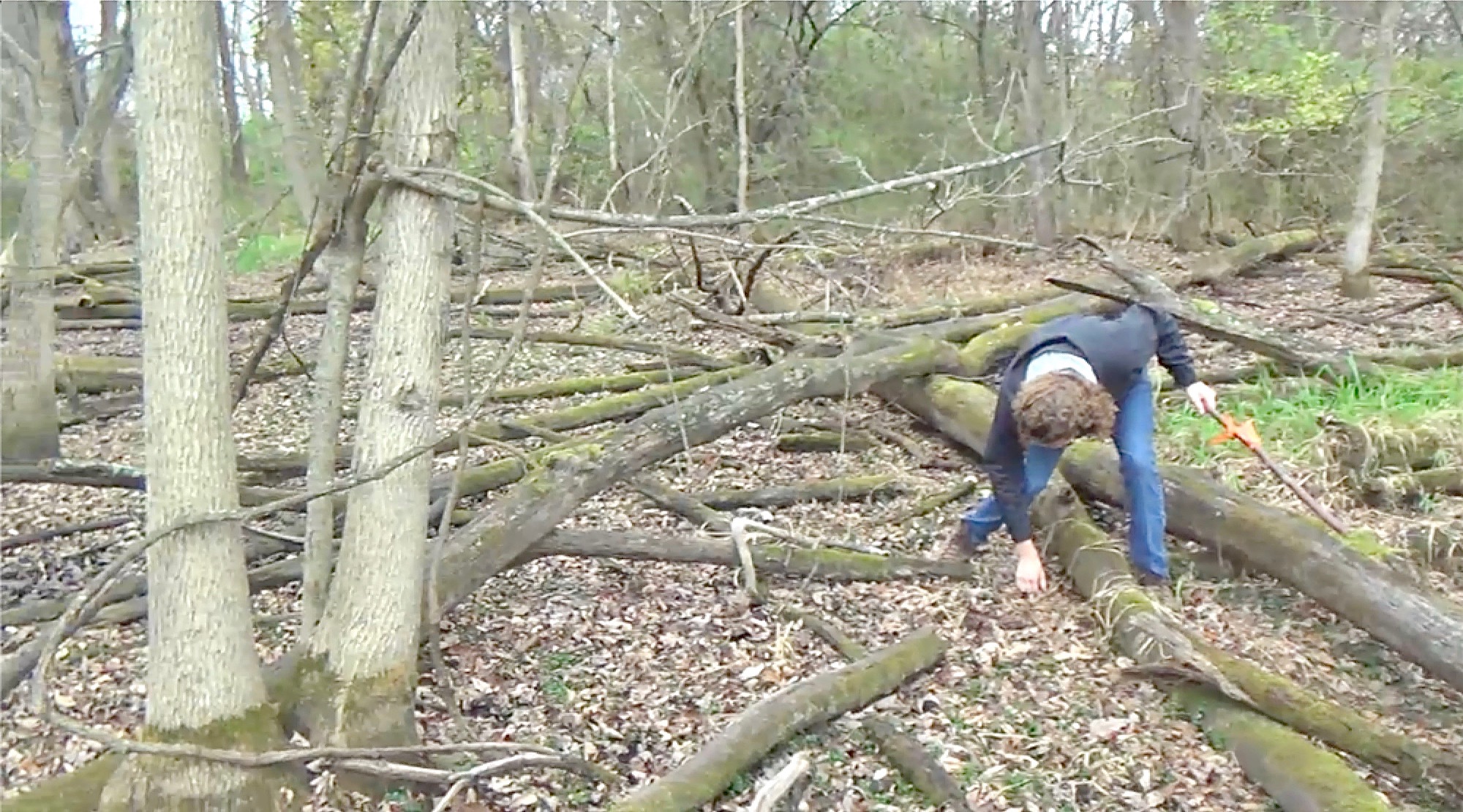
ABOVE: Luke picks up seeds after using the stick to dislodge them from a low branch
of the rightmost trunk of the "Far Doublet", which has strikingly light gray trunks.
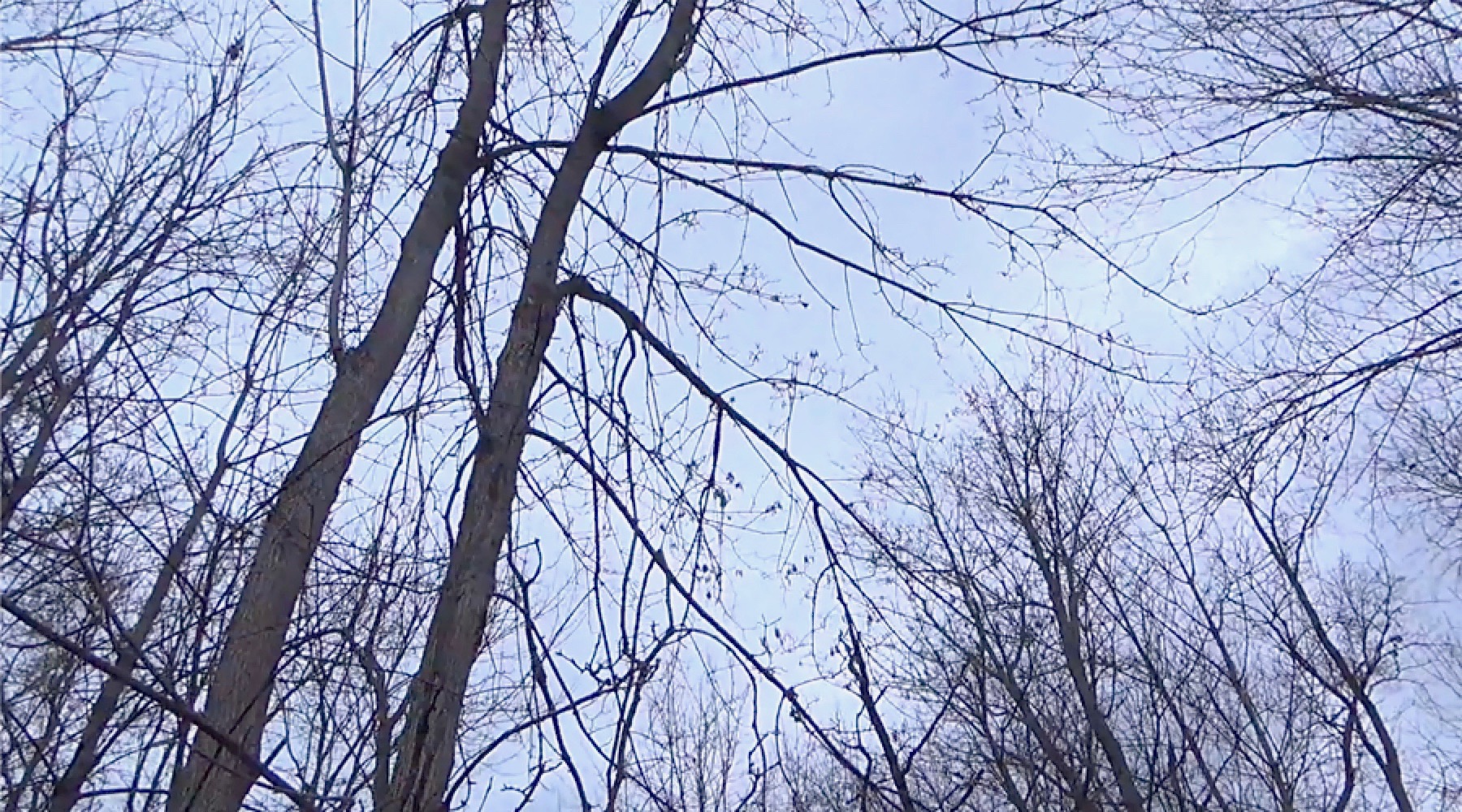
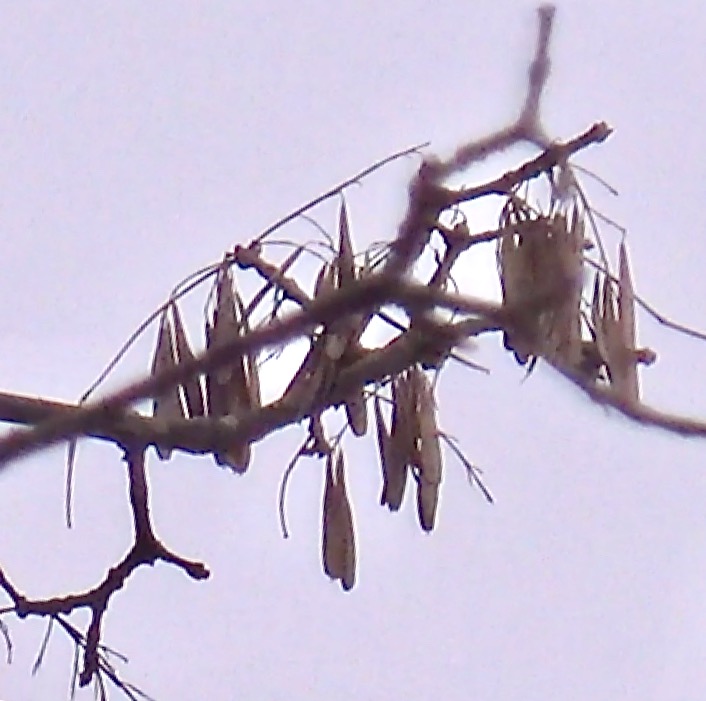 ABOVE LEFT: Left stem of "Far Doublet" is 20 inch circumference; right is 21 inch (6.5 inch DBH).
ABOVE RIGHT: Seeds were seen high up only on branches of the right-most stem of Far Doublet. 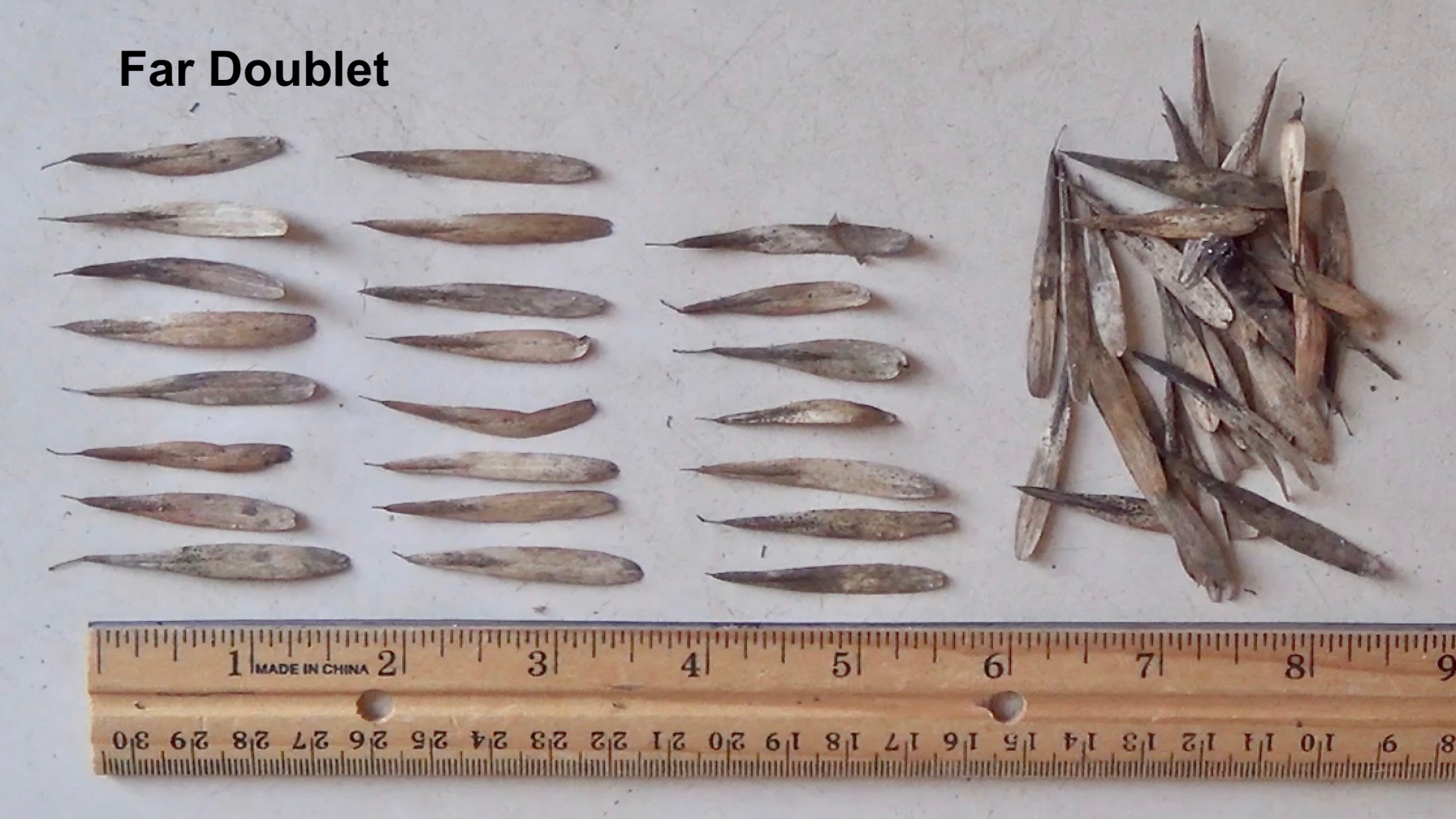 ABOVE: 23 seeds passed the thumbnail-press test, as Luke collected only the newly fallen).
"Swamp End Group" (3 mother trees: 10, 7.5, 6 inch DBH)
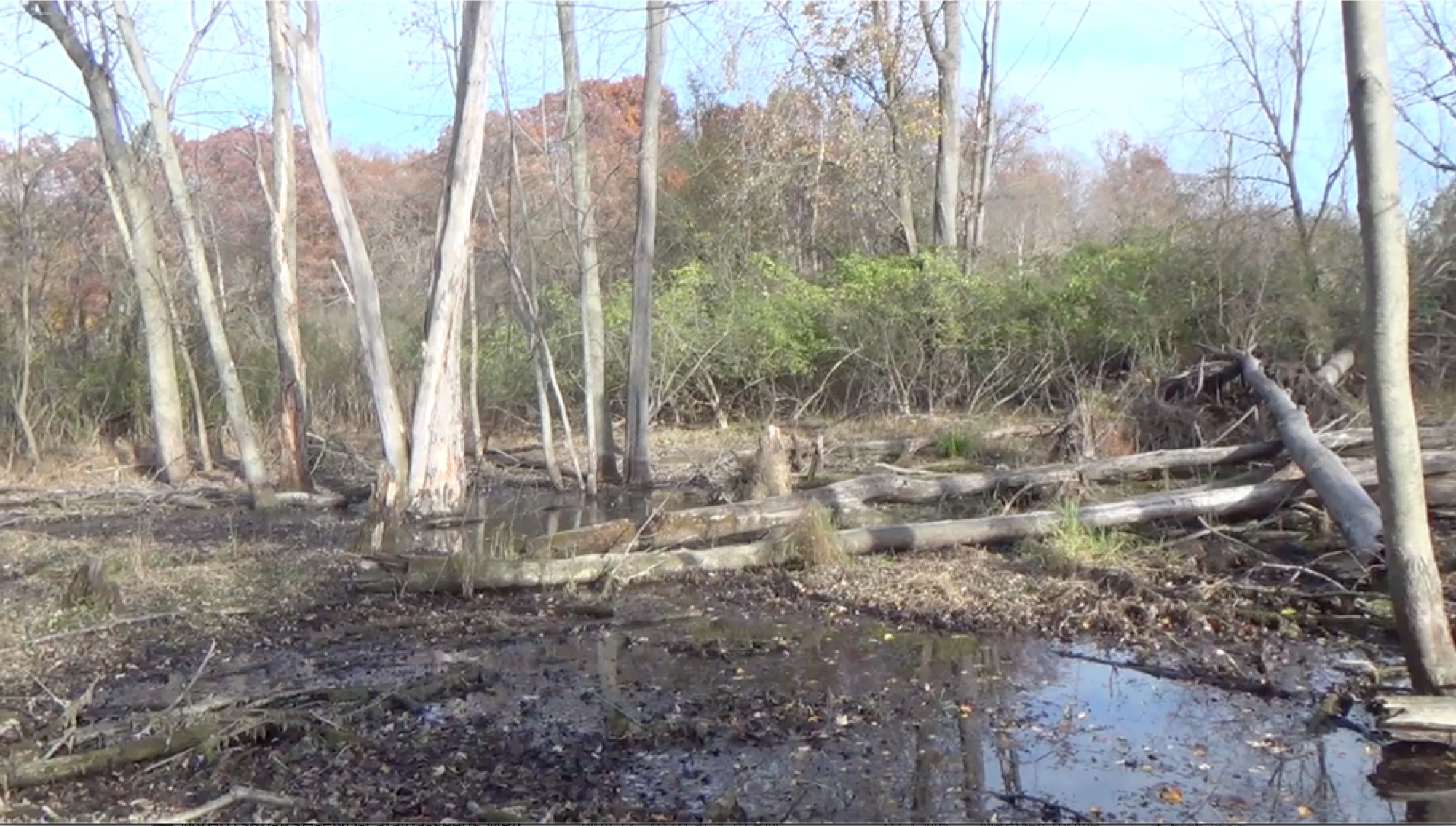
ABOVE & BELOW: Enroute to the "Swamp End Group", the ponded water here is perennial.
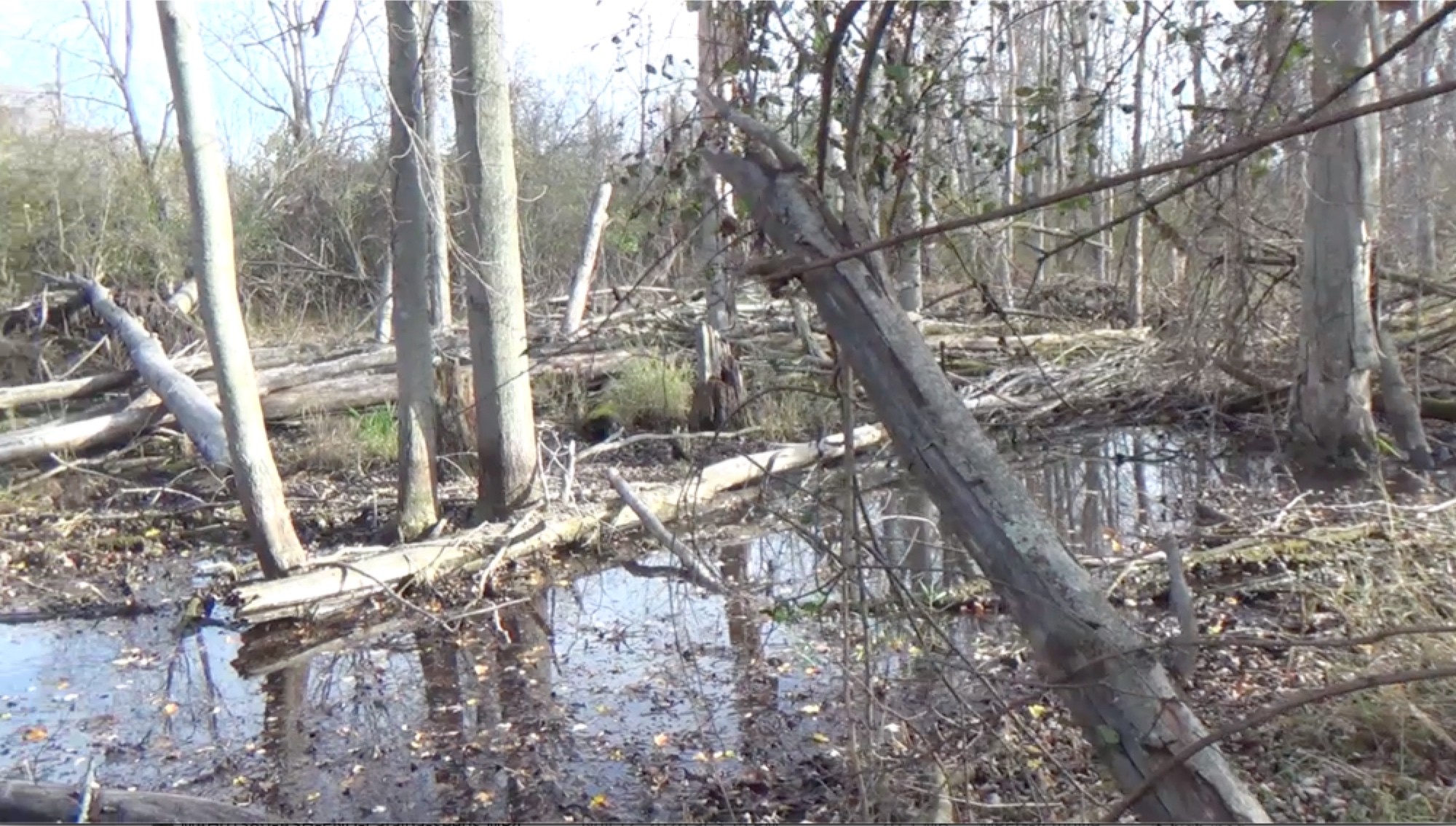
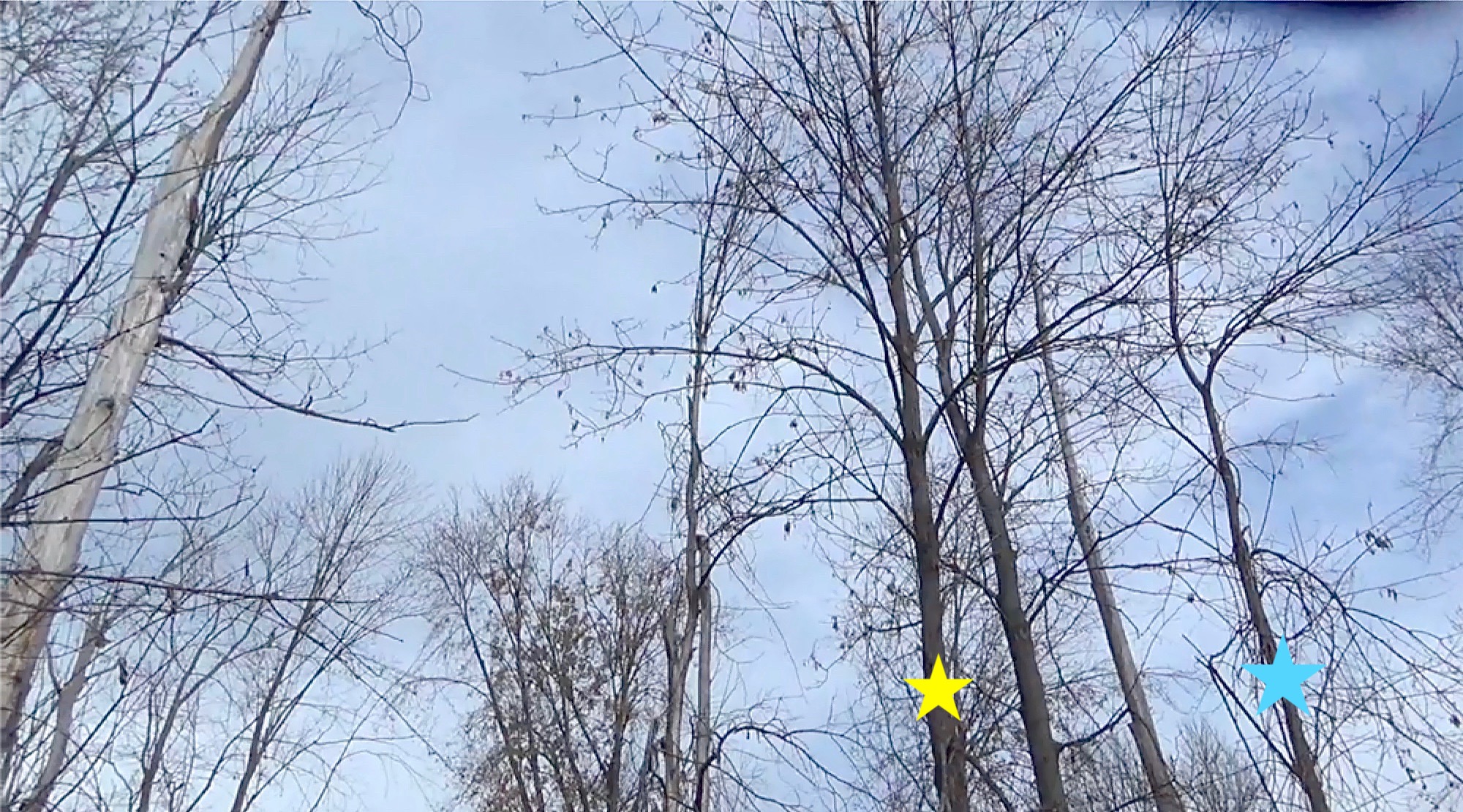
ABOVE & BELOW: Two seed-bearing trees had collectible seeds floating on water.
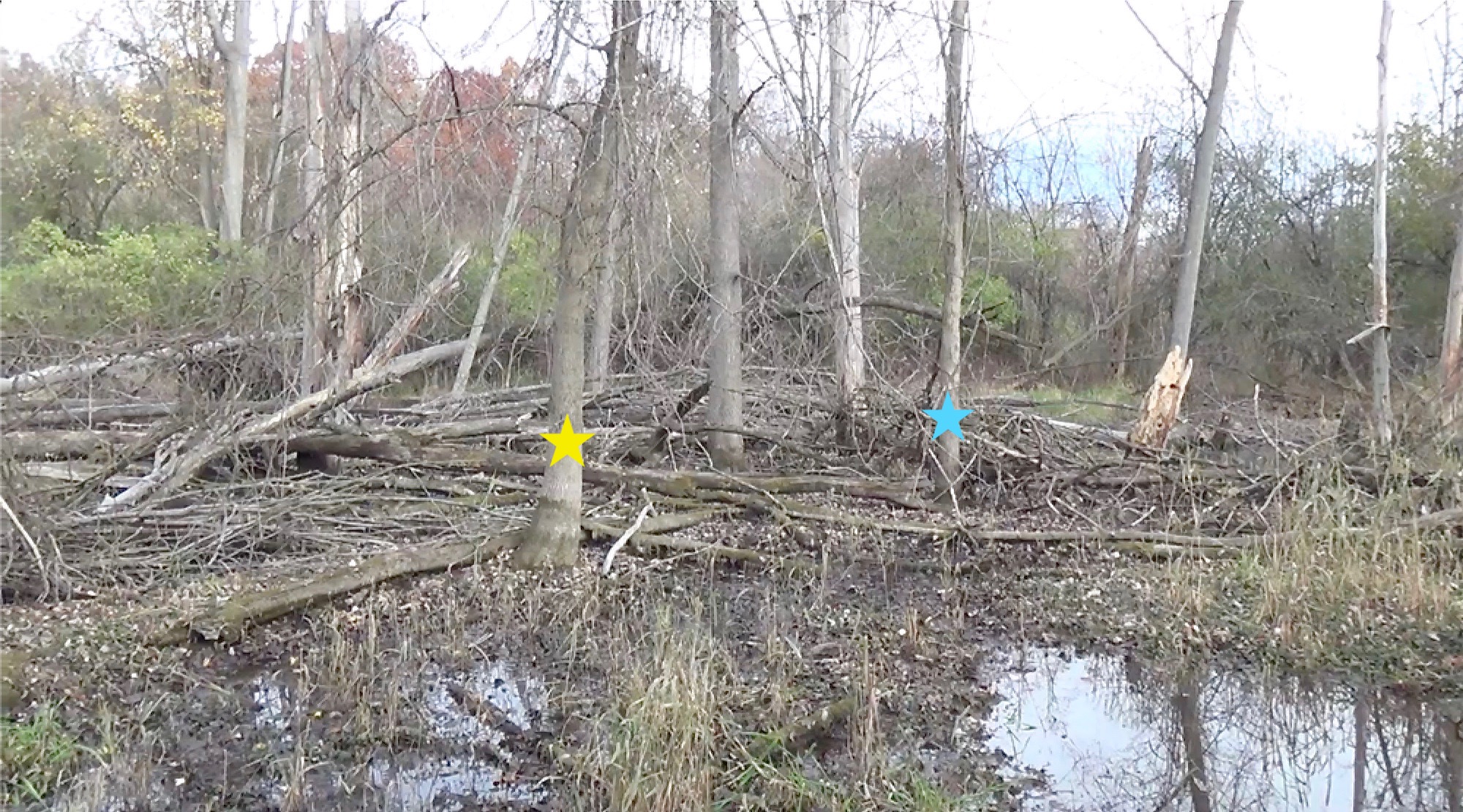
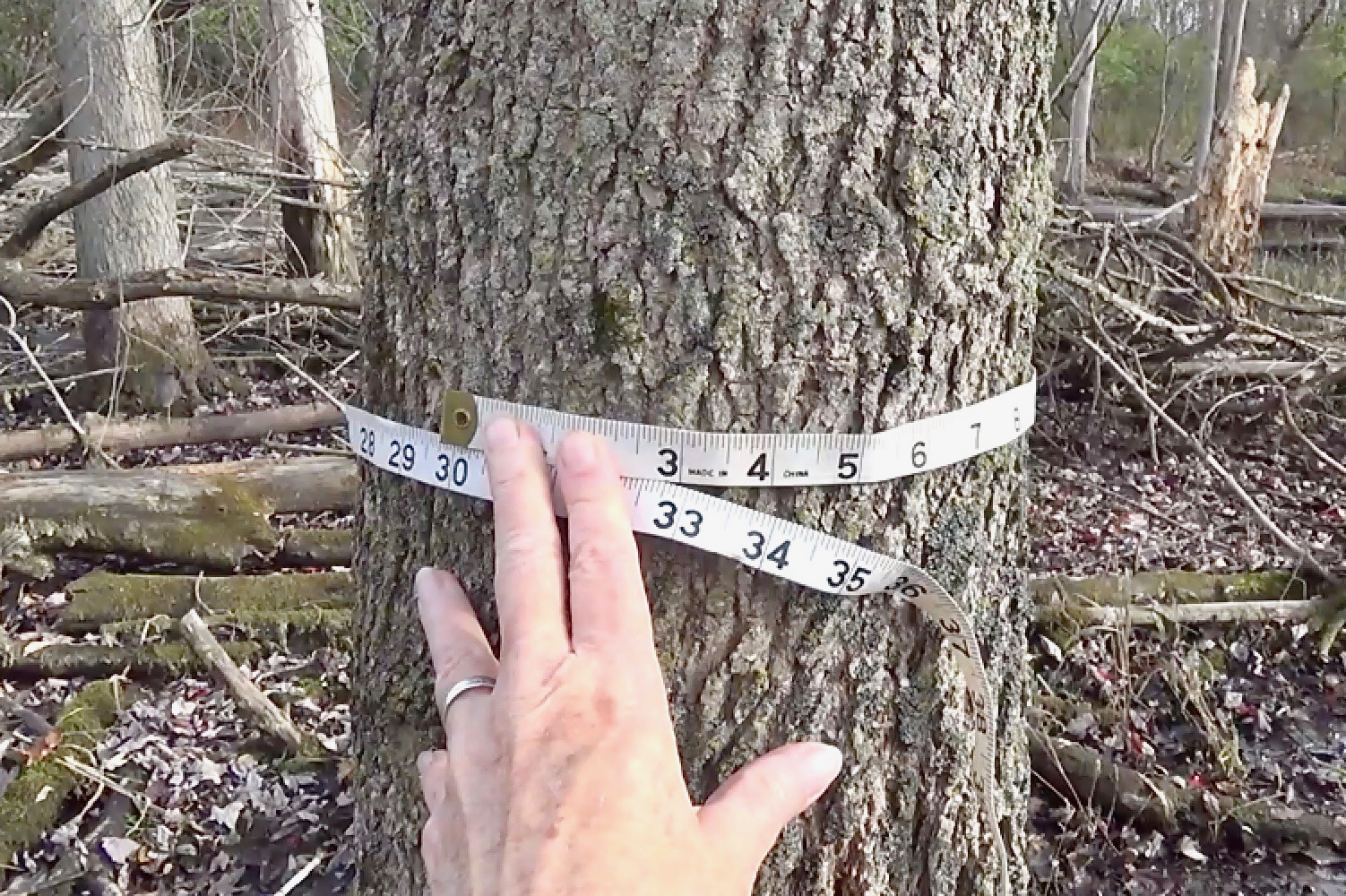
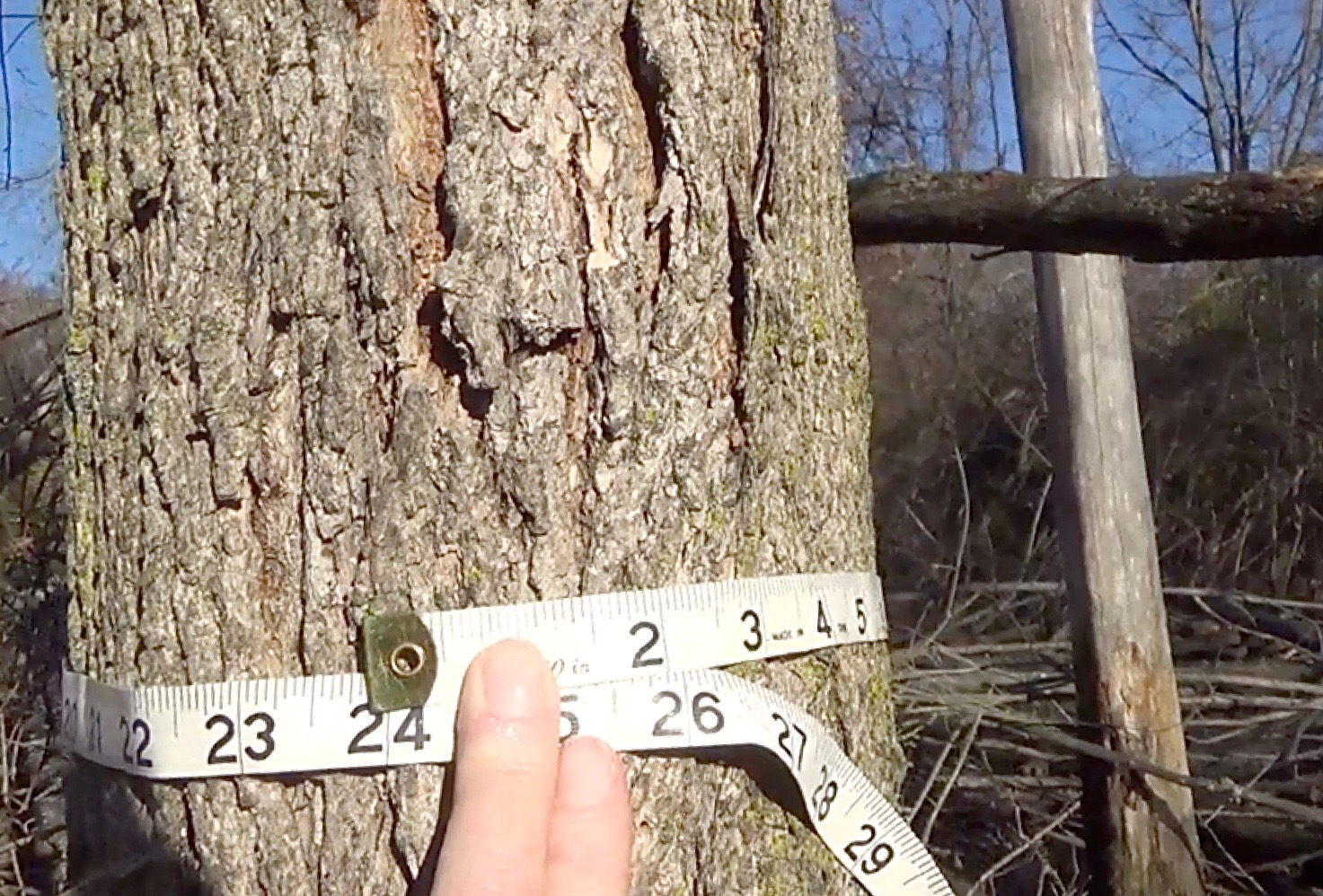 ABOVE: 10 inch DBH for the yellow star; 7.5 inch DBH for the blue.
BELOW: Examples of bad bark (on 10 inch) and healed bark on (7.5 inch)
QUESTION: How does one discern bark removal by Pileated Woodpeckers, present at this site?
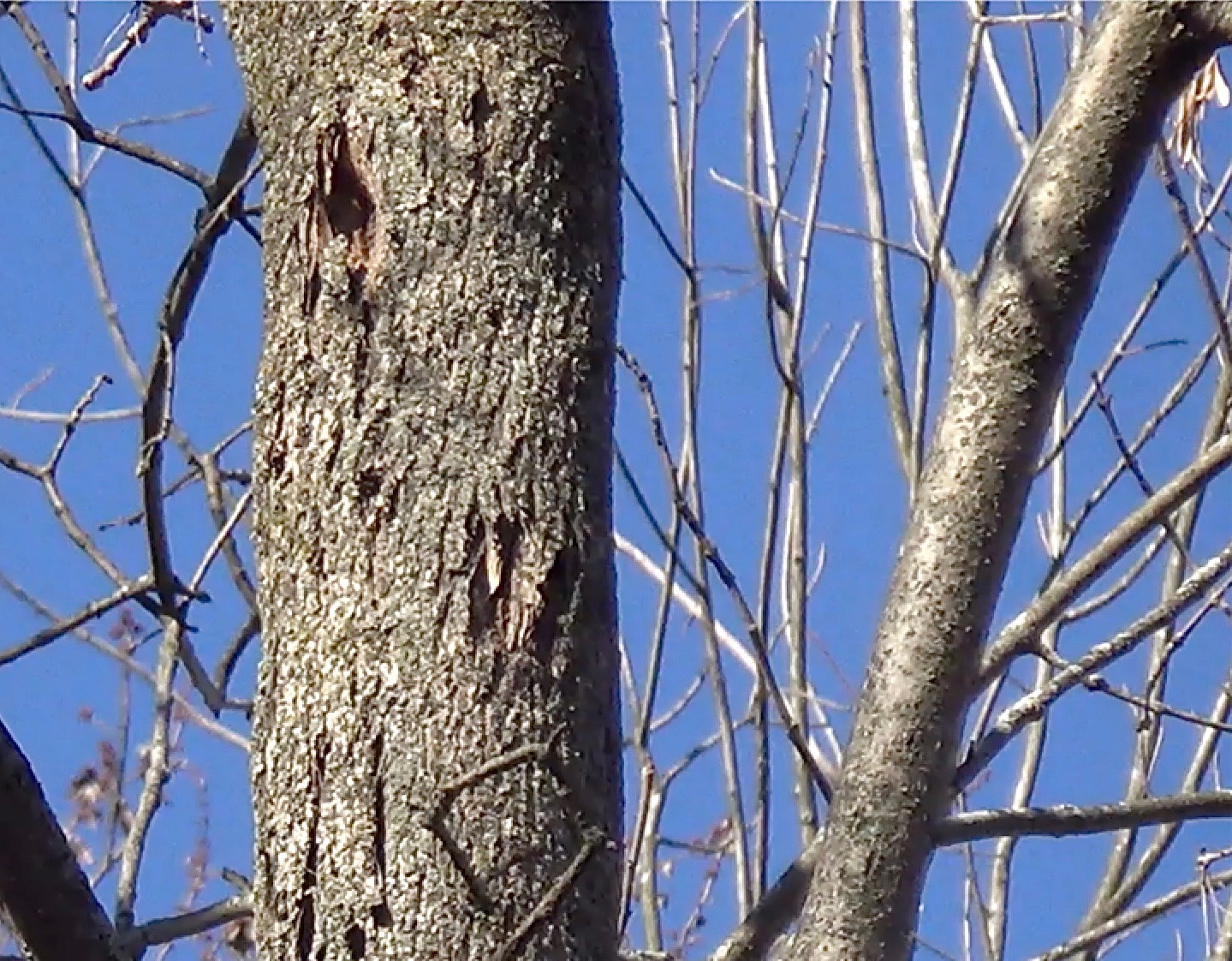
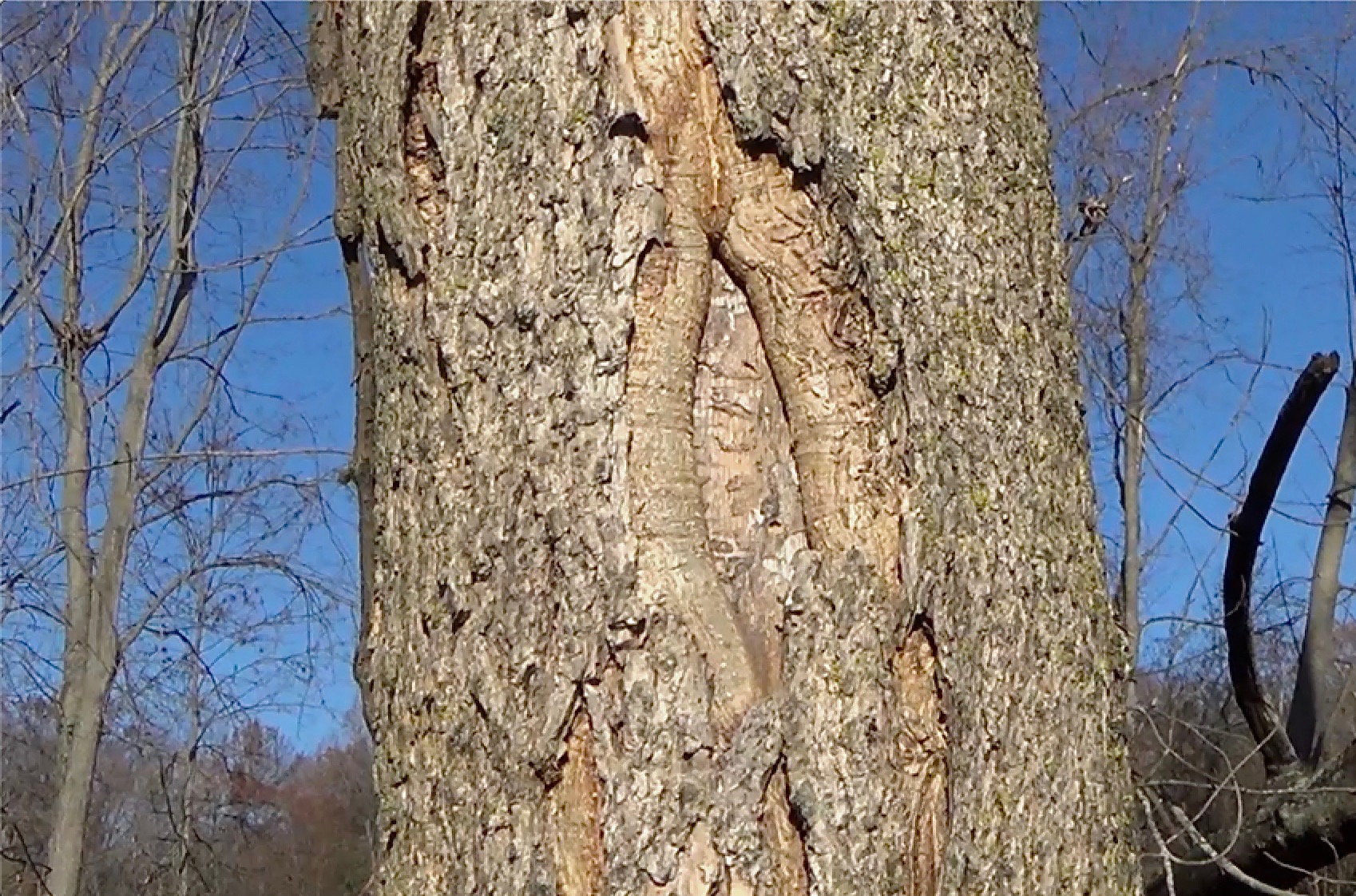
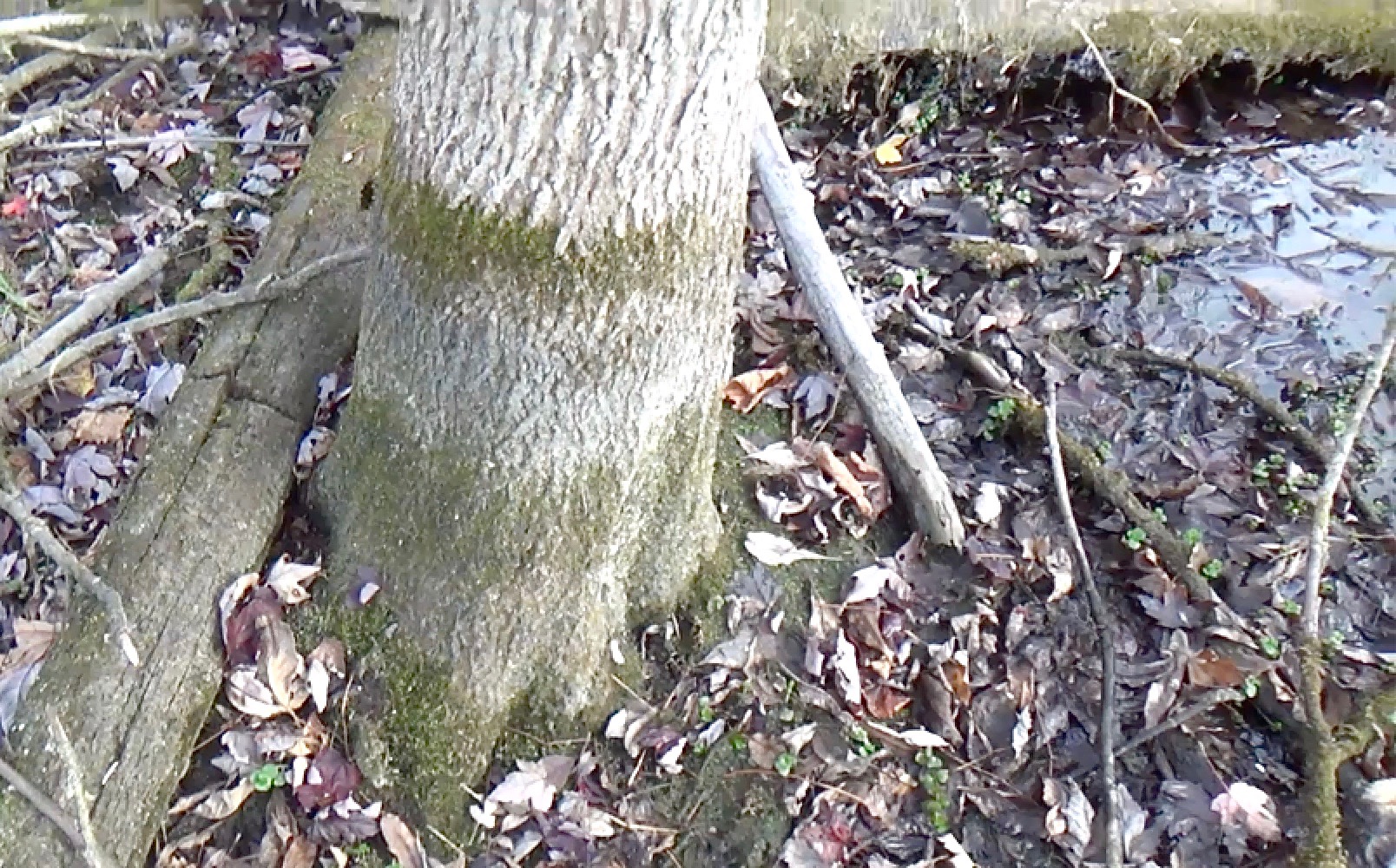
ABOVE: The base of the yellow-star ash: "Green Rings Mother Tree".
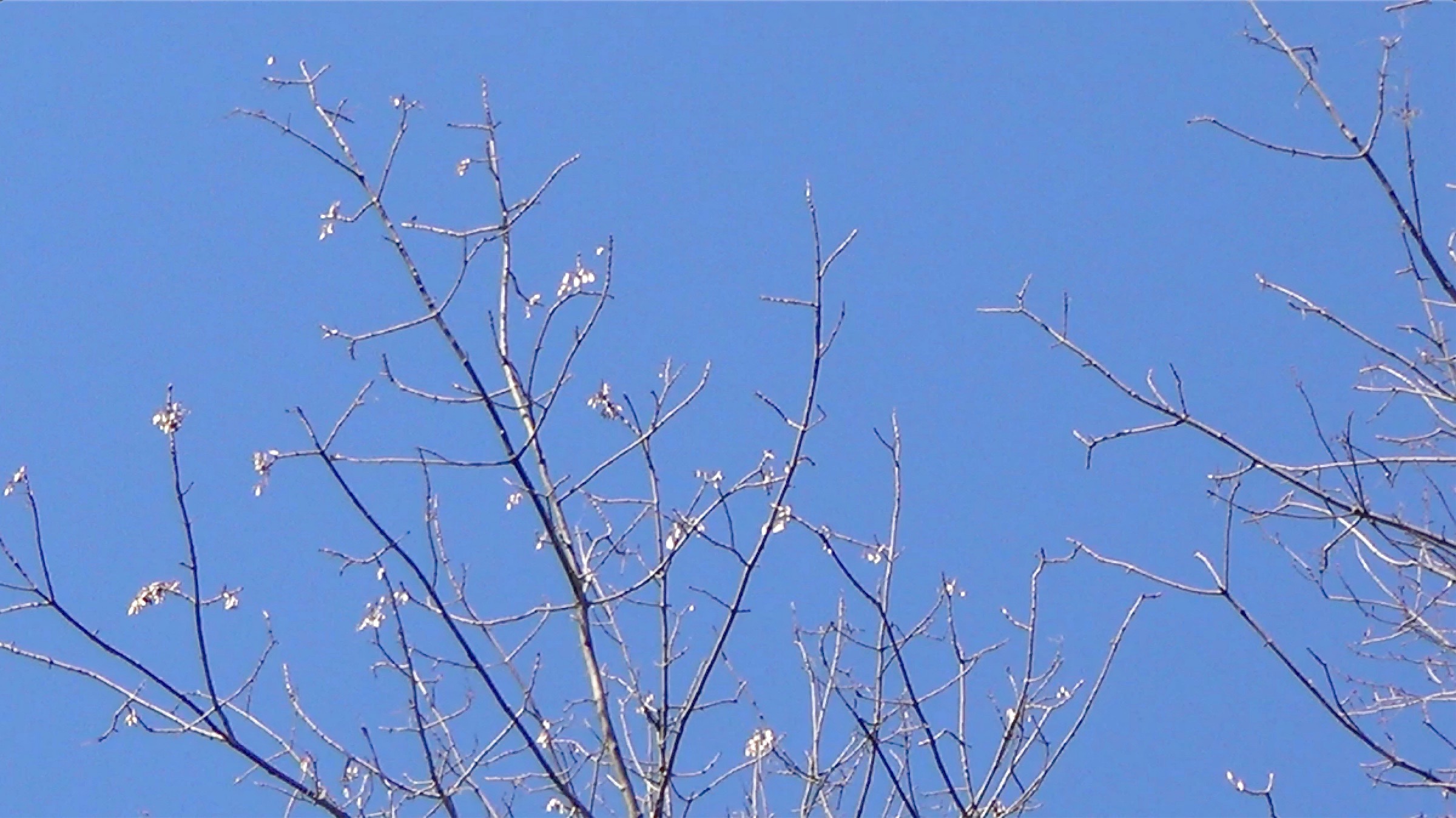
ABOVE: Samaras can be seen all the way to the top of the Greenrings Tree.
BELOW: Samaras lower down on the blue-star tree.
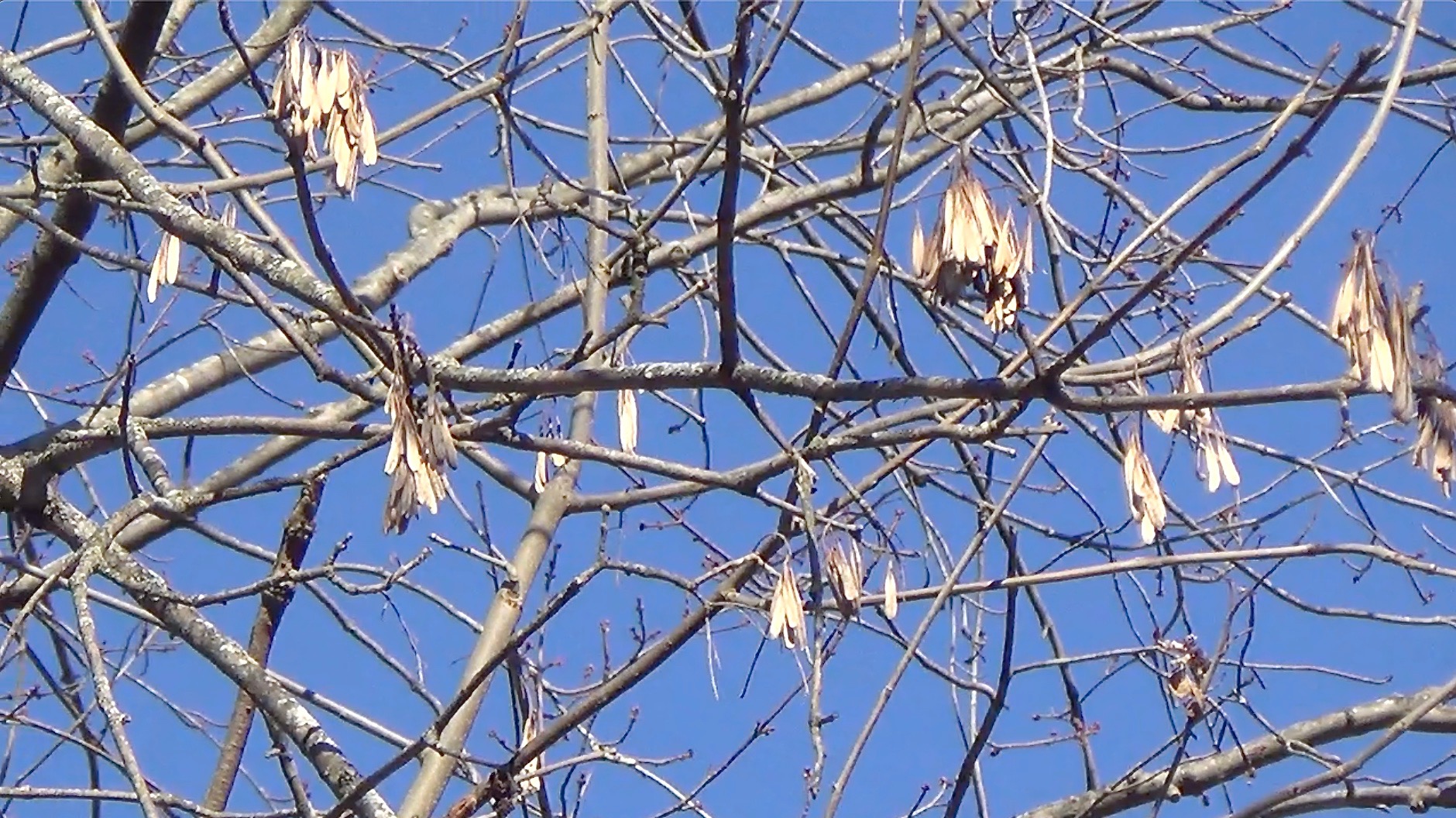
"Banktree Mother Tree" (the 3rd tree of the END GROUP)
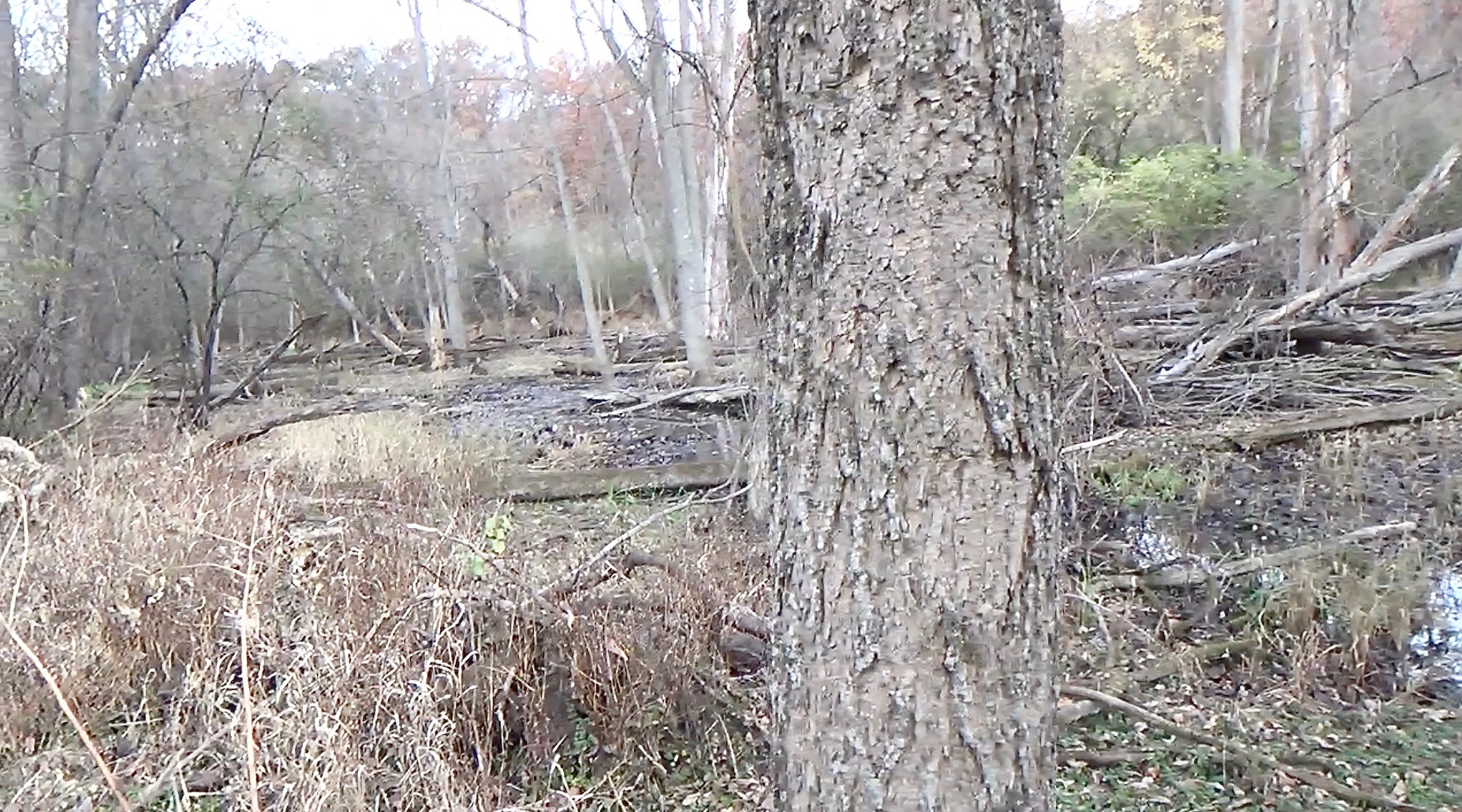
ABOVE: Beyond the water home of "Green Rings" is "Banktree Mother Tree", close front (unmeasured).
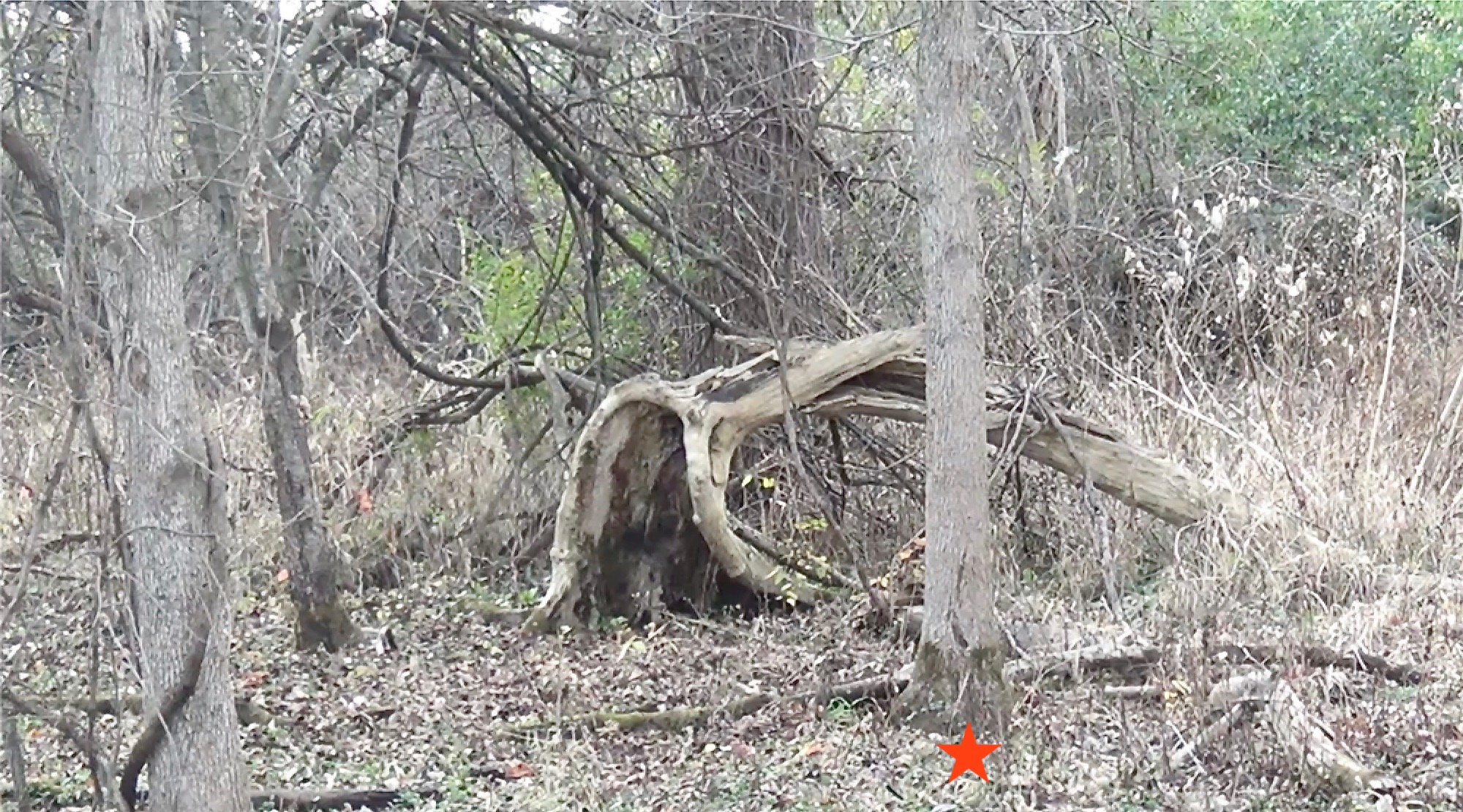 ABOVE: "Banktree" rises above the red star. The big, dark trunk center is a dead cottonwood. 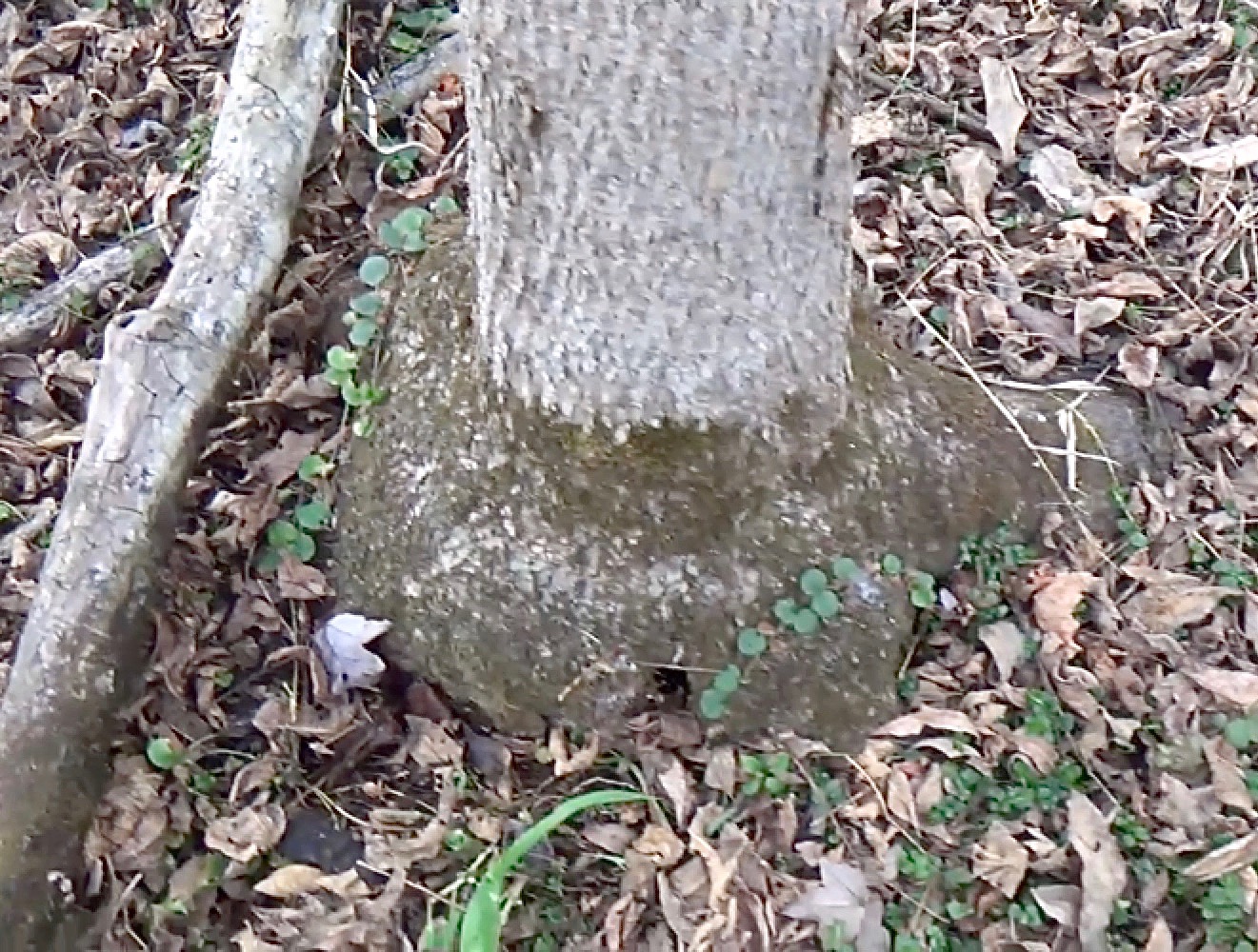
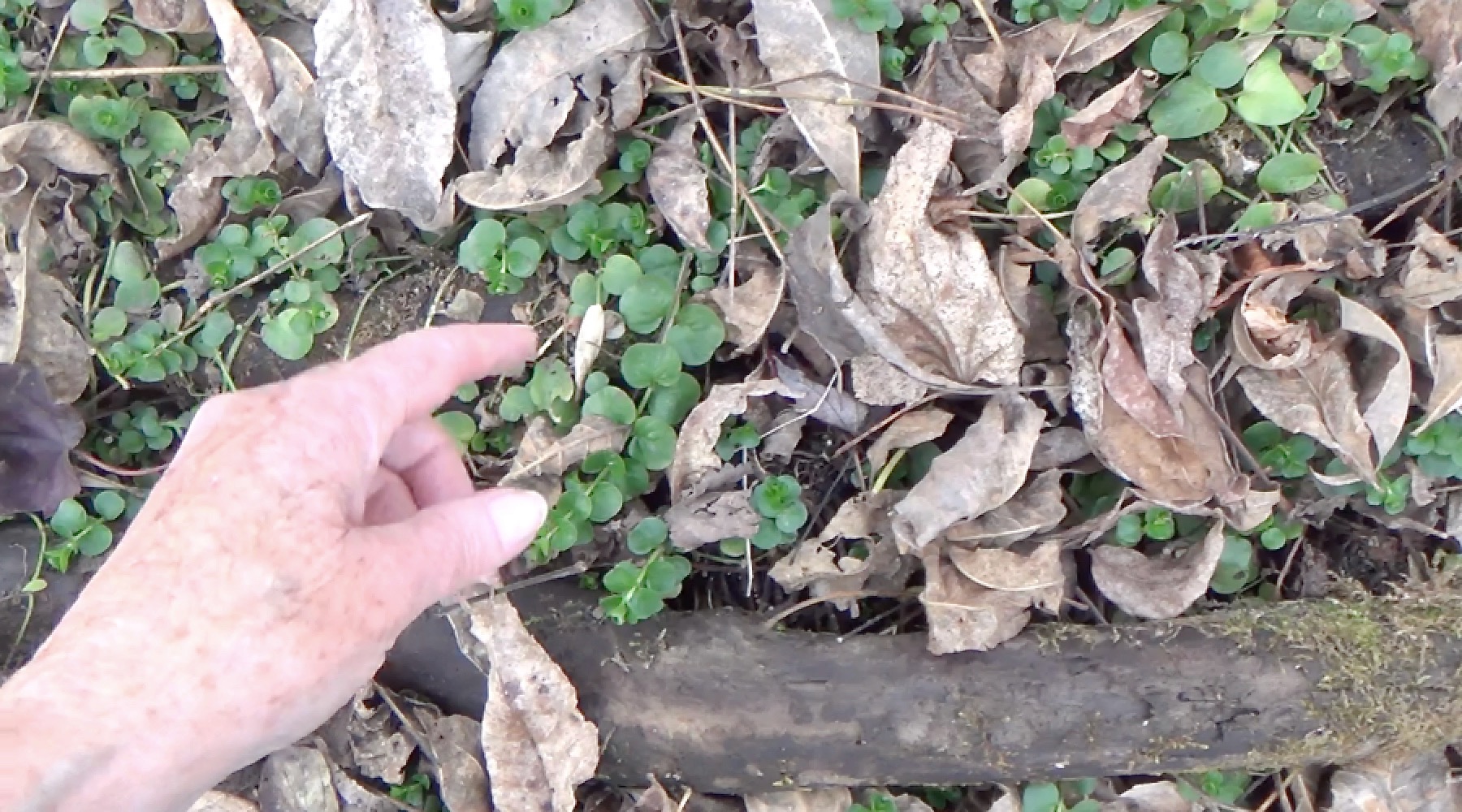 ABOVE: (L) Base of the Banktree; (R) reaching for ash seed atop Creeping Jenny. 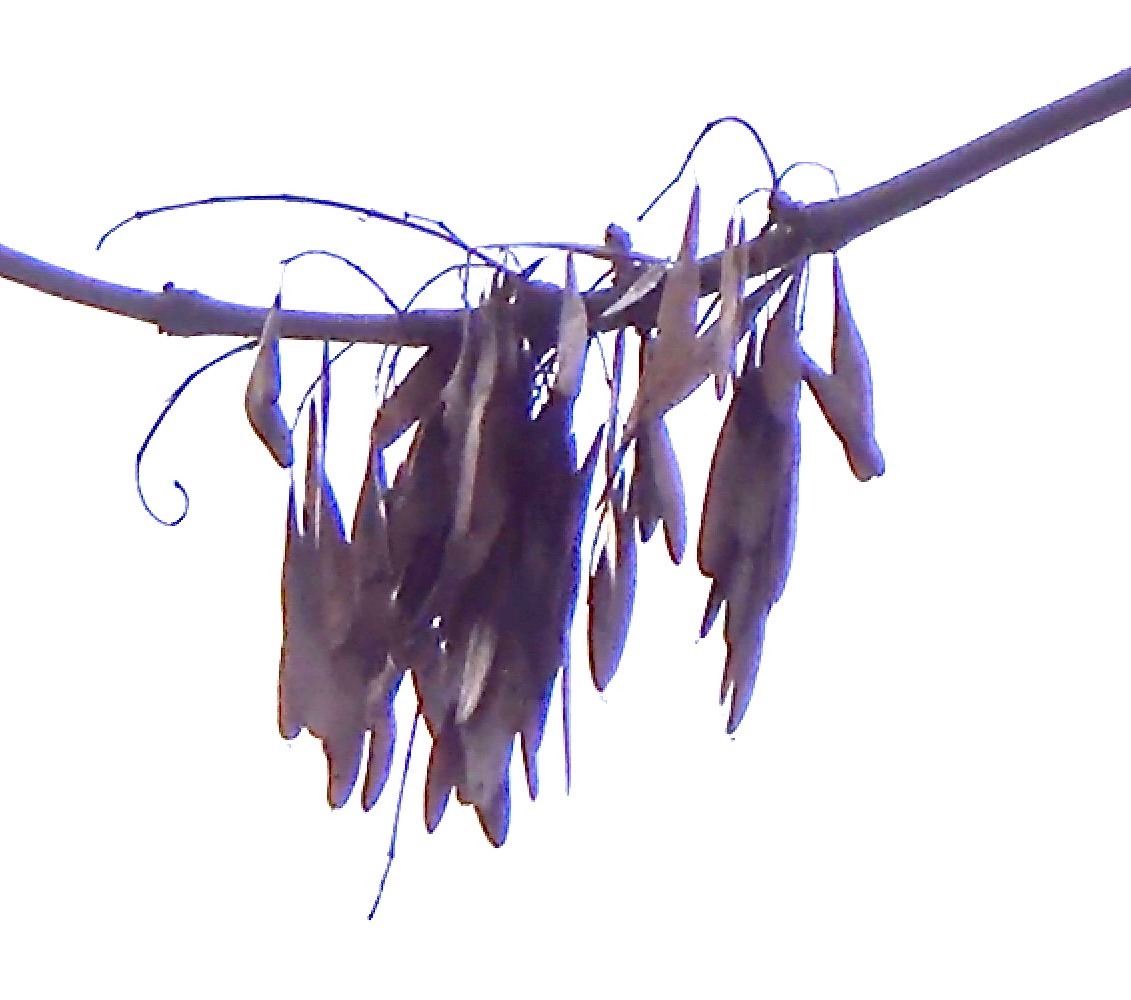
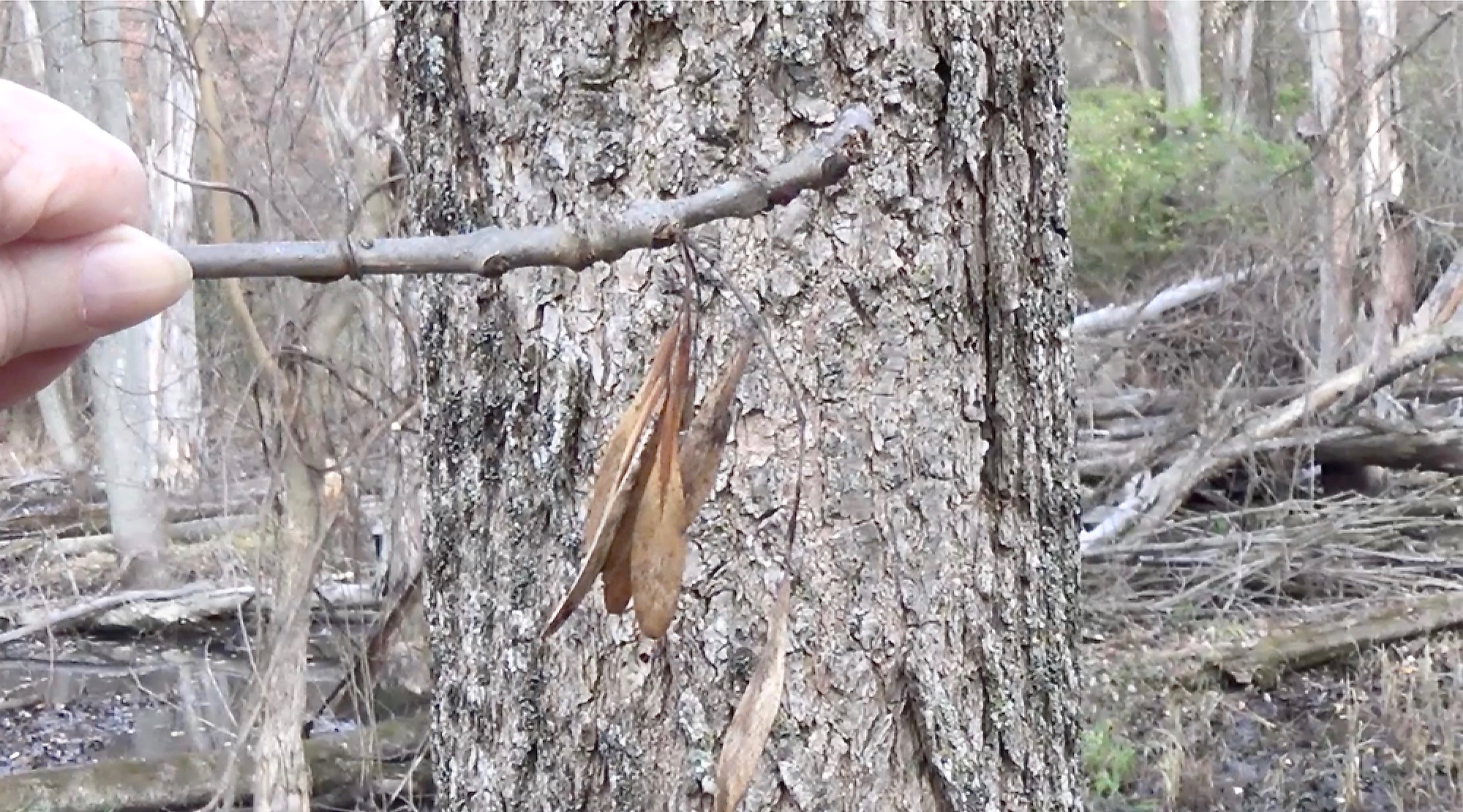 ABOVE: Seeds in air and on twig held in front of the trunk of Banktree. 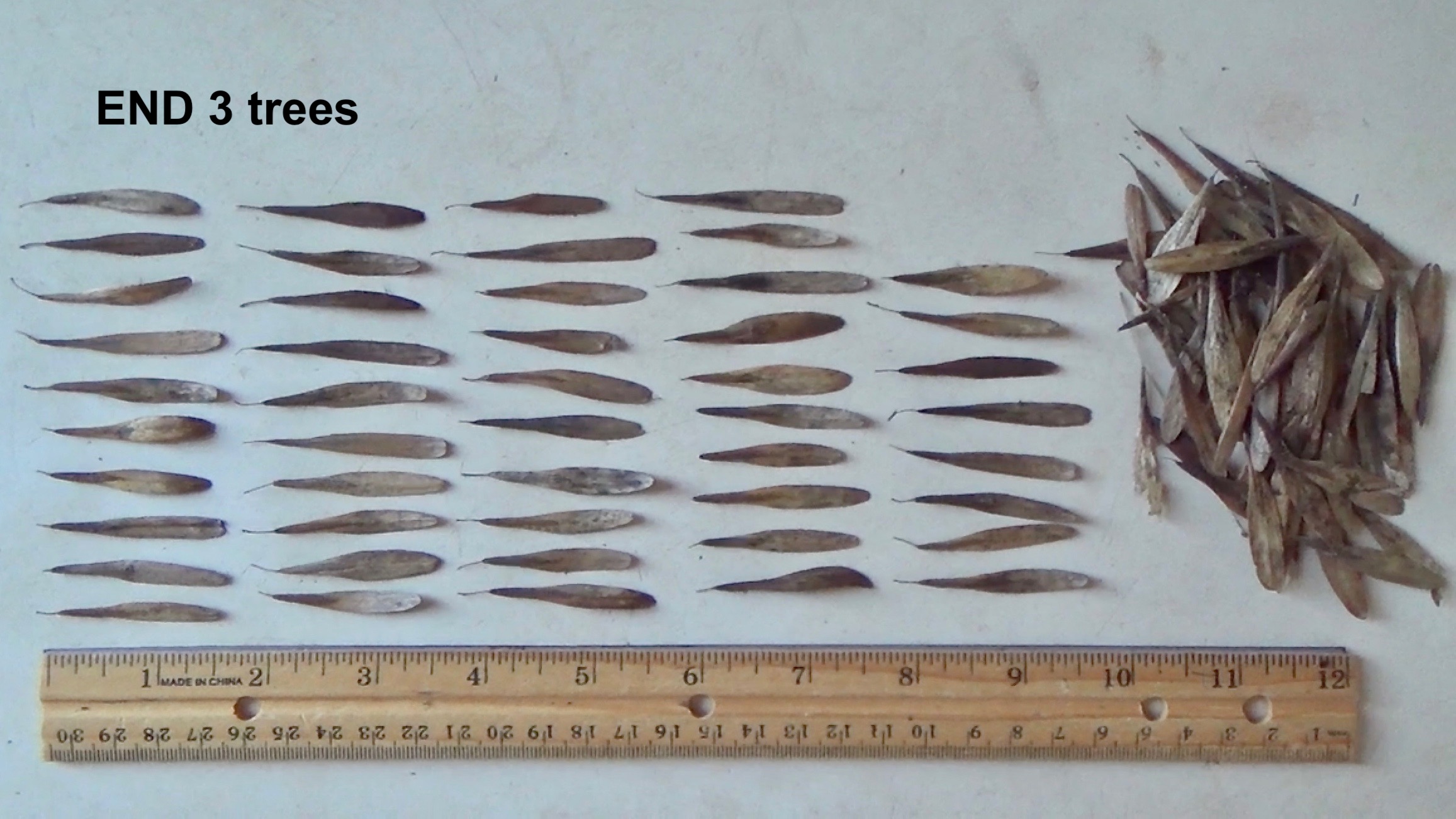 ABOVE: Seed collection of the END GROUP did not distinguish between the 3 mother trees.
Most were collected floating on water. A total of 48 seeds passed the thumbnail-press test.
"Catalpa Neighbor Mother Tree" (6 inch DBH)
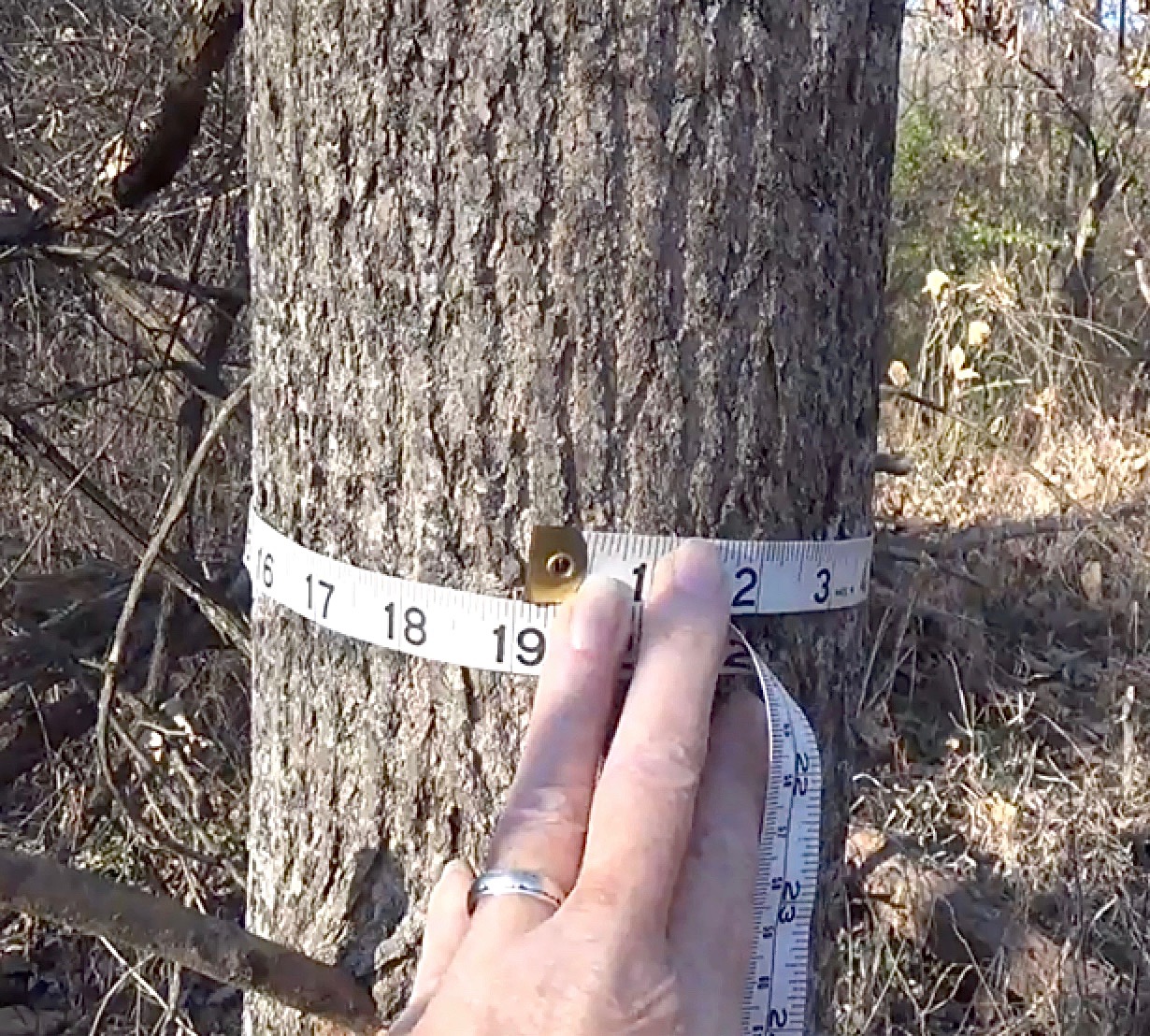 ABOVE: The lone "Catalpa Neighbor Mother Tree" circumference of 19.5 inches = 6 inch DBH. 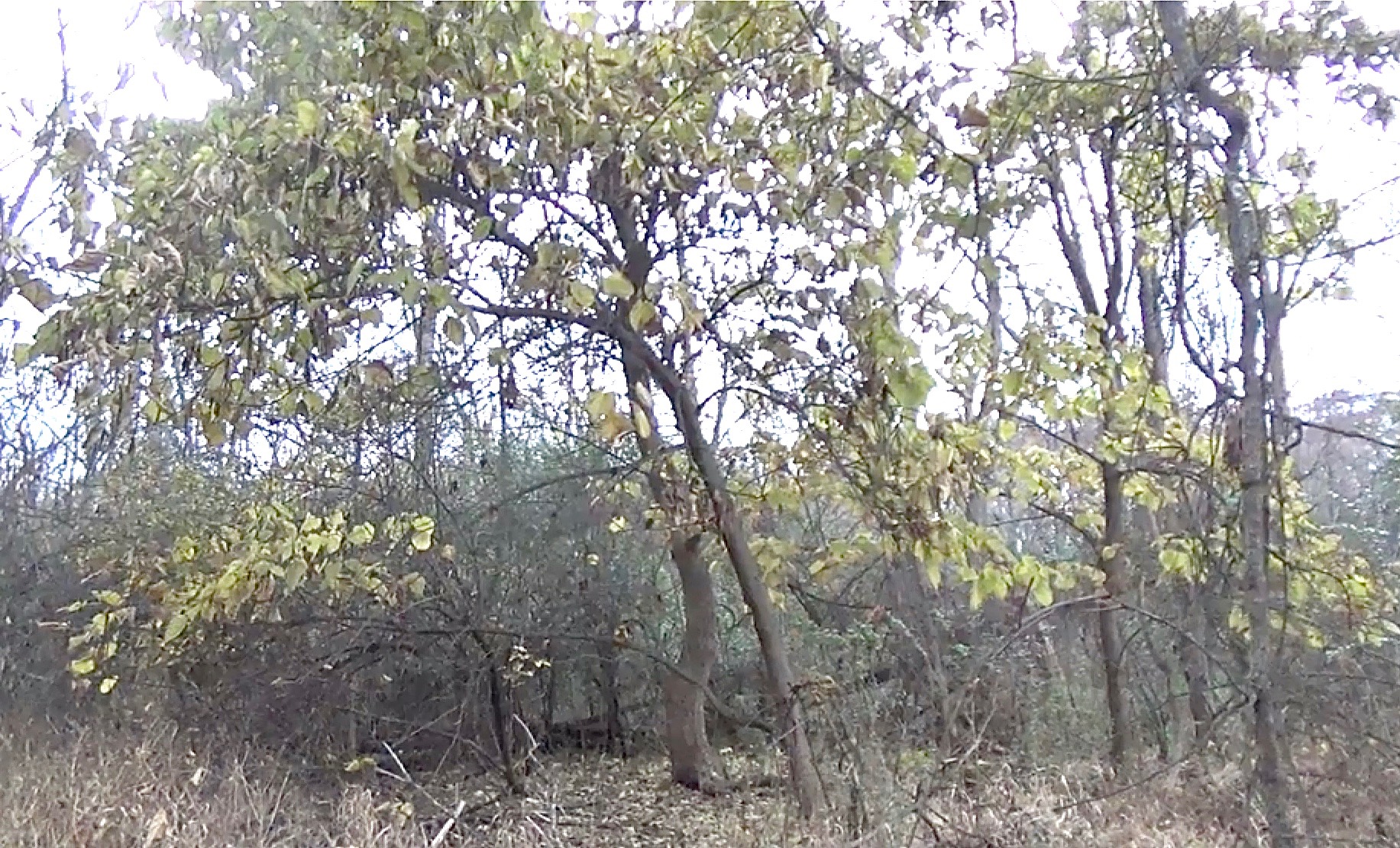
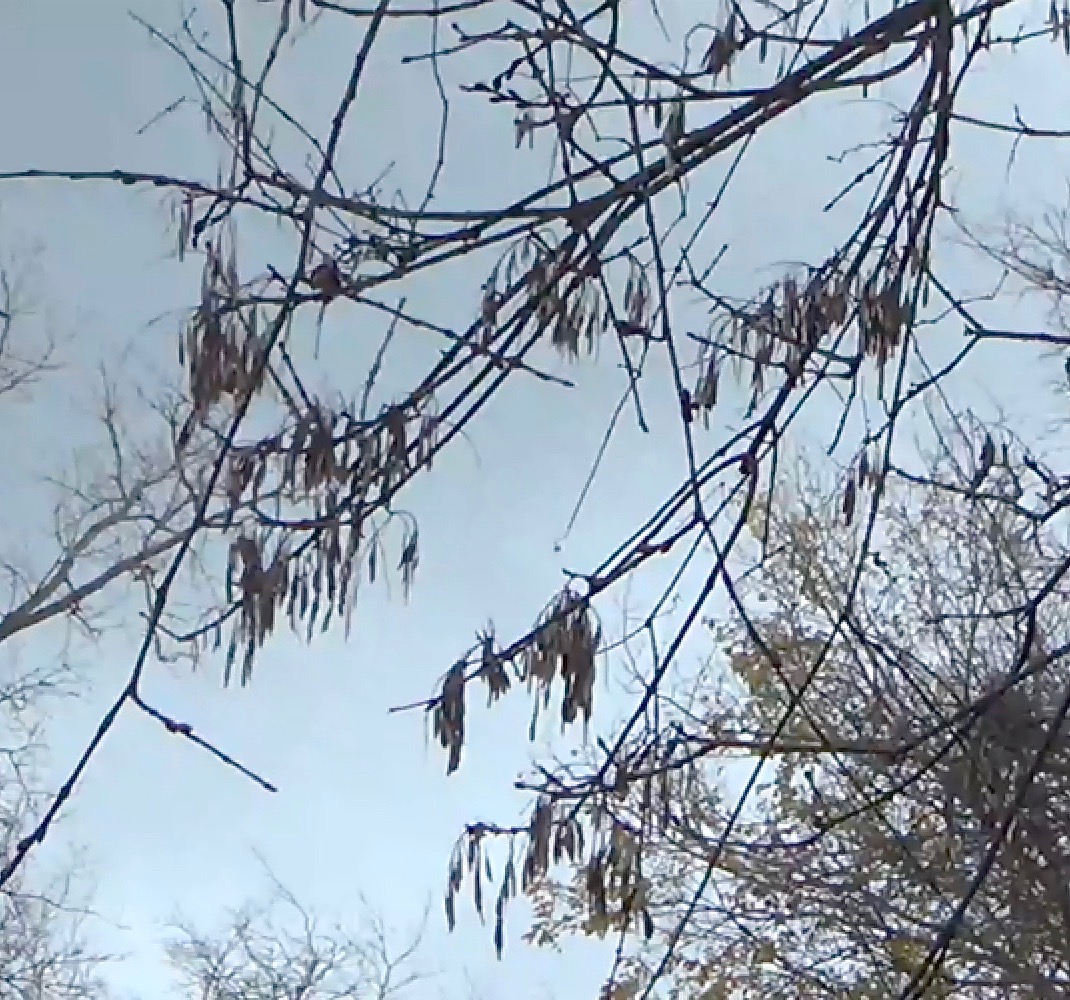 ABOVE: (L) The nearby cluster of young catalpa trees. (R) Samaras on lowest branches. 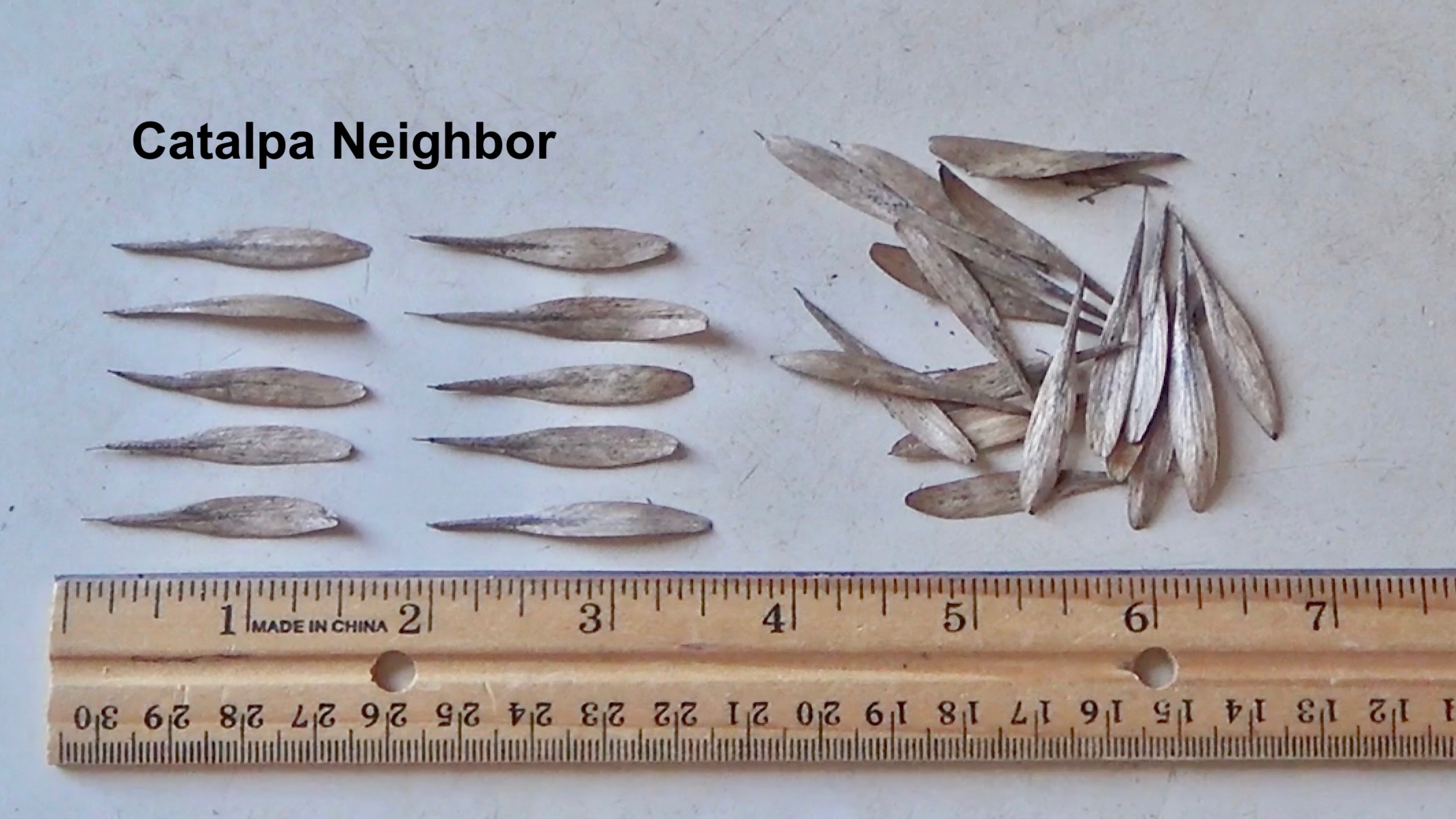 ABOVE: 10 seeds collected Nov 12 passed the test (another 10 viable collected Nov 22). 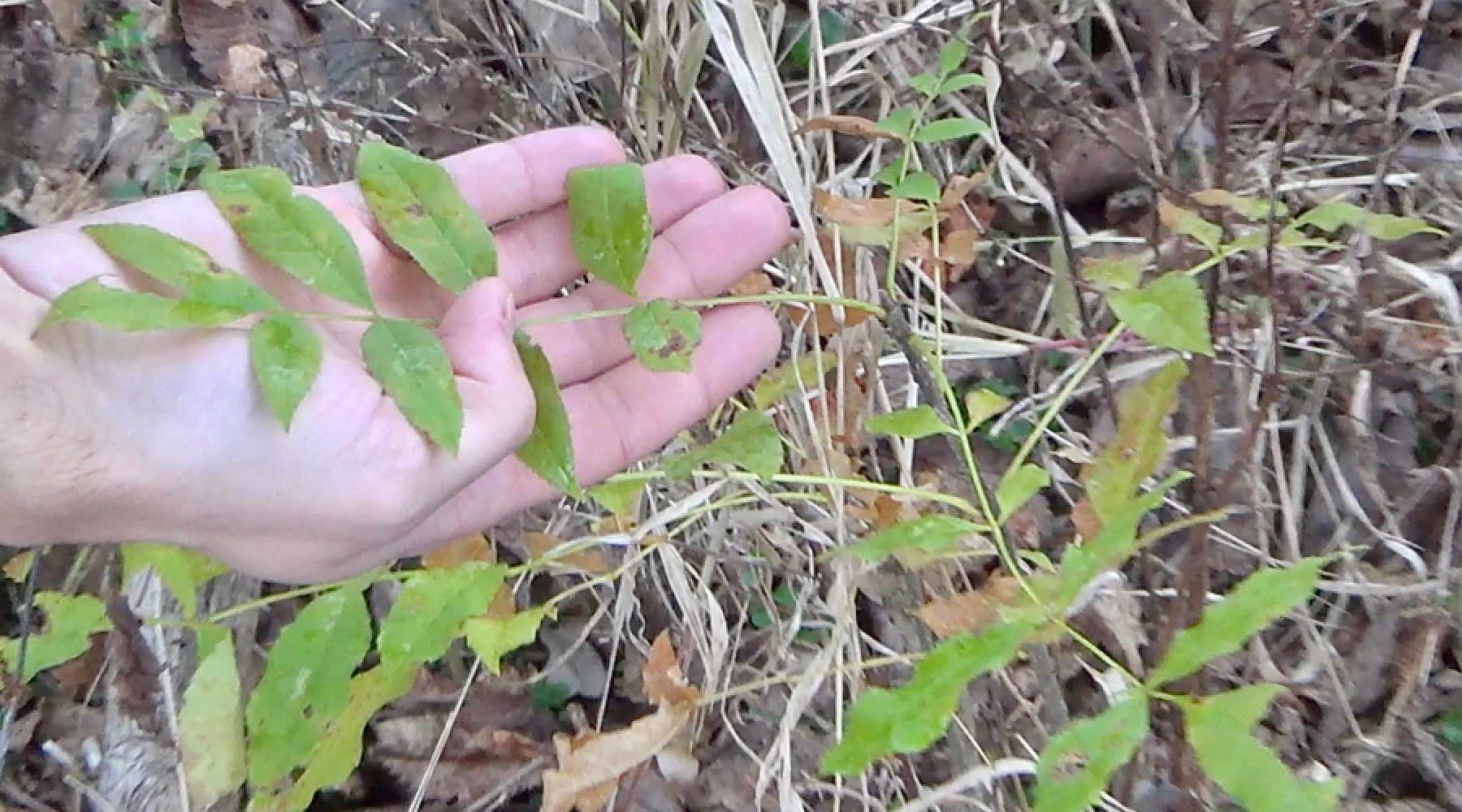
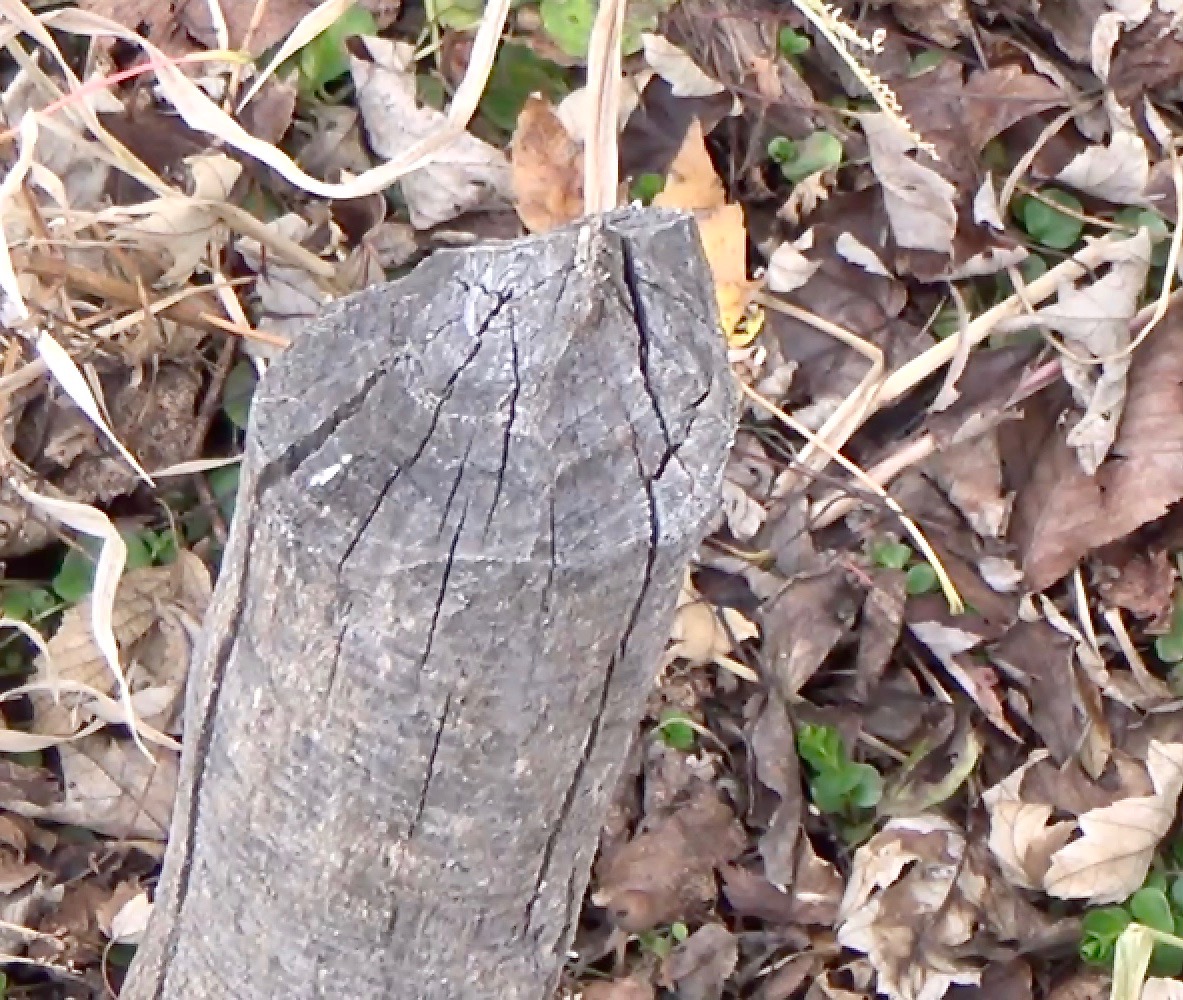 ABOVE: (L) Seedling very near Catalpa Neighbor. (R) Stump of a beaver-cut tree long ago.
"Fence Mother Tree" (7 inch DBH)
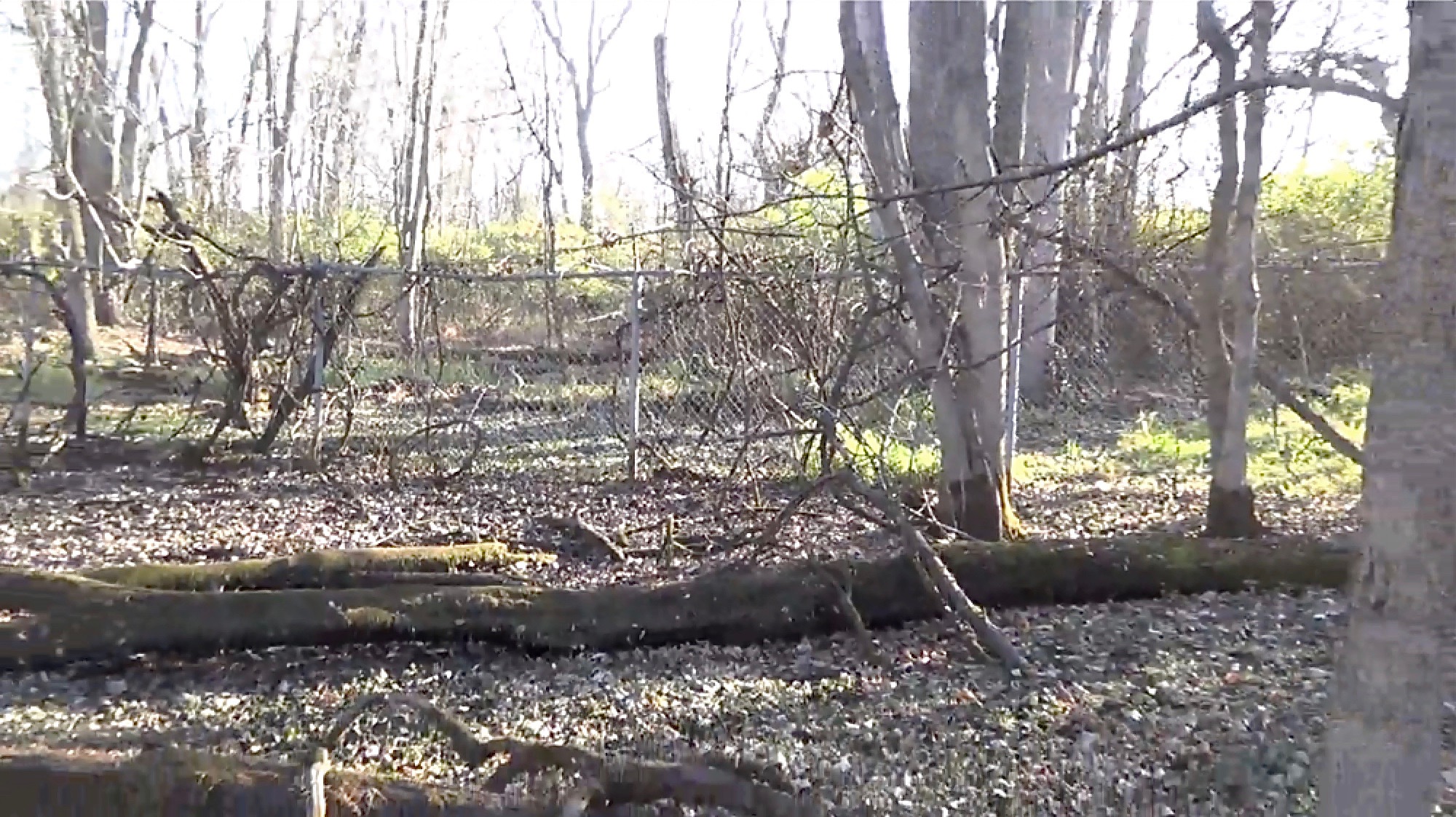 ABOVE: View of the fence beyond our farthest documented living ash. 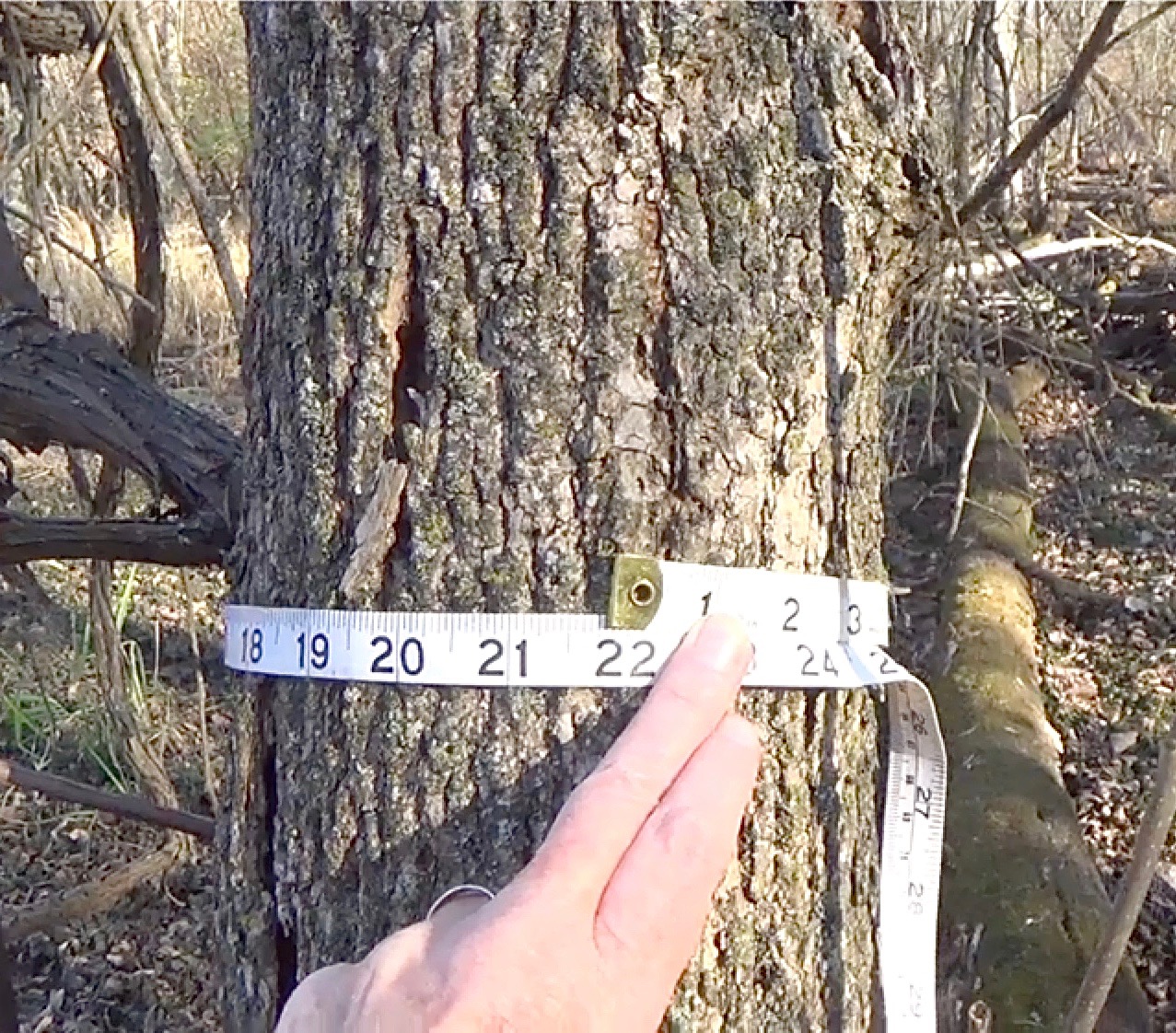
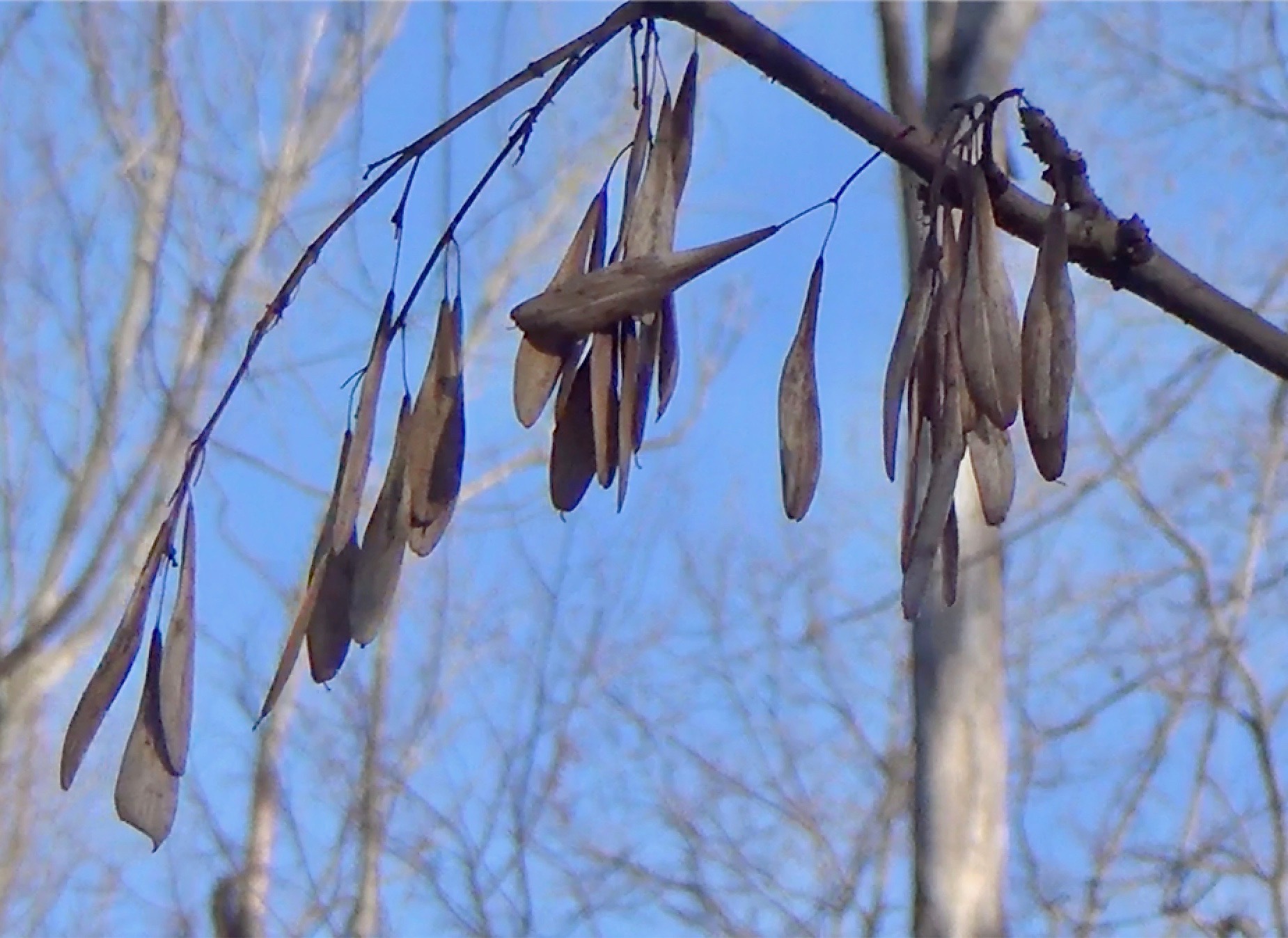 Circumference of 22 inches = 7 inch DBH. All seeds were collected by hand from an epicormic branch.
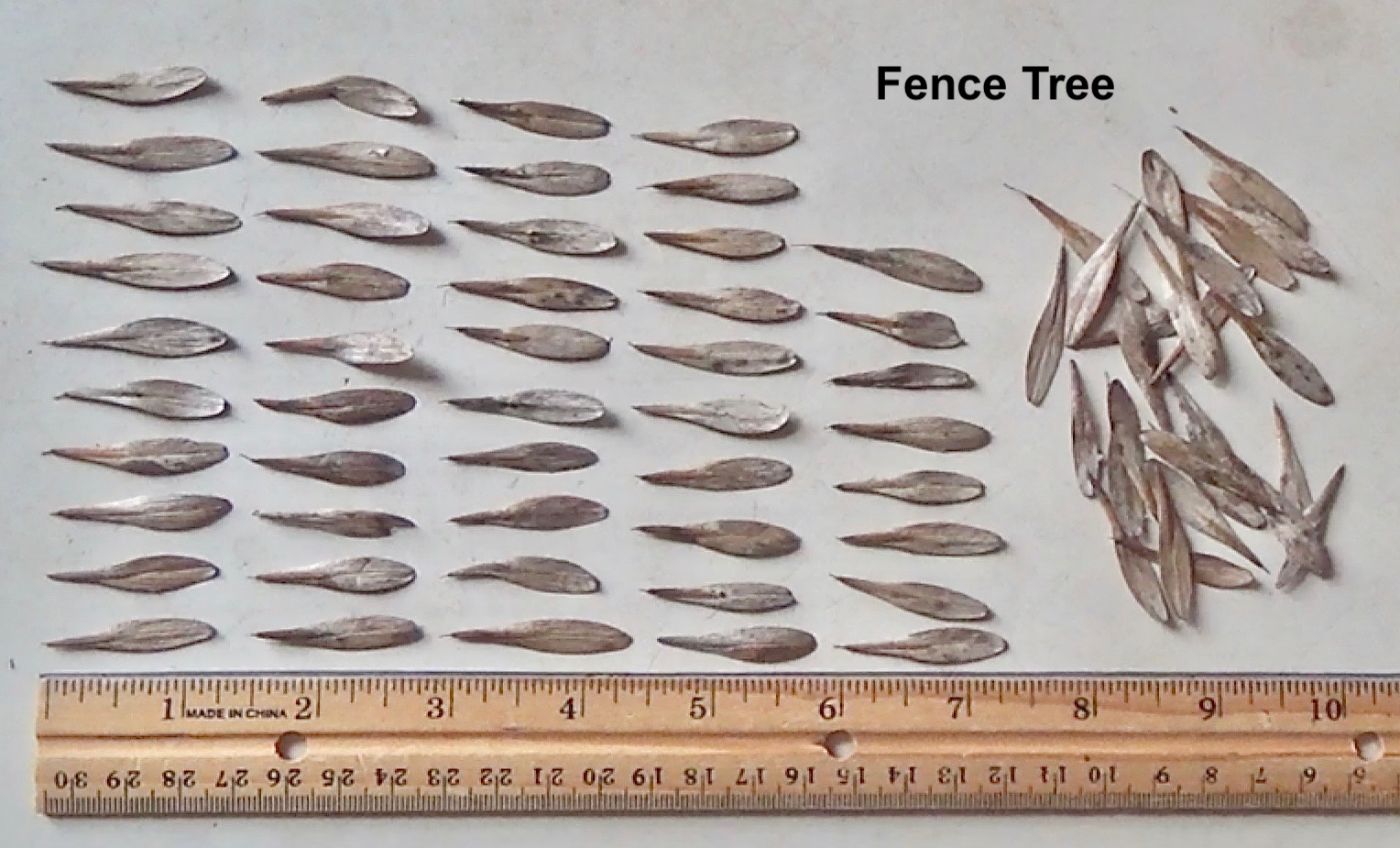
48 seeds passed the thumbnail-press test; 27 seeds at right did not.
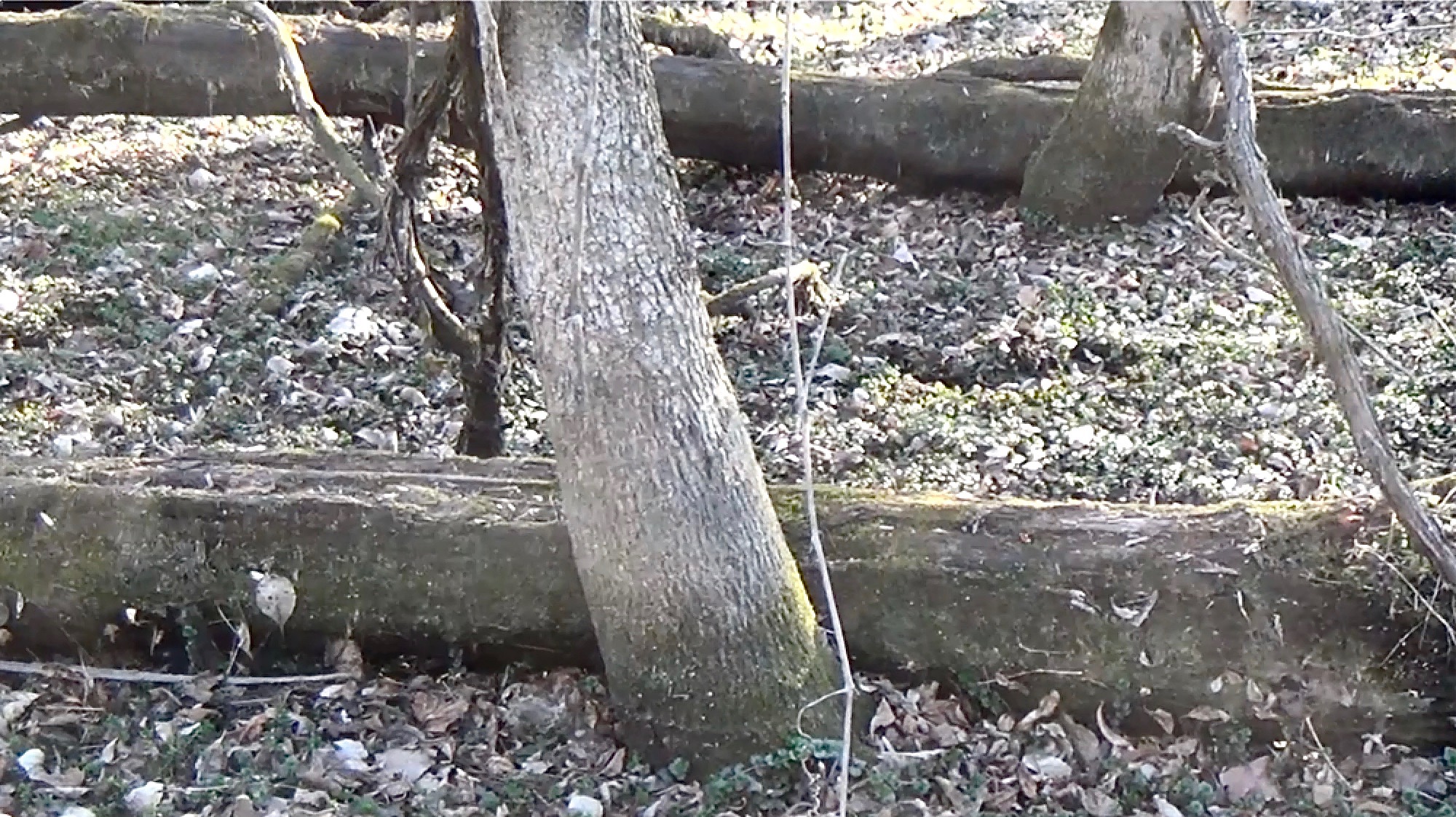 ABOVE: Base of the Fence Mother Tree is front center. Mossy logs are likely first-generation beetle-kill.
Notice the dense greenery of creeping jenny amid the leaf litter.
Relevant Research Papers
• 2025 - "Ongoing regeneration of ash and co-occurring species 20 years following invasion by emerald ash borer," by Caleb J. Wilson, Louise Labbate, Toby Petrice, Therese M. Poland, and Deborah G. McCullough, Forest Ecology and Management PDF
... Although green ash is colonized sooner and typically sustains greater mortality than white ash, this species has continued to persist in these post-invasion stands. Whether green ash mortality will ultimately exceed recruitment rates in post-invasion stands warrants additional study.
... Even when ash is abundant in post-invasion forests, mortality is generally high for trees > 10 cm [4 inches] in diameter and mortality rates increase with tree size (Morris et al., 2023; Robinett and McCullough, 2019; Ward et al., 2021). High mortality of small diameter ash trees could further limit the regeneration potential of ash over time given that white ash can begin flowering when trees are smaller than 10 cm DBH (Schlesinger, 1990) and minimum seed-bearing age ranges from 9 to 20 years (Bonner 2008). When we evaluated canopy condition, seeds were present on 23% of the ash trees and 32% of those trees were recruits. In our sites, 46% of overstory ash and 82% of ash recruits were relatively healthy with < 30% canopy dieback, while 47% of ash overstory trees, 17% of recruits, and 7% of saplings were dead.
... Ash seed production and regeneration may also be limited by other factors. Ash seed weevil [Lignyoodes helvolus (LeConte)] may limit the number of successfully germinated seedlings, and dense sedge mats can form in canopy gaps created by ash decline, which subsequently limits seedling germination (Engelken et al., 2020). Although we did not quantify basal-sprout regeneration from top-killed trees in this study, this mode of regeneration can contribute to ash persistence in some areas of Michigan. For example, Kashian (2016) reported that stump sprouts were the dominant form of green ash regeneration in plots surveyed in southeast Michigan from 2010 to 2014 and that 27% of sprouts produced seeds in 2011, which was a mast year. Whether or not stump-sprouted ash are able to successfully recruit into the overstory has not been studied.
• 2025 - "Long-term survival and radial growth of four North American and two Asian ash species in a common garden exposed to emerald ash borer invasion", by River D.R. Mathieu and Deborah G. McCullough, Environmental Entomology PDF
... Despite heavy EAB infestation, F. pennsylvanica radial growth in 2011 to 2022 remained relatively high. Results show F. nigra is highly preferred and vulnerable to EAB, followed by F. pennsylvanica, while F. americana is an intermediate host and F. quadrangulata is resistant.... Emerald ash borer (EAB) (Agrilus planipennis Fairmaire)
(Coleoptera: Buprestidae) is the most destructive forest insect pest
to ever invade North America, killing hundreds of millions of ash
trees since its introduction from Asia into Detroit, Michigan in
the mid-1990s (Herms and McCullough 2014, Siegert et al. 2014,
McCullough 2020). Currently, EAB is known to be established in
37 states and 6 Canadian provinces.
... PLANTATION A established April 2007; PLANTATION B April 2010 at Michigan state University Tree Research Center, Lansing MI. ... As trees became large enough to be colonized by EAB (DBH > 2.5cm), the trunks and branches weere wraped with cardboard tree wrap or layers of cotton fabric each spring to protect them from EAB oviposition during the summer. Wrapping was discontinued and trees were exposed to potential EAB colonization beginning in the spring 2012. [collected annual data of new woodpecker holes, EAB D-shaped exit holes, degrees of canopy death, epicormic sprouts.
... In August 2022, all 26 of the remaining blue ash were
alive and appeared healthy. In contrast, every black ash tree had been
killed by EAB by fall 2013, following 2 seasons of exposure to the
local EAB population. Both blue ash and black ash, therefore, were
excluded from the analysis of survivorship between 2017 and 2022.
Mortality caused by EAB between 2017 and 2022 varied for Chinese
ash, green ash, and white ash. PLANTATION A: In Plantation A by 2022, EAB had killed more than 60% of the green ash but only 3 white ash trees3 of the
12 live green ash trees were in poor condition with at least 60%
canopy dieback; PLANTATION B: Every green ash tree in Plantation B had been colonized by EAB and most had multiple signs of infestation, while Manchurian ash trees, intermixed with the green ash, were largely ignored by EAB.... Every green ash had at least one epicormic sprout and 67% of the green ash trees were assigned a
rank of 3, indicating > 6 epicormic sprouts were visible.
HEALING: White ash often produced wound periderm around old EAB larval galleries, then laid down new sapwood and bark, effectively reestablishing phellogen and cambial integrity
over the injury. We observed this response, which may contribute to the persistence of colonized trees, on most white ash trees in Plantation A, but it was rare on green ash or Chinese ash trees.
• 2016 - "Sprouting and seed production may promote persistence of green ash in the presence of the emerald ash borer," by Daniel M. Kashian, Ecosphere PDF
...Seventeen study sites were sampled in southeastern Lower Michigan, USA and were located either on private land or within state or municipal park boundaries. All sites were flat and experienced standing water in the spring months (typically between March and May), likely explaining a notable lack of shrub and herbaceous vegetation. Sampled forest stands were 40 to 70 yr old, ranged in size between 0.08 and 0.5 ha, and were dominated (relative density > 95%) in all strata by green ash (also called red ash (Barnes and Wagner 2004)). High ash dominance in this study is a significant departure from previous studies of EAB-affected ash. Other tree species occasionally present included box elder (Acer negundo L.), red maple (A. rubrum L.), silver maple (A. saccharinum L.), eastern cottonwood (Populus deltoides W. Bartram ex Marshall), and American elm.
... Tree ring series were obtained from cross-sections of all fallen dead ash trees in each stand and increment cores from standing dead ash, as well as increment cores obtained from live ash trees.
... The results of this study suggest that green ash — due to its physiology, regeneration ecology, and site relationships — may be able to persist in the presence of EAB despite heavy mortality and significantly altered ash population dynamics. Persistence of green ash in the aftermath of EAB may arguably better resemble American elm after DED [Dutch elm disease] than American chestnut after chestnut blight, for example, given its propensity for sprouting and stable levels of seed production and seedling establishment after heavy EAB infestation... Much like the response of American elm to DED (Barnes 1976), post-EAB green ash populations are unlikely to ever reach their pre-EAB condition, neither in individual tree size nor stand-level productivity and health.
... Thus green ash persisting with EAB has been transformed from a canopy dominant to a species with a reduced but still important ecological niche rather than being functionally eliminated from the landscape.
Return to HOME PAGE
|