|
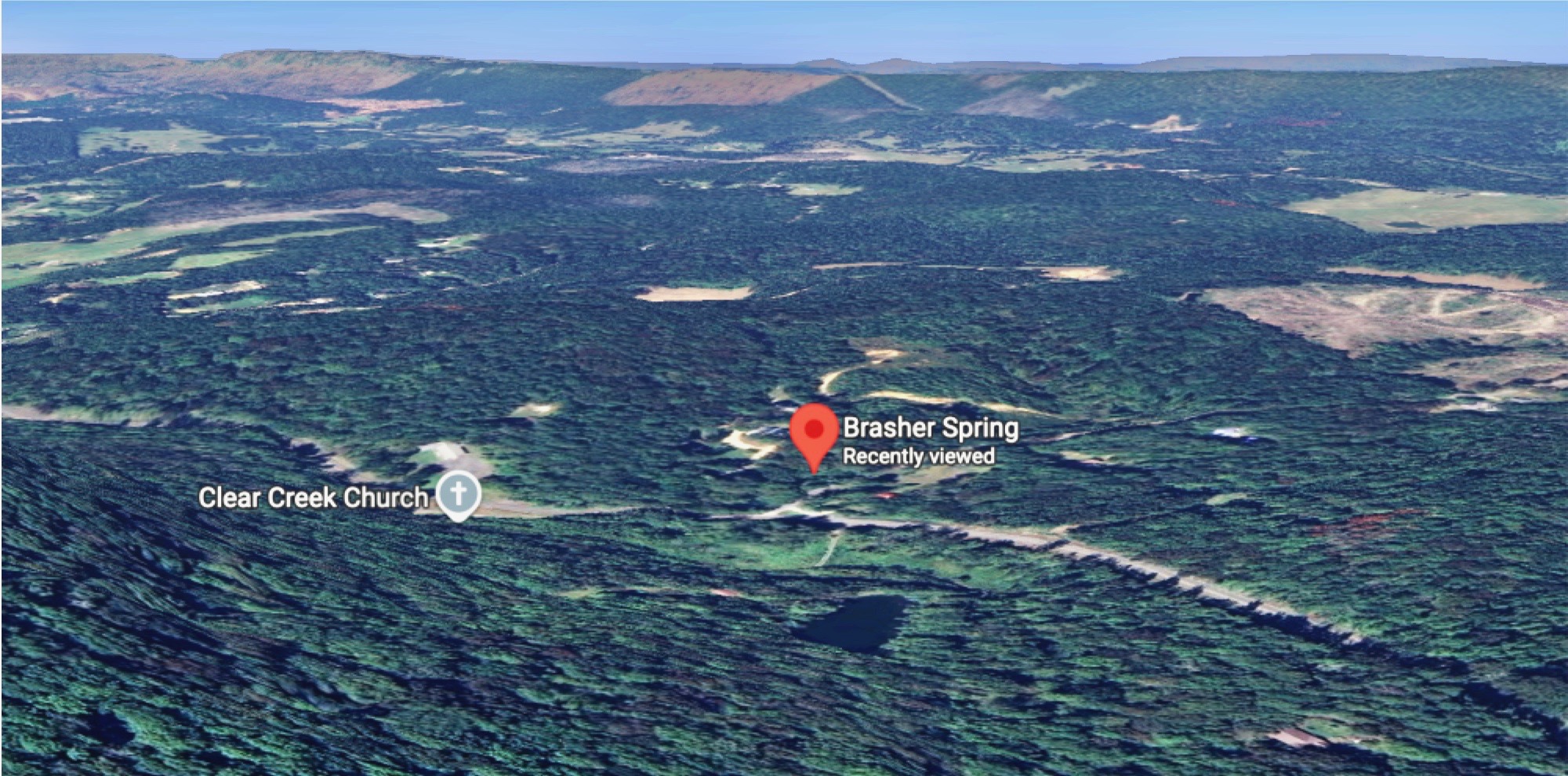
at Brasher Springs (Etowah County) Northeast ALABAMA private landowner, Larry Brasher
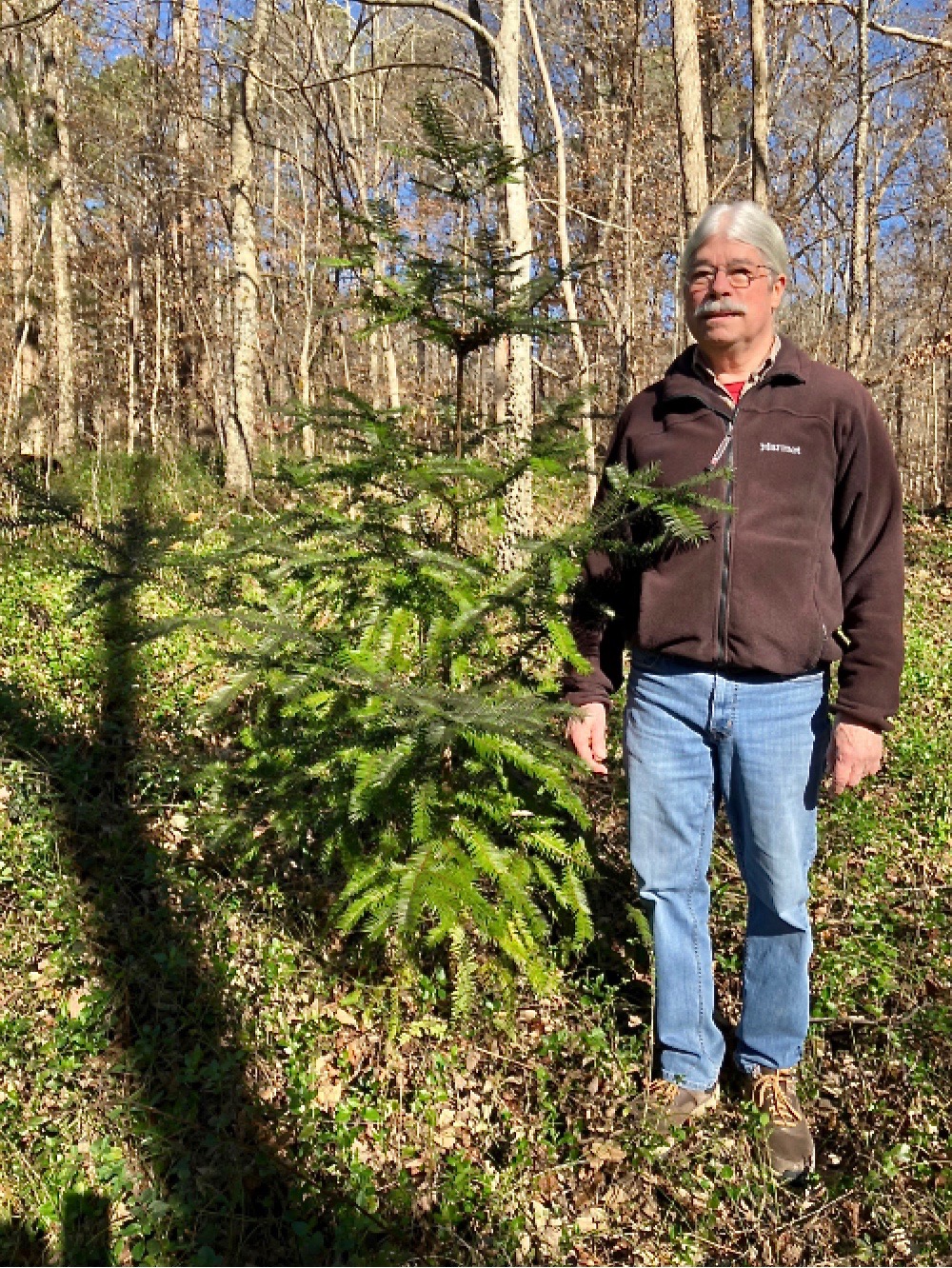
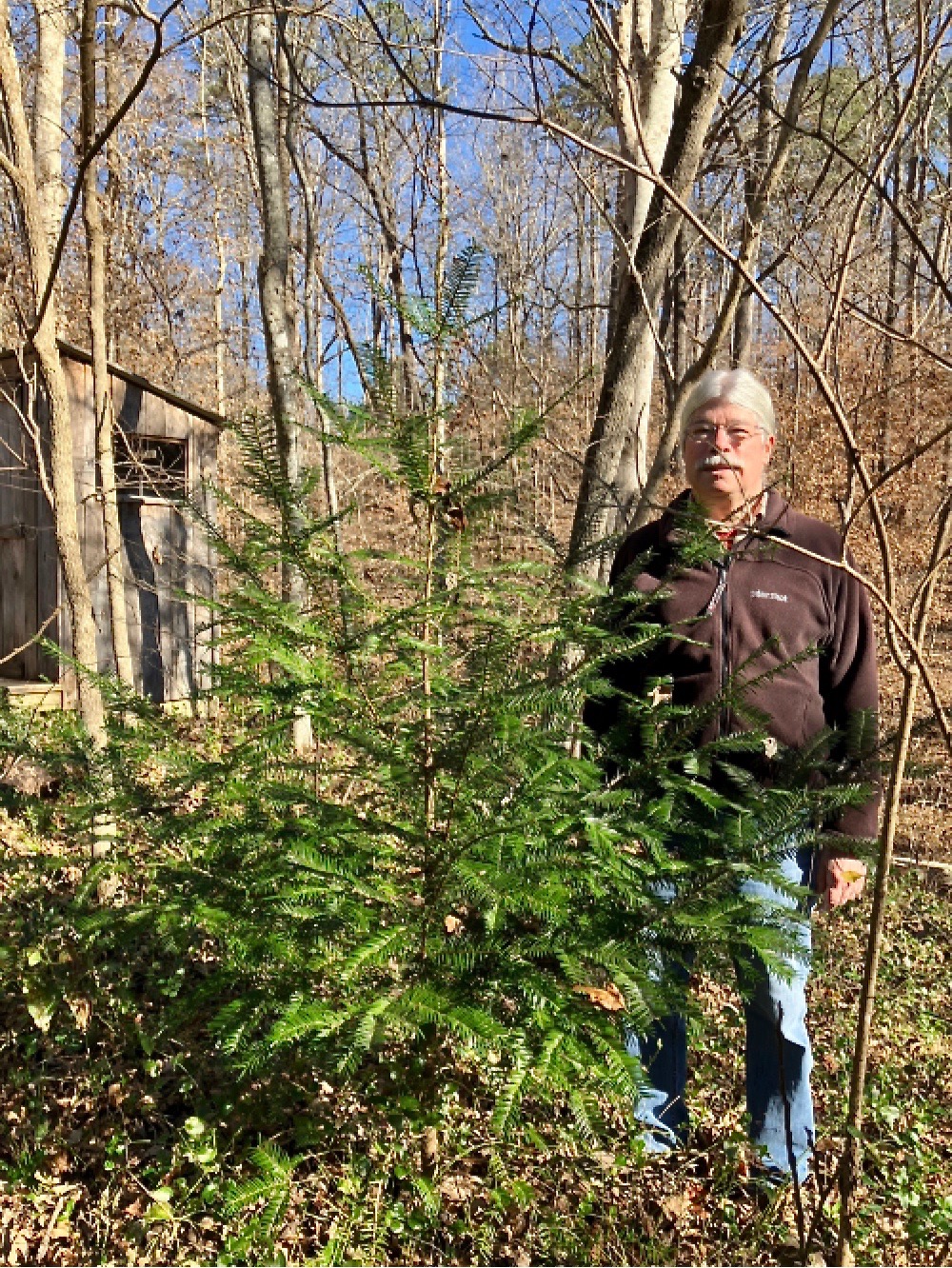
ABOVE: Larry Brasher with his two remaining torreyas in November 2025. He writes, "These two Torreyas are located just 50-75 feet from the family house in the edge of a one-and-a-half acre patch of old-growth mixed hardwoods. Editor's note: The photos above indicate superb vertical growth rate, despite siting beneath a hardwood forest canopy. Larry suggests that "they probably photosynthesize all winter" — which you can see in the November photos above do offer close to full sun. As well, Larry writes, "The site is in the larger area of Greasy Cove, which some weather experts think may be the coldest spot in Alabama." So I rescued two of the 10-inch torreyas from the full sun site, and transplanted them to within 3 feet of the one that did so well near the cedar. I also put a ring of hardware cloth about 5 inches into the ground around each to discourage voles. Those two are now both growing very well — full form and about 2 feet tall now. Last winter I planted two more [PHOTOS ABOVE IN 2025] that were each about two feet tall. I planted them into the edge of the woods, and they are shaded all day during the summers. They are doing very well with lots of new growth.
• July 2024: The two torreyas that I planted into the woods edge 4 years ago are doing very well. They are now about 5 feet tall with lots of limbs and very vigorous. The torreyas I planted 10 years ago out in the open all died within 4 years. Some died from heat/sun. Others died from voles eating them just below ground. So far, no vole damage on the 2 in the woods. The trees really stick you when you try to remove fallen limbs from the hardwoods above! No deer herbivory.
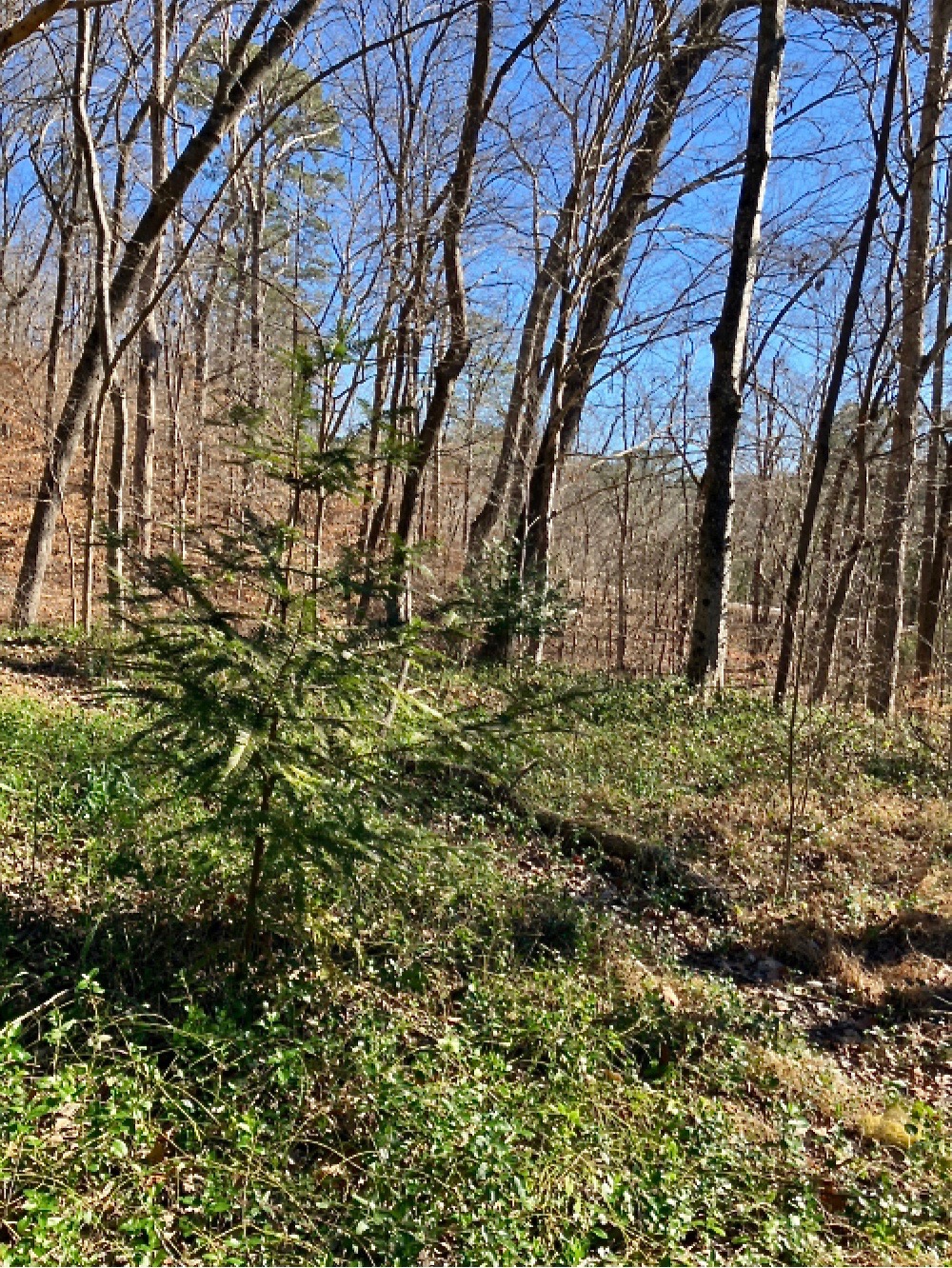
• APRIL 2025: The two torreyas are now about 6 feet tall. They are under hardwood canopy all day. For good or for ill, they are surrounded by Vinca major, an invasive periwinkle, but it doesn't seem to slow the Torreya down at all. I might like to supplement these two with torreya seeds to plant in the cool old-growth hardwood hollow downslope of the two trees. Only trouble is we now have pretty bad deer predation, and it is all I can do to keep my garden and fruit trees caged. The two 6-foot trees have no deer browse; the needles too sharp. I never caged any of my torreya plantings, and saw no evident browse damage.
• JANUARY 2026: Alas, I looked today, and one of the trees has been partially hit by voles. Definitely the roots on one side. Some of the inner needles on the tree are yellow. The other tree is solid (no voles) and all needles deep green. That led me to encircle each of the torreyas with six-inch diameter hardware collars. I also pushed down a layer of coarse gravel/stones some 2 to 4 inches, both inside and outside the hardware cloth. Because of the roots, I was only able to sink the hardware cloth about half an inch below the soil surface. Maybe this new installation will discourage further vole activity. Over the years I've lost other Torreya and young apple trees to voles. They seem to attack randomly.
BELOW: The two torreyas under hardwood canopy in November 2025 are surrounded by an evergreen invasive periwinkle.
|